

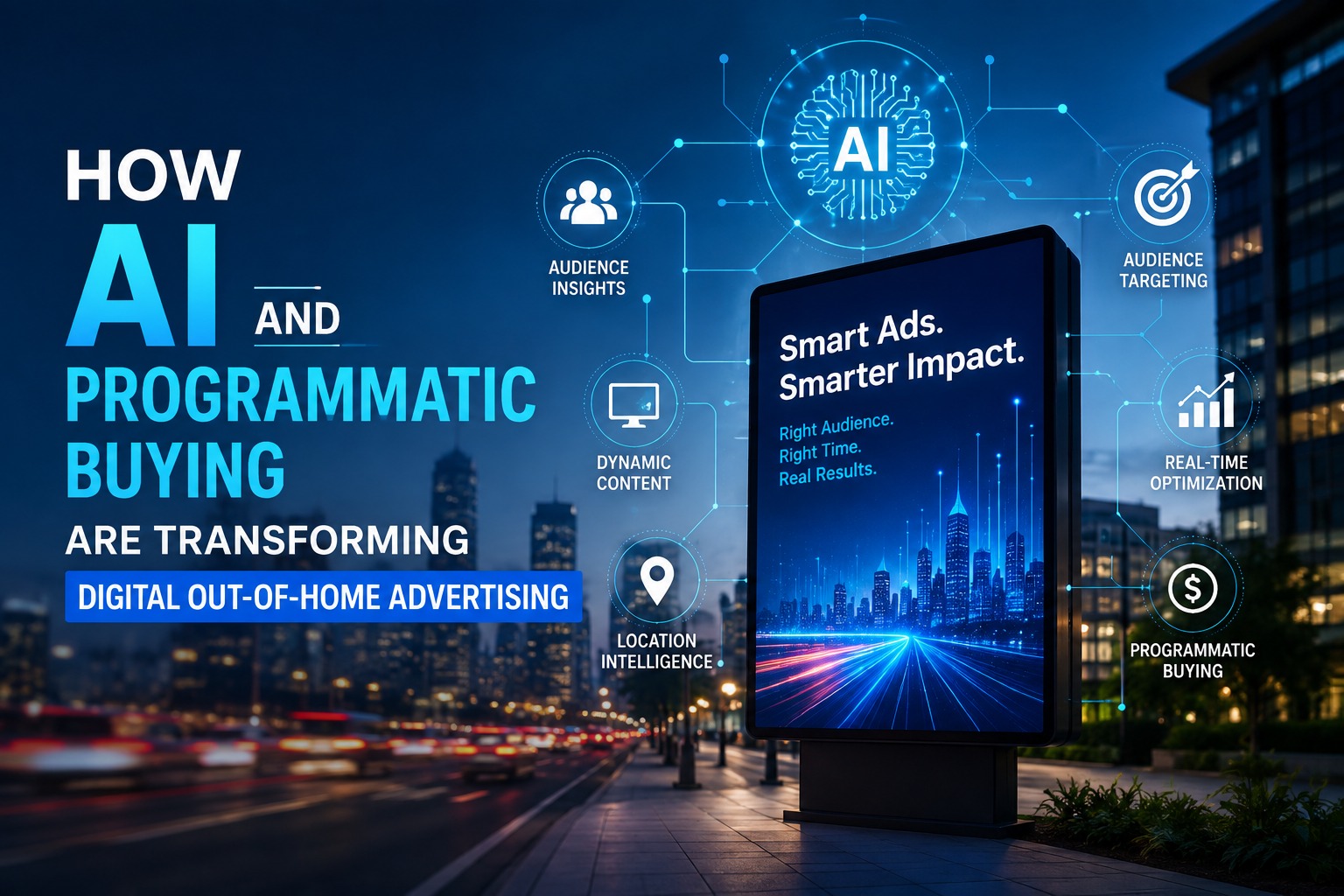
Digital advertising has evolved rapidly over the past decade, but one of the most significant changes has been the transformation of outdoor media. Traditional billboards have become intelligent digital displays capable of delivering dynamic, data-driven messages. Businesses exploring digital out-of-home advertising often discover that modern campaigns are no longer based solely on location and visibility. Instead, they leverage artificial intelligence (AI), automation, and real-time data to reach the right audience at the right moment.
This shift matters because consumer behavior has become increasingly dynamic. People commute at different times, shop based on weather conditions, respond to local events, and interact with multiple digital touchpoints before making purchasing decisions. AI and programmatic buying allow advertisers to adapt campaigns instantly rather than relying on static creative that remains unchanged for weeks or months.
How AI and Programmatic Buying Are Reshaping DOOH
Digital Out-of-Home (DOOH) combines digital display technology with traditional outdoor advertising formats such as roadside billboards, transit displays, shopping mall screens, airport signage, and retail media networks. The addition of AI and programmatic buying has transformed these screens into intelligent advertising platforms.
Programmatic buying automates the purchasing of advertising inventory. Instead of manually negotiating placements, advertisers can bid for available screen time based on predefined targeting criteria. AI enhances this process by analyzing large datasets and determining which advertisements should appear, where they should appear, and when they will likely generate the highest engagement.
For example, a coffee chain might automatically increase advertising during cold mornings near train stations while promoting iced beverages during unusually warm afternoons. Similarly, a sporting goods retailer may increase campaign frequency before major local sporting events without requiring manual intervention.
This flexibility enables advertisers to optimize budgets while delivering more relevant messages to consumers.
A Practical Strategy for Using AI in DOOH Campaigns
Businesses interested in AI-powered DOOH advertising should follow a structured approach instead of simply automating existing campaigns.
Step 1: Define Clear Campaign Objectives
Every campaign should begin with measurable goals.
Common objectives include:
- Increasing brand awareness
- Driving foot traffic
- Promoting limited-time offers
- Supporting product launches
- Encouraging event attendance
Clear objectives help AI systems optimize toward meaningful business outcomes instead of simply maximizing impressions.
Step 2: Collect High-Quality Audience Data
AI performs best when supported by reliable information.
Useful data sources may include:
- Historical campaign performance
- Weather conditions
- Traffic patterns
- Local event schedules
- Time-of-day trends
- Geographic movement data
Rather than relying on assumptions, advertisers can identify when and where target audiences are most likely to engage with messaging.
Step 3: Build Dynamic Creative
One of AI’s greatest strengths is creative personalization.
Instead of producing a single advertisement, marketers can create multiple creative variations that automatically adjust based on:
- Temperature
- Day of the week
- Time of day
- Nearby events
- Inventory availability
- Audience demographics
For example, a restaurant might display breakfast promotions before 10 a.m., lunch specials during midday, and family dinner offers in the evening using the same digital screen.
Step 4: Automate Media Buying
Programmatic platforms evaluate thousands of advertising opportunities in real time.
Instead of purchasing every available display, advertisers can focus on premium inventory that matches their audience profile and campaign objectives.
This often improves efficiency because budgets are spent where they are most likely to generate results.
Step 5: Continuously Optimize Performance
AI improves over time through continuous learning.
Campaigns should be monitored using metrics such as:
- Estimated audience reach
- Screen impressions
- Visit lift
- Conversion rates
- Store traffic
- Brand recall
The system can automatically adjust bidding strategies, creative rotation, and scheduling as new performance data becomes available.
Real-World Applications Across Industries
AI-powered DOOH is proving valuable across multiple sectors.
Retail
Retailers frequently adjust promotional messaging based on inventory levels and shopping patterns.
If one store experiences excess inventory, AI can prioritize advertisements near that specific location while reducing exposure elsewhere.
Transportation
Airports, train stations, and bus terminals experience changing passenger flows throughout the day.
Programmatic buying enables advertisers to increase visibility during peak travel periods while reducing unnecessary spending during quieter hours.
Healthcare
Healthcare providers can display seasonal health awareness campaigns based on weather conditions or regional trends.
For example, flu prevention messaging may become more prominent during periods of increased illness.
Automotive
Car manufacturers often coordinate outdoor advertising with dealership inventory, local test-drive events, and regional sales promotions.
AI ensures advertisements appear where buying intent is strongest.
Common Challenges Businesses Should Avoid
Although AI offers significant advantages, several common mistakes can reduce campaign effectiveness.
One mistake is relying exclusively on automation. AI provides recommendations, but experienced marketers should still oversee strategy, messaging, and brand consistency.
Another issue is using poor-quality data. Inaccurate location information, outdated audience insights, or incomplete reporting can lead AI systems to make ineffective optimization decisions.
Many organizations also create only one version of their creative assets. Without multiple variations, AI has limited opportunities to test different messaging and improve performance.
Some advertisers focus solely on impressions instead of business outcomes. High visibility is valuable, but campaigns should ultimately support measurable goals such as increased visits, leads, or sales.
Finally, many teams fail to review campaign performance regularly. Even intelligent systems benefit from human evaluation to identify new opportunities and changing market conditions.
Expert Recommendations for Maximizing AI-Powered DOOH
Successful organizations treat AI as a decision-support tool rather than a replacement for marketing expertise.
Start with clearly defined audience segments before expanding campaign complexity. Testing small geographic regions often produces valuable insights before launching nationwide campaigns.
Invest in high-quality creative that can adapt to different situations. Dynamic content performs best when every variation maintains consistent branding while delivering contextually relevant messaging.
Combine DOOH data with broader marketing analytics whenever possible. Understanding how outdoor advertising influences website traffic, search behavior, and customer journeys creates a more complete picture of campaign effectiveness.
Regular reporting also plays an important role. Tracking performance across channels helps marketers identify which creative assets and locations generate the strongest return on investment. For organizations managing multiple client campaigns, tools such as AudEsto can simplify website performance evaluations by generating white-label SEO audit reports that complement broader digital marketing analysis, making it easier to understand how online experiences support awareness generated through offline advertising.
Finally, remember that AI should enhance customer relevance rather than overwhelm audiences. Showing the right message at the appropriate time creates better experiences than simply increasing advertising frequency.
Conclusion
Artificial intelligence and programmatic buying have fundamentally changed how Digital Out-of-Home advertising operates. Instead of purchasing static advertising space months in advance, businesses can now deliver dynamic, data-informed campaigns that adapt to audience behavior, environmental conditions, and real-time performance.
Organizations that combine quality data, thoughtful creative development, continuous optimization, and strategic oversight are positioned to achieve stronger campaign performance while making more efficient use of advertising budgets. As AI capabilities continue to evolve, DOOH will become increasingly intelligent, personalized, and measurable, offering advertisers new opportunities to connect with consumers in meaningful and timely ways.
