

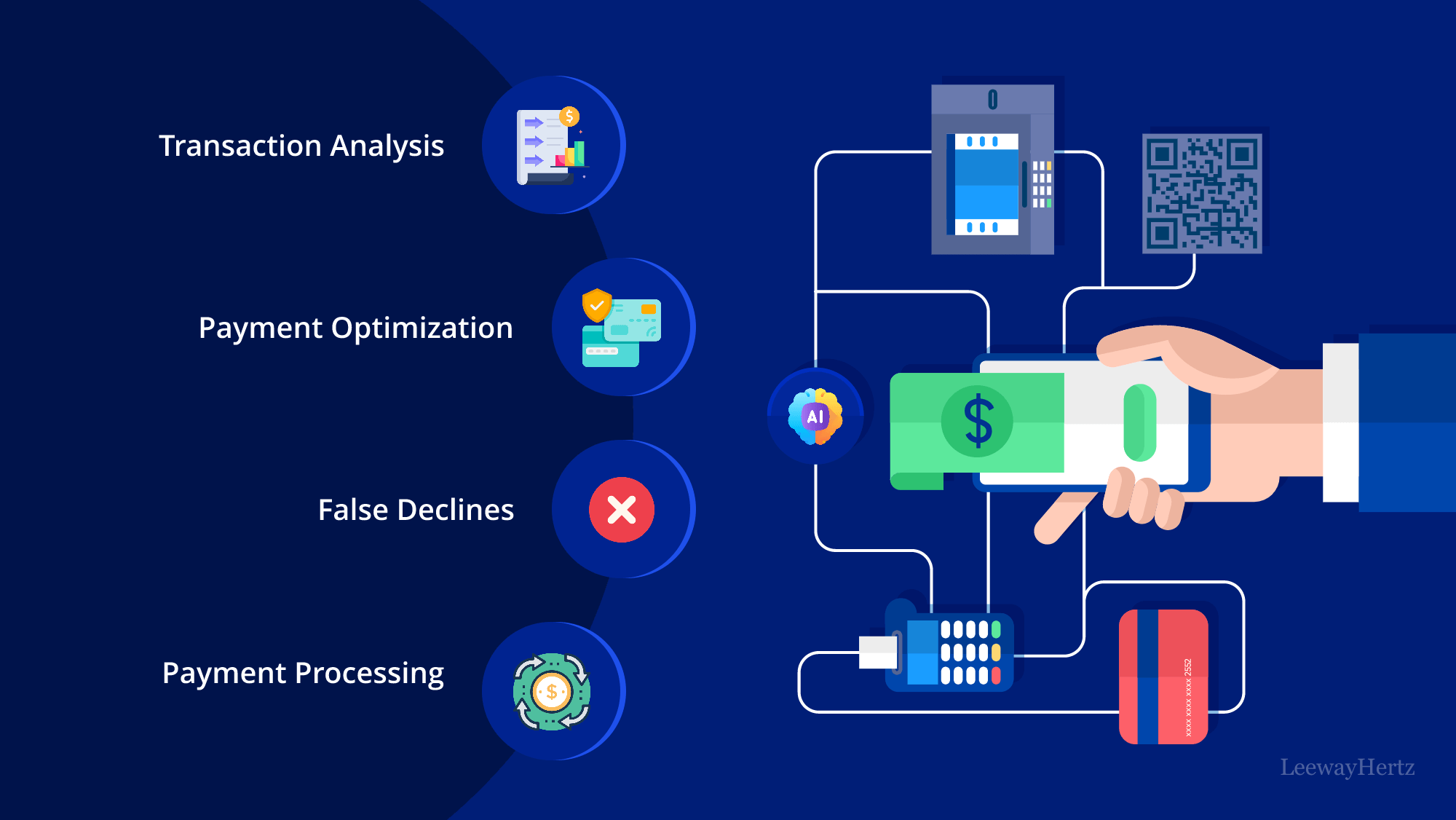
When most people think about moving goods across the world, they picture cargo ships, delivery trucks, and bustling warehouses. However, modern logistics is just as much a financial process as it is a physical one. Every single shipment can involve a complex web of financial data. A single delivery requires initial quotes, purchase orders, complex freight charges, detailed invoices, scheduled payments, mandatory customs fees, eventual refunds, and occasional disputes.
Because of this massive amount of data, logistics technology and financial technology increasingly overlap. Managing the physical movement of a product is only half the battle. The other half involves making sure the money flows accurately. Today, artificial intelligence can help connect this operational and financial information, creating a smoother process for everyone involved in the supply chain.
Why Logistics Is Also a Financial Workflow
To understand the connection between these two sectors, you only need to look at the standard supply chain lifecycle. The process typically moves from the initial order to the physical shipment, followed by delivery, generating an invoice, and finally completing the payment. While this sequence seems straightforward on paper, real world problems can occur at every single step.
For example, companies regularly deal with incorrect freight charges applied to a shipment. They face invoice discrepancies where the billed amount does not match the original quote. Missing documentation can hold up goods at borders, while payment delays can strain supplier relationships. Additionally, businesses often have to navigate duplicate charges or unexpected fees.
Dealing with these constant financial hurdles creates an interesting bridge between logistics and fintech. Fixing the physical supply chain is no longer enough. Companies must also streamline the financial workflow that runs alongside it to truly optimize their business operations.
Where AI Fits Into the Logistics-Finance Connection
As companies look for ways to streamline their operations, artificial intelligence is stepping in to solve some of the most persistent challenges in supply chain finance. There are several key areas where this technology is making a significant impact.
First is freight and invoice processing. Artificial intelligence can quickly extract critical information from hundreds of invoices and automatically compare it with corresponding shipment data. This eliminates hours of manual data entry and reduces human error significantly.
Payment reconciliation is another major use case. Connecting payments to specific deliveries can be incredibly complex when dealing with massive volumes of shipments. AI can help identify mismatches between expected costs and actual charges, making the reconciliation process much faster and more accurate.
When it comes to quote management, AI can assist with gathering all the necessary information needed to generate or compare various freight quotes. It can pull historical pricing data and market trends to help businesses make more informed financial decisions.
Additionally, fraud and anomaly detection benefits greatly from machine learning. Intelligent systems can automatically flag unusual transactions, strange billing patterns, or unexpected fee structures for immediate human review.
Finally, there is the sheer volume of documentation. Supply chains run on paperwork, and AI is exceptionally good at processing it. Intelligent tools can instantly read and categorize invoices, shipping documents, legal contracts, and complex customs paperwork. By handling these repetitive tasks, the technology ensures that the financial side of the supply chain keeps pace with the physical movement of goods.
AI-Powered Logistics Operations Go Beyond Route Optimization
When reading popular discussions about artificial intelligence in the supply chain, the conversation usually focuses on physical automation. The industry loves to talk about the latest advancements in autonomous vehicles, real time route optimization, and sophisticated warehouse robots. But another major opportunity is information workflow automation.
In a typical logistics organization, you might find employees manually moving information between different software platforms all day. They are constantly copying data from an email and pasting it into spreadsheets. They are manually cross referencing their transportation management system (TMS) with their enterprise resource planning (ERP) software. They are bouncing between payment systems and supplier portals just to confirm a single transaction.
Artificial intelligence can help connect these disconnected workflows. By integrating systems and automating data transfer, businesses can build truly intelligent supply chains. These AI-powered logistics operations allow companies to focus less on manual data entry and more on strategic growth, transforming the back office from a cost center into a highly efficient engine for the business.
Why Automation Needs Human Oversight
While automation offers incredible benefits, the intersection of finance and logistics creates highly sensitive situations. Because real money and important supplier relationships are on the line, AI should not automatically resolve every single case.
Consider common supply chain scenarios like a heavily disputed invoice or an unusually high freight charge. A system might encounter a missing document required for international compliance, an unexpected customs fee that was not in the original budget, or a glaring supplier discrepancy. In these situations, letting a machine make the final call could lead to costly mistakes or damaged partnerships.
Instead, the most effective approach relies on a careful balance. AI handles the routine cases and processes the vast majority of standard transactions automatically. When it encounters anomalies or high risk situations, humans review the exceptions. This collaborative model makes the technology more credible and aligns perfectly with standard enterprise AI principles, ensuring safety and accuracy.
The Technology Behind AI-Enabled Logistics
Building this bridge between physical and financial operations requires a specific mix of modern technologies. At the core are AI and machine learning models trained to recognize patterns in massive datasets. These models are paired with optical character recognition (OCR) and intelligent document processing tools, which allow computers to read text within scanned PDFs or paper documents.
To make this information useful, application programming interfaces (APIs) serve as the connective tissue. APIs allow different software programs to talk to each other securely. Through these connections, businesses can achieve seamless ERP integration and TMS integration, ensuring operational data flows directly into financial records.
Modern payment systems plug into this ecosystem to facilitate automated fund transfers once conditions are met. Workflow automation tools act as traffic controllers, routing documents and approvals to the right people. Finally, advanced analytics give executives a clear view of their combined operational and financial performance.
What Businesses Should Consider Before Automating
Before investing heavily in new technology, organizations need a clear strategy. Implementing artificial intelligence into financial and operational workflows is a significant undertaking. Companies should review a specific checklist to ensure they are ready for the transition:
- Is the process repetitive? Automation works best on tasks that follow a predictable, repeatable pattern.
- Is there enough data? AI models require substantial historical data to learn and function accurately.
- Are business rules clear? The steps for processing documents and payments must be standardized and documented.
- Can systems be integrated? Legacy systems must have the capability to connect with modern APIs and automated tools.
- What happens when AI is uncertain? There must be a clear protocol for routing ambiguous data to a human.
- Who reviews exceptions? A designated, trained team must be ready to handle flagged anomalies and disputes.
- How will performance be measured? Clear metrics are required to prove the return on investment and system accuracy.
The Future of Logistics and Financial Automation
The industry is rapidly approaching a major convergence of logistics technology, financial technology, and artificial intelligence. Historically, these systems operated in silos, leaving human workers to bridge the gap. Today, the barriers between moving goods and moving money are disappearing.
As companies continue to connect their operational and financial data, AI can potentially help coordinate workflows entirely across both sides of the business. In the near future, an ecosystem where shipments automatically trigger verified, instant payments upon delivery will become the standard rather than the exception.
Conclusion
The future of logistics isn’t only about moving goods more efficiently across the globe. It is also about moving information and financial transactions efficiently through digital networks. Artificial intelligence can help organizations connect these complex processes seamlessly. By allowing intelligent systems to handle the heavy lifting of data entry and reconciliation, companies can allow people to focus on exceptions, relationship building, and higher value business decisions.
