

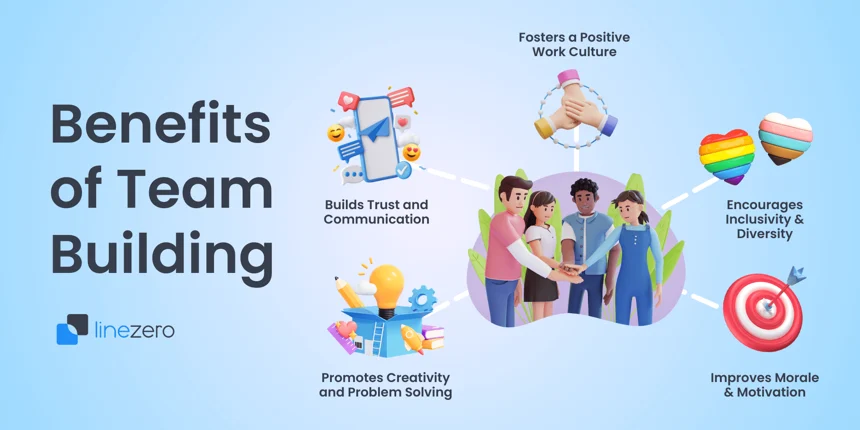
In today’s fast-paced work environment, effective collaboration and communication are vital for the success of any organisation. Many companies are turning to corporate team building events as a strategy to enhance team dynamics and foster better workplace collaboration. These events are not just about having fun; they play a crucial role in improving the way teams communicate, work together, and achieve common goals. In this article, we’ll explore how team building events can positively impact workplace collaboration.
Breaking Down Communication Barriers
Communication barriers are often the root cause of many workplace issues. Team building events offer a casual and relaxed setting where employees can feel more at ease to communicate with their colleagues. Engaging in activities outside of the usual work setting allows team members to practice and develop effective communication skills, making it easier to express ideas and opinions. When communication barriers are reduced, it naturally leads to improved collaboration and better understanding among team members.
Building Trust and Encouraging Teamwork
Trust is a foundational element of collaboration. Without trust, teams cannot function effectively. Team building events are specifically designed to build trust among colleagues. Through various activities and challenges, employees learn to rely on each other’s strengths and capabilities, making them more willing to cooperate and work towards collective goals. As trust builds, so does the willingness to work together, resulting in a more cohesive and collaborative work environment.
Fostering Creativity and Innovative Thinking
Collaborative environments thrive on creativity and innovation. Team building events stimulate creativity by presenting teams with unique challenges that require out-of-the-box thinking. Diverse activities can inspire new ideas and perspectives, which employees can bring back to the workplace. When teams are exposed to varied problem-solving scenarios, they learn to approach work challenges more creatively and collaboratively, which is essential for fostering innovation.
Enhancing Employee Engagement and Satisfaction
Employee engagement and satisfaction are critical drivers of successful workplace collaboration. Participating in team-building activities gives employees a sense of belonging and recognition. Such events can boost morale and job satisfaction, leading to higher engagement levels. An engaged and satisfied workforce is more collaborative, as employees are actively involved and invested in contributing to the team’s success. This heightened sense of engagement can significantly improve workplace collaboration.
Encouraging Leadership and Role Identification
Team building events often highlight various leadership qualities and help employees identify their roles within a team. As various tasks and constraints are navigated, natural leaders emerge, and team members learn where their strengths lie. Recognising these roles and allowing individuals to contribute their best effort enhances the team’s ability to collaborate effectively. Understanding and valuing each member’s contributions enable teams to distribute tasks appropriately, leveraging everyone’s strengths for optimal collaboration.
In conclusion, team building events are a valuable investment for any organisation aiming to improve workplace collaboration. They help break down communication barriers, build trust, foster creativity, enhance engagement, and establish clearer roles within teams. By creating opportunities for employees to connect and collaborate outside of the regular office setting, companies can cultivate a more unified and collaborative work culture, leading to higher productivity and success.
Ben Austin is the founder and CEO of Absolute Digital Media, a UK-based SEO and digital marketing agency established in 2008. The agency specialises in regulated industries including iGaming SEO, financial services, legal, and healthcare, and has accumulated over 175 industry awards. Ben has 17 years of hands-on experience in technical SEO, link acquisition, and search strategy for compliance-sensitive sectors. He writes on organic search, AI-driven visibility, and LLM citation optimisation.
