

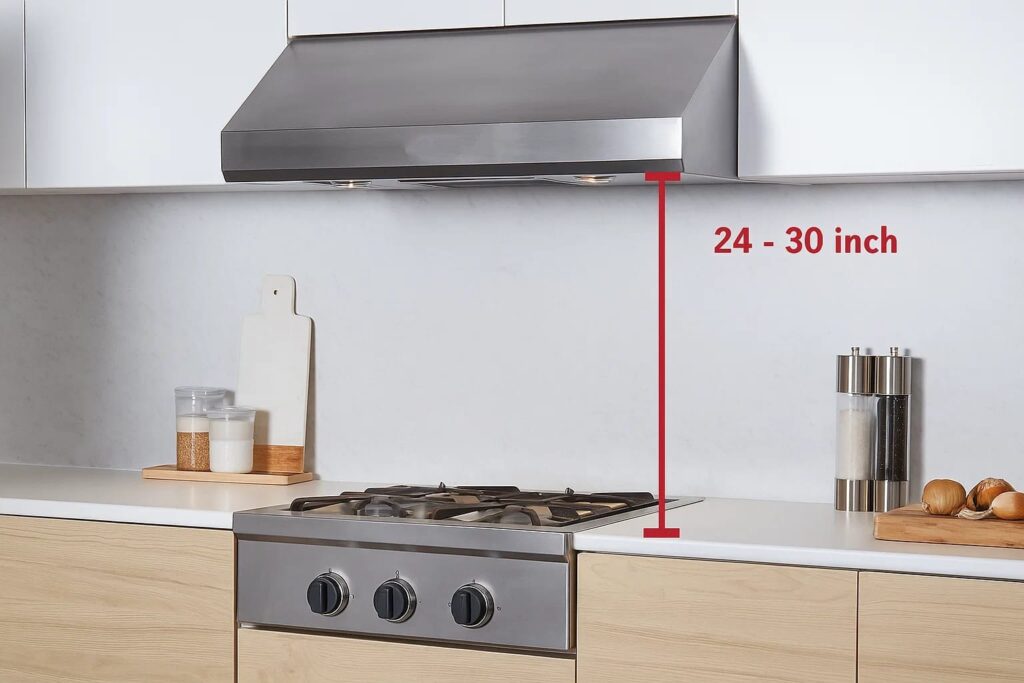
When you remodel a kitchen or set up a new cooking space, you spend a lot of time picking out appliances, choosing cabinet styles, and finding the perfect countertop. One detail that often gets overlooked until the very last minute is the placement of your ventilation. Specifically, how high should you hang your range hood above your stove?
Getting this measurement correct is not just a matter of looks. It directly affects how well your kitchen vents smoke, grease, and heat. Hang the hood too high, and the air will escape into your kitchen before the fan can pull it in. Hang it too low, and you risk damaging the appliance, creating a fire hazard, or constantly bumping your head while you cook.
Why Installation Height Matters
A range hood acts as the main filtration system for your kitchen. When you cook, you release steam, grease droplets, odors, and combustion byproducts like carbon monoxide into the air. The ventilation system captures these pollutants and either vents them outside or filters and recirculates the air.
1. Air Capture Performance
The primary job of the hood is to catch dirty air. As hot air rises, it expands outward in a cone shape. If your hood is too far from the stove, this plume of steam and grease spreads wider than the intake area of the fan. The fan will run, but a large portion of the smoke will escape into your living space.
2. Fire Prevention and Safety
Cooking produces high heat, especially if you use gas burners. If you mount a hood too close to the cooktop, the heat can damage the internal components, warp the metal housing, or melt plastic parts. More importantly, grease accumulates on the filters over time. If a flare-up occurs on your stove, a low-hanging, grease-coated filter can easily catch fire.
3. Kitchen Ergonomics
Cooking should be comfortable. If the hood hangs too low, it blocks your line of sight. You will find yourself leaning forward or bending down just to see into your pots. It also creates a physical barrier, meaning you might bump your forehead when you lean in to stir a dish.
The Standard Height Rules
As a general rule of thumb, most manufacturers recommend keeping a distance of 24 to 36 inches between the cooking surface and the bottom of the range hood. However, this range is broad because different cooktops require different setups.
| Cooktop Type | Recommended Height Range | Key Factor |
| Electric Cooktop | 24 to 30 Inches | Lower heat output allows a closer mount. |
| Induction Cooktop | 24 to 30 Inches | Focuses heat on cookware, reducing ambient heat. |
| Gas Cooktop | 30 to 36 Inches | Open flames require more clearance for safety. |
Gas Stoves
Gas burners produce open flames and generate massive amounts of dry heat. Because of this, you must mount your ventilation higher. The standard minimum distance for a gas range is 30 inches. If your stove has high-output burners with high British Thermal Units (BTUs), you should aim closer to 32 or 36 inches to prevent heat damage to the hood.
Electric and Induction Stoves
Electric coil, glass-top, and induction cooktops do not produce open flames. Because the heat is more controlled, you can safely mount the hood lower, usually between 24 and 30 inches. Mounting the hood at the lower end of this scale helps capture steam quickly, which is helpful because electric cooking does not create the same upward draft that rising gas heat does.
Factors That Influence Your Installation Distance
Every kitchen is different. While the general rules provide a solid starting point, you need to adjust your measurements based on your specific setup.
1. The Power of Your Fan (CFM)
Range hood power is measured in Cubic Feet per Minute (CFM). This tells you how much air the fan can move in one minute.
- Low CFM hoods (under 300 CFM) need to be mounted closer to the stove (around 24 inches for electric, 30 inches for gas) because they lack the raw power to pull air from a greater distance.
- High CFM hoods (600 CFM or more) have much stronger suction. You can safely mount these models at the higher end of the spectrum (up to 36 inches) without losing performance.
2. Hood Style and Design
The physical shape of your range hood plays a major role in where you mount it:
- Under-cabinet and Wall Mount Hoods: These are the most common styles. They work best within the standard 24-to-36-inch range.
- Island Hoods: Because island cooktops are open to the entire room, cross-breezes can easily push smoke away from the fan. Island hoods should usually be mounted around 30 inches to keep a strong hold on the rising air.
- Downdraft Systems: These systems pull smoke downward into the counter rather than upward. They do not follow the standard height rules but must rise high enough above your tallest pots to work.
3. User Height and Kitchen Cabinets
You must consider who will use the kitchen. If the primary cook is tall, mounting a hood at 24 inches will make the stove feel cramped and block their view. In this case, it is better to choose a high-CFM hood and mount it at 32 to 36 inches so the workspace remains open.
Additionally, check your surrounding cabinetry. Your hood needs to align neatly with the adjacent wall cabinets to look balanced.
Step-by-Step Installation Guide
Before you begin mounting your appliance, always consult the manufacturer manual. To find detailed specifications and physical dimensions for standard setups, check out this guide on kitchen range hood height to help plan your layout.
- Mark the Centerline: Find the exact center point of your cooktop and use a level to draw a straight vertical line up the wall. This keeps your hood perfectly centered.
- Mark the Height: Measure up from the cooktop surface to your desired height (for example, 30 inches). Draw a horizontal line crossing your centerline. This marks where the bottom of the hood will sit.
- Locate Wall Studs: A range hood is heavy. You must screw the mounting brackets into solid wood studs, not just drywall. Use a stud finder to locate the studs and mark them.
- Mount the Bracket: Align the mounting bracket with your lines and screw it into the studs.
- Hang and Connect: Lift the hood onto the bracket. Connect your metal ductwork to the vent collar, seal the joints with aluminum foil tape (do not use plastic duct tape), and plug in the electrical connections.
The Benefits of Getting the Height Right
Taking the time to measure carefully offers several long-term benefits for your home:
- Less Cleaning: When a hood sits at the correct height, it catches grease before it can settle on your cabinets, countertops, and walls. You will spend far less time scrubbing sticky residue off your kitchen surfaces.
- Better Air Quality: Cooking fumes contain fine particles that can irritate your lungs. Proper ventilation removes these particles quickly, keeping your indoor air clean.
- Lower Noise Levels: If your hood is mounted at the correct height, you can run the fan on a lower, quieter speed while still capturing all the steam. You only need to use the loud, high-speed settings for heavy searing or frying.
- Moisture Control: Cooking releases a lot of moisture. If this steam is not removed, it can condense on cold walls and cabinets, eventually leading to paint peeling or mold growth.
Challenges and How to Avoid Them
Even with careful planning, you can run into roadblocks during installation. Here are some common mistakes and how to handle them.
Low Ceilings
If your kitchen has low ceilings, you might find that a standard chimney-style hood is too long, leaving you with less than 24 inches of clearance. To solve this, look for low-profile under-cabinet models or short chimney extensions designed specifically for lower ceilings.
Recirculating vs. Ducted Hoods
Ducted hoods vent air outside, while ductless (recirculating) hoods use charcoal filters to clean the air and blow it back into the kitchen. Ductless hoods are slightly less efficient at removing heat and moisture, so you should install them closer to the lower end of the recommended height range to maximize their performance.
Modern Kitchen Ventilation Trends
Kitchen design is moving toward minimalist, open layouts. Homeowners want clean lines and quiet spaces. Because of this, smart ventilation systems are growing in popularity.
Modern appliances are designed to be sleeker, quieter, and more efficient. For example, the smart technology integrated into the Ciarra One series allows hoods to adjust their fan speeds automatically based on the heat and smoke coming from the cooktop. This eliminates the guesswork of managing your ventilation while you cook and ensures you always have the right amount of suction.
Other rising trends include:
- Built-In Inserts: These hoods hide completely inside custom cabinetry for a seamless look.
- LED Task Lighting: Bright, warm LED lights built into the underside of the hood make it easy to see your food without relying on overhead kitchen lights.
- Easy-to-Clean Filters: High-quality baffle filters made of stainless steel can go straight into the dishwasher, making maintenance simple.
Final Thoughts
Finding the right height for your kitchen range hood is a balance between safety, performance, and comfort. Keep the 24-to-30-inch rule in mind for electric cooktops, and stick to the 30-to-36-inch range for gas burners. Always prioritize the guidelines in your appliance manual, and make sure your hood is anchored securely to wall studs.
