

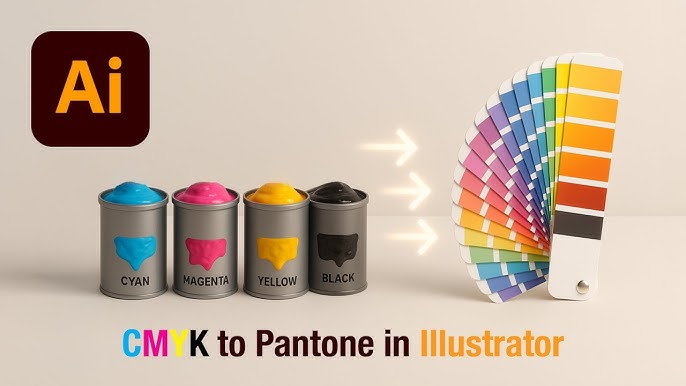
Color plays a major role in design, branding, packaging, and professional printing. Whether you are creating a logo, product label, brochure, or marketing material, choosing the right color system can make the difference between a design that looks consistent and one that varies from print to print. Many designers work in CMYK because it is the standard color model for most commercial printing projects. However, there are many situations where a Pantone color is required to ensure precise color matching across different materials and printing methods. This is where understanding CMYK to Pantone conversion becomes essential.
Designers often need to convert digital process colors into spot colors that can be reproduced consistently. While the process may seem simple at first, color conversion involves several technical considerations. Different inks, paper types, printing presses, and color profiles can affect the final appearance of a printed design. Learning how CMYK to Pantone conversion works helps designers make informed decisions and achieve more predictable results. This guide explains the differences between the two color systems, discusses conversion methods, highlights common challenges, and shares practical techniques that can improve print accuracy and color consistency.
Understanding the Difference Between CMYK and Pantone
Before attempting a CMYK to Pantone conversion, it is important to understand how these color systems differ. CMYK stands for Cyan, Magenta, Yellow, and Key (Black). It is a process color model used by most printers to create a wide range of colors by combining percentages of these four inks. When tiny dots of cyan, magenta, yellow, and black overlap on paper, they produce the colors seen in magazines, brochures, posters, and many other printed products. Because CMYK relies on mixing inks during printing, the final result can vary depending on equipment, paper stock, and printing conditions.
Pantone, on the other hand, is a spot color matching system developed to provide consistent color reproduction. Instead of mixing four process inks during printing, Pantone colors are pre-mixed according to exact formulas. Each Pantone shade has a unique identification number that printers and designers can use worldwide. This consistency makes Pantone especially valuable for brand colors that must remain identical across different print runs and materials. While CMYK can reproduce many colors effectively, certain vibrant, metallic, or highly specific shades may only be achievable through Pantone spot inks. Understanding these differences helps designers recognize why converting CMYK to Pantone often requires selecting the closest possible match rather than finding an exact equivalent.
Why Designers Need CMYK to Pantone Conversion
There are many practical reasons why designers convert CMYK values into Pantone colors. One of the most common situations involves brand identity projects. Companies invest heavily in creating recognizable visual identities, and color consistency is a key part of that effort. A brand’s logo may be designed using CMYK colors for digital layouts, but when it is printed on packaging, promotional products, signage, or business cards, Pantone colors are often used to maintain consistency across every application.
Another reason for CMYK to Pantone conversion is improving print quality. Some colors that look excellent on a computer screen or in CMYK printing may not reproduce consistently across different presses. By selecting a Pantone spot color, designers can reduce variation and achieve more predictable results. Pantone colors are also useful for specialty printing projects that require vibrant hues, fluorescent colors, metallic effects, or unique shades outside the standard CMYK gamut. In professional production environments, converting CMYK colors to Pantone equivalents helps communication between designers, clients, and printers. Everyone can reference the same color standard, reducing misunderstandings and minimizing costly printing errors.
Methods for Converting CMYK to Pantone Colors
Several methods can be used to perform a CMYK to Pantone conversion, and the best approach often depends on the project’s requirements. One common method involves using digital conversion tools. Many online color conversion platforms allow users to enter CMYK values and receive suggested Pantone matches. These tools provide a quick starting point and can save time during the design process. Platforms focused on color accuracy, such as hue ink, help designers compare color systems and identify the nearest Pantone equivalents efficiently.
Professional design software also includes conversion features. Applications like Adobe Illustrator and Adobe InDesign offer access to Pantone color libraries, allowing designers to compare process colors against Pantone swatches directly. These built-in tools can provide useful recommendations, but designers should remember that software-generated matches are estimates. Physical Pantone guides remain one of the most reliable resources for color evaluation. By comparing printed swatches under proper lighting conditions, designers can assess how closely a Pantone color matches their intended CMYK appearance. Combining digital tools with physical color references often produces the most accurate results and helps avoid surprises during final production.
Challenges and Limitations of Color Conversion
Although CMYK to Pantone conversion is a common design task, it is important to recognize that the process has limitations. CMYK and Pantone are fundamentally different color systems, which means an exact one-to-one conversion is not always possible. Some CMYK colors can be matched closely using Pantone spot inks, while others may require compromise. Designers should understand that conversion tools provide the nearest available match rather than a guaranteed identical color.
Color appearance can also change based on printing conditions. Paper type has a significant impact on how colors look. A Pantone color printed on coated paper may appear different from the same color printed on uncoated stock. Lighting conditions can influence color perception as well. A color viewed under daylight may look slightly different under fluorescent or LED lighting. In addition, monitor calibration affects how colors appear on screen. If a designer’s monitor is not properly calibrated, the displayed CMYK color may not accurately represent the final printed result. These factors highlight the importance of testing and proofing before large production runs. Understanding these limitations helps set realistic expectations and supports better decision-making throughout the print workflow.
Best Practices for Achieving Accurate Print Results
Successful CMYK to Pantone conversion involves more than simply selecting a suggested color match. Designers who prioritize print accuracy follow a series of best practices that improve consistency and reduce production issues. One of the most important steps is working with standardized color profiles. Proper color management ensures that colors remain as consistent as possible across devices, software, and printing equipment. Calibrated monitors help designers evaluate colors more accurately during the design phase.
Requesting printed proofs is another essential practice. Digital previews provide useful guidance, but they cannot fully replicate the appearance of ink on paper. A physical proof allows designers and clients to review colors before final production begins. Communication with the printing provider is equally important. Printers can offer recommendations regarding paper selection, ink options, and color matching techniques based on their specific equipment. Designers should also reference current Pantone color guides rather than outdated versions, as color libraries can change over time. By combining proper color management, proofing procedures, and collaboration with print professionals, designers can achieve more reliable results and improve overall project quality.
Choosing the Right Pantone Match for Your Design
Selecting the best Pantone equivalent requires both technical knowledge and visual judgment. When evaluating CMYK to Pantone conversions, designers should focus on the intended purpose of the project rather than seeking mathematical perfection. In many cases, a Pantone color that appears slightly different in numerical terms may actually produce a closer visual match in real-world printing conditions. Reviewing multiple suggested Pantone options can help identify the most suitable choice.
Brand requirements should also guide the selection process. If a design represents an established brand, maintaining consistency across all materials is often more important than matching a specific CMYK value exactly. Designers should consider how the chosen Pantone color will appear on different substrates, including paper, packaging materials, textiles, and promotional products. Viewing swatches under consistent lighting conditions can improve decision-making and reveal subtle differences that may not be visible on screen. Modern color resources and professional conversion platforms make the process easier, but human evaluation remains an important part of achieving the best possible result. By balancing technical accuracy with practical design considerations, professionals can select Pantone colors that support both visual appeal and brand consistency.
Conclusion
Converting CMYK to Pantone is an essential skill for designers who work with professional printing, branding, packaging, and marketing materials. While CMYK uses a process of combining four inks to create color, Pantone relies on pre-mixed spot colors designed for consistency and precision. Because these systems function differently, conversions are usually based on finding the closest possible match rather than achieving an exact duplicate. Understanding this distinction helps designers set realistic expectations and make more informed color decisions.
The most successful CMYK to Pantone workflows combine digital conversion tools, physical Pantone guides, proper color management practices, and collaboration with experienced print providers. By understanding the strengths and limitations of each color system, designers can improve print accuracy, maintain brand consistency, and deliver professional results across a wide range of projects. Whether you are creating packaging, logos, promotional materials, or large-scale print campaigns, mastering CMYK to Pantone conversion will help ensure your colors look as intended from concept to final production.
