

A university assignment becomes easier to manage when three things are clear: what the question requires, what evidence will answer it, and how the argument should develop. Problems often begin when students start writing before resolving those decisions.
A polished document can still miss the task. Extensive research can produce little value if the sources do not address the question. Similarly, a detailed outline needs room to change when the evidence challenges the original idea.
The following process explains how to plan, research and structure a university assignment, from reading the brief to checking the final submission.
1. Turn the Assignment Brief into a Checklist
Before searching for sources, read the brief alongside the marking criteria. Identify the required output: an essay, report, case study, reflective account, presentation or another assessment format.
Record the essential requirements:
• The question and any compulsory tasks.
• Learning outcomes and marking criteria.
• Word limit and stated exclusions.
• Required theories, calculations or examples.
• Referencing style and submission format.
• Deadline and rules governing external assistance or AI use.
Pay particular attention to command words. Describe asks what something is like. Analyse requires examining relationships, causes or implications. Evaluate involves weighing evidence against relevant criteria and reaching a justified judgement.
For example, an assignment asking students to evaluate a company’s expansion strategy needs more than a description of its international activities. It requires criteria for judging the strategy, evidence about its performance and consideration of alternatives.
Where instructions appear inconsistent, seek clarification from the module team before making an assumption.
2. Build an Outline Around the Question
An effective assignment plan connects each section to a specific part of the task. Begin with provisional headings, then note the argument, evidence and analysis needed beneath each one.
For a report evaluating a business decision, an initial plan might cover:
Section
Purpose
Introduction
Define the problem, scope and approach
Relevant context
Establish the facts needed for the analysis
Analysis
Apply suitable concepts and examine the evidence
Evaluation
Compare options and explain trade-offs
Recommendations
Propose actions supported by the findings
Conclusion
Answer the central question
This is an example, rather than a universal template. A reflective assignment or laboratory report will need a different structure.
Allocate words according to the importance of each section and the marking criteria. Protect sufficient space for analysis instead of allowing background information to dominate.
3. Research with Questions, Not Just Keywords
Useful academic research starts with questions that the assignment needs to answer.
Suppose the topic concerns employee retention. Searching only for “employee retention” may produce an unmanageable collection of material. More focused questions could include:
• Which factors influence retention in the relevant sector?
• What evidence supports the proposed intervention?
• Under what conditions might that intervention fail?
• How closely does the research setting resemble the case organisation?
Use these questions to develop search terms, including alternative terminology and relevant geographical or sector boundaries.
University library databases, academic journals, official statistics and original organisational reports can serve different purposes. A company report may establish financial results, while a research article may explain a theoretical relationship. Choose the source according to the claim being made.
Recent publication dates matter for changing conditions, but older foundational research may remain appropriate when the task requires a particular theory.
4. Evaluate Sources Before Using Them
A source should earn its place in the assignment through relevance and credibility.
Check who produced it, how the evidence was collected, when it was published and what limitations affect its conclusions. Consider whether the findings apply to the population, country or organisation under discussion.
For instance, a small interview study can offer detailed explanations of participants’ experiences. It does not automatically establish how common those experiences are across an entire industry.
Keep a research log containing the source details, relevant findings, page numbers and limitations. Separate direct quotations from paraphrases and personal interpretation.
Read the original source before citing it. Search snippets, summaries and AI-generated descriptions can omit qualifications that change the meaning of a finding.
5. Structure the Assignment for Its Format
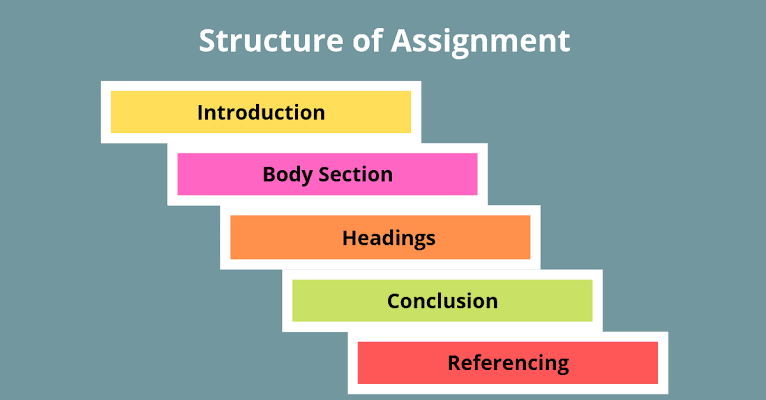
An essay normally develops a continuous argument through an introduction, body and conclusion. A report may use numbered headings, an executive summary, recommendations and appendices. Follow the specified assessment format.
Introduction
Explain the topic, define the problem and establish the assignment’s scope. Introduce the approach or central argument without filling the opening with broad statements.
Main body
Arrange sections in a logical sequence. Establish necessary context, examine the evidence, apply relevant concepts and explain what the findings mean.
Give each section a clear role. Repeating the same theory under several headings usually adds length without advancing the argument.
Conclusion
Answer the question using the analysis already presented. Explain the overall judgement and its practical implications. Avoid introducing new evidence or recommendations that have not been developed earlier.
References and appendices
Include a complete reference list in the required style. Use appendices for supporting material where permitted, while keeping essential reasoning in the main text.
6. Develop Analysis Within Each Paragraph
A useful analytical paragraph makes a point, supports it with evidence, explains its significance and connects it to the assignment question.
Consider a report examining flexible working. Stating that flexibility improves retention leaves several questions unanswered. Which employees benefit? What evidence supports the relationship? Could workload, management practices or job design influence the outcome?
Stronger analysis examines those conditions and acknowledges competing explanations.
The same principle applies to academic frameworks. Naming SWOT, PESTLE or a leadership model is only the beginning. Explain why the framework suits the problem, apply it to evidence and recognise what it cannot establish.
Avoid forcing every paragraph into an identical pattern. The objective is clear reasoning, rather than mechanical repetition.
7. Use Digital Tools to Support a Clear Workflow
Digital tools are most useful when they remove an identifiable obstacle.
A calendar can divide the assignment into research, drafting and review stages. A reference manager can organise sources. Spreadsheet software can support calculations, provided formulas, inputs and assumptions are checked.
Document headings and navigation tools help maintain a consistent structure, while version history can protect against accidental changes.
Reference managers and grammar tools still require supervision. Check imported publication details and ensure suggested edits preserve the intended meaning.
If AI tools are permitted, verify their outputs and follow disclosure requirements. Do not treat generated references as genuine without locating and reading the sources.
8. Seek Feedback on Specific Problems
Feedback becomes more useful when the question is precise. Instead of asking whether an assignment is “good”, identify the uncertainty: whether the argument answers the task, whether a calculation is correct or whether the evidence supports a recommendation.
Begin with the support available through the university, such as tutors, library teams and academic skills services.
When considering external support from a provider such as FIZ Business Solutions, clarify the requested service (for example, understanding a brief, discussing report structure, reviewing referencing or receiving draft feedback) and check that it is permitted by the institution.
The student should remain responsible for the reasoning, evidence and submitted work.
9. Review Content Before Presentation
Complete the final review in two stages.
First, examine the substance. Does every required task receive an answer? Are conclusions supported? Are calculations reproducible? Have important limitations been acknowledged?
Then check presentation:
• Confirm the word count against the brief.
• Match in-text citations with reference-list entries.
• Number and label tables and figures consistently.
• Check headings, page numbers and file requirements.
• Remove drafting notes and unresolved placeholders.
• Open the final exported file and inspect its layout.
• Save a backup and retain submission confirmation.
Leave enough time for this review. Formatting cannot repair a missing argument, and a strong argument still needs to be submitted in a readable, complete document.
Bring the Process Together
Planning, research and structure work best as a connected process. The brief determines the questions; research provides evidence; analysis develops the answer; and structure makes that answer easy to follow.
Begin with a workable outline, refine it as the evidence develops and reserve time for revision. A successful assignment demonstrates informed judgement through relevant sources, clear reasoning and an answer that remains focused on the task.
