

Most business owners can tell you whether they’re busy. Many can tell you whether they’re profitable. But far fewer can answer the question that really matters in the long run:
Is the business financially strong?
That’s where the balance sheet comes in.
A balance sheet doesn’t show how much you sold this month, or how expensive your advertising was last week. Instead, it gives you something far more revealing: a financial snapshot of the business at a single moment in time. It shows what you own, what you owe, and what’s left over for the owners once everything is accounted for.
If you want long-term success — and not just short bursts of sales — learning to read a balance sheet is one of the most practical skills you can develop.
1. The Balance Sheet: A Summary
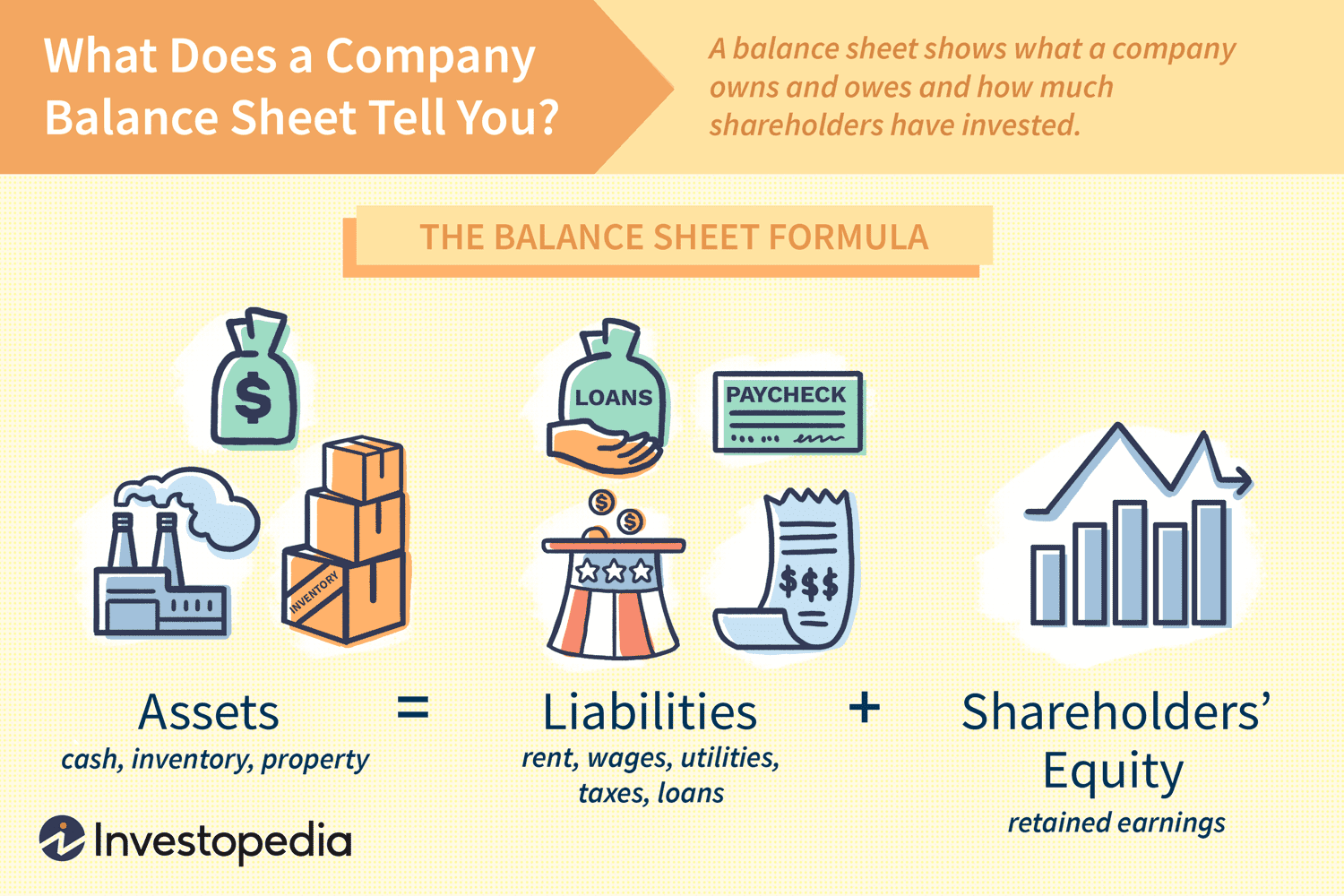
The balance sheet is built around one simple idea:
Assets = Liabilities + Equity
It sounds technical, but it’s actually common sense.
Your assets are the valuable resources your business controls — money in the bank, customer invoices waiting to be paid, equipment, stock, property and so on.
Your liabilities are what the business owes — supplier bills, tax owed, loans, credit cards, and other commitments.
And equity is the residual amount left for the owner(s), once liabilities are subtracted from assets. In other words, equity represents what the business is worth “on paper” at that moment, after all obligations are taken into account.
This is why it’s called a balance sheet. The two sides must always balance. What the business owns has been funded by either borrowing (liabilities) or owner investment and retained profits (equity).
A balance sheet is particularly valuable because it exposes the difference between activity and stability. A business can be extremely busy, take plenty of card payments, and feel like it’s thriving… while the balance sheet quietly shows that it’s living on borrowed time. If you’re a bit baffled, you may want to see the ZandaX accounting jargon buster articles which give you easy-to-follow breakdowns, with PDF downloads to keep for reference.
To see why, we’ve included a coule of scenarios in ths article to illustrate our points.
Scenario 1: Busy doesn’t mean safe
Laura runs a printing business. She has plenty of orders and is constantly working. Revenue looks great. But when she checks her balance sheet, she sees something unsettling: almost no cash, a large pile of unpaid customer invoices, and increasing supplier bills.
In other words, she isn’t short of work — she’s short of financial breathing room.
And a balance sheet reveals that kind of risk instantly!
2. Assets (What You Own)
When most people hear “assets”, they picture physical items: vans, machinery, computers, stock. Those do matter, but for a business owner, the most important assets are often far less glamorous.
Your assets include anything the business owns or is owed that has measurable value. They are usually divided into two groups: current assets and non-current assets.
Current assets: the survival category
Current assets are assets that should turn into cash within the next 12 months. This is the section that tells you whether your business can survive normal ups and downs — and whether you can pay what’s coming due.
Current assets typically include cash in the bank, customer invoices waiting to be paid (known as accounts receivable), inventory you expect to sell soon, and prepayments.
But here’s the tricky part: current assets can give a false sense of safety if you don’t look closely. For example, customer invoices might be listed as an asset — but that doesn’t mean the cash is actually in your account. If customers pay late (or not at all), your balance sheet may look healthy while your bank account looks worrying.
That’s why experienced business owners don’t just ask, “How many invoices are outstanding?” They ask, “How quickly do they usually get paid?”
Non-current assets: long-term strength
Non-current assets are items the business expects to use over a longer period — property, vehicles, equipment, and long-term investments.
These assets can be important for credibility and capability. A construction company with well-maintained equipment can take on larger work. A manufacturer with proper machinery can improve quality and output. But non-current assets don’t always help you survive in the short term — because you can’t easily turn a forklift into cash next week.
That’s why balance sheet thinking requires a mindset shift: a business can be asset-rich but cash-poor, and cash poverty kills businesses far more quickly than a lack of long-term equipment.
3. Liabilities (What You Owe)
Liabilities represent what the business owes to others. Again, there are two main groups: current liabilities and non-current liabilities.
Current liabilities: the pressure points
Current liabilities are debts due within 12 months. This includes supplier bills, VAT, payroll liabilities, credit card balances, and short-term loan payments.
These are the commitments that can cause panic if they’re not planned for — because they demand real cash. One of the biggest reasons businesses fail is not lack of profit, but lack of cash at the wrong time. Current liabilities reveal those dangers.
Let’s bring in another scenario.
Scenario 2: Profitable but fragile
This is where Mark runs a training company and has had a great quarter. He’s made a profit, and work is coming in. But on the balance sheet, current liabilities have jumped: VAT is due next month, suppliers need paying, and a loan repayment is scheduled.
If he doesn’t keep enough cash available, he could hit a cash crunch even while the business is profitable. And the worst part? Many owners only realise it when the bank balance drops into the danger zone.
The balance sheet gives you the warning before the crisis hits.
Non-current liabilities: long-term debt
Non-current liabilities are obligations due beyond 12 months, such as long-term loans or finance agreements. These aren’t necessarily bad. In fact, sensible borrowing can help a business grow. The real question is whether the business can comfortably carry the debt — and that comes down to profitability and cash flow.
A business with too much long-term debt becomes vulnerable when sales slow down or costs rise. And long-term debt often creeps up gradually, disguised as “manageable monthly payments” until it becomes restrictive.
Balance sheets are excellent at revealing that slow creep.
4. Cash Flow & Survival Metrics
At this point, you may be thinking: So the balance sheet tells me what I own and what I owe. But how do I know if I’m safe?
This is where a few key survival metrics come in — and they can be calculated straight from the balance sheet.
Working capital: your breathing room
Working capital = current assets – current liabilities
Working capital tells you whether your short-term resources can cover your short-term obligations. Positive working capital usually means you have breathing room. Negative working capital means you’re likely relying on future cash coming in quickly — which becomes risky if customers pay late, sales dip, or costs rise.
Working capital is one of the fastest ways to detect a problem that profit figures won’t show.
Current ratio: a simple safety indicator
Current ratio = current assets / current liabilities
A ratio above 1 means you theoretically have enough current assets to cover current liabilities. But in reality, the quality of assets matters. For example, a business may have a current ratio of 1.5, but if most of those assets are slow-paying invoices, the owner could still struggle to pay bills on time.
This is why a balance sheet must be read with business understanding, not just maths.
Cash position: the brutally honest number
Many business owners already know this instinctively: cash is king. That’s because cash is the only asset that can pay liabilities without delay.
A balance sheet helps you see whether your business is relying too heavily on “paper assets” like receivables. It also helps you decide whether you need to improve payment terms, chase debtors harder, reduce stock levels, or keep a larger cash buffer.
Final Thought: A Balance Sheet is a Business Mirror
A balance sheet isn’t about impressing accountants. It’s a mirror that shows the truth about your business’s financial strength. It reveals whether growth is sustainable, whether debt is creeping up, whether cash risk is building quietly, and whether the business has genuine value beyond short-term income.
Once you learn to read it properly, you stop running the business based on assumptions and feelings — and start running it based on real financial awareness.
And that is exactly how businesses survive, scale, and succeed over the long term.
