

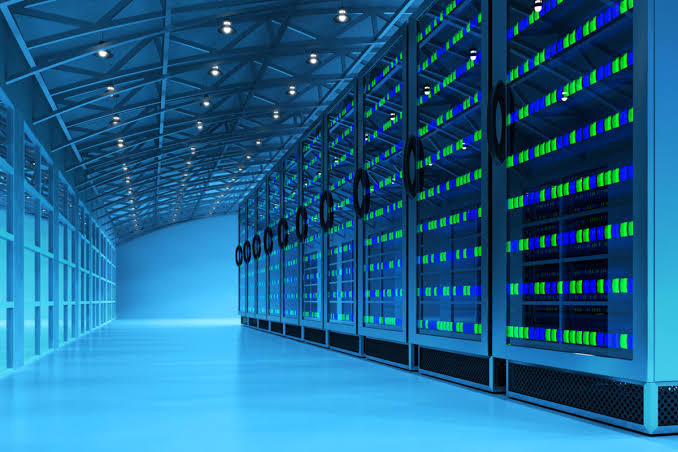
South Asia’s tech infrastructure story has largely been told through the lens of India’s data center boom and Southeast Asia’s cloud expansion. Bangladesh rarely makes that conversation — yet beneath the radar, the country is going through its own quiet but significant enterprise hardware upgrade cycle, one that’s worth understanding for anyone tracking how emerging markets build out digital backbone infrastructure.
Over the past few years, Bangladesh’s combination of rising internet penetration, a fast-growing fintech and e-commerce sector, and increasing corporate digitization has created sustained demand for two categories of enterprise hardware in particular: servers and network switches. Understanding why this demand is rising — and how local IT buyers are approaching it — offers a useful snapshot of where the country’s tech infrastructure is heading next.
A Digital Economy Outgrowing Its Old Infrastructure
Bangladesh’s internet economy has expanded rapidly. Mobile banking, e-commerce platforms, and digitally-delivered government services have pushed millions of new users online over a relatively short period. That growth has put pressure on the infrastructure sitting behind it — ISPs, data centers, and corporate IT departments that, in many cases, were built for a smaller, slower-moving user base.
The result is a wave of infrastructure modernization projects across the country. ISPs are expanding network capacity to serve more subscribers with lower latency. Corporate offices are upgrading internal IT systems to support hybrid work and digital-first operations. Data centers are scaling their racks to accommodate growing client workloads. Each of these projects, regardless of industry, eventually comes down to the same purchasing decisions: which servers to buy, and which networking hardware to build the connectivity layer on top of.
Servers: The Centerpiece of Every Infrastructure Refresh
Of all the hardware categories driving this modernization wave, servers sit at the center. They host the databases, applications, and virtualized environments that every other piece of digital infrastructure depends on. As more Bangladeshi businesses move workloads in-house — either for cost control, data residency preferences, or simply outgrowing shared hosting — server procurement has become a recurring line item in IT budgets rather than a one-time purchase.
This has changed how local buyers approach the market. A few years ago, server purchasing in Bangladesh was largely relationship-driven: a business would call a known vendor, describe a rough need, and accept whatever quote came back. That’s shifted toward a far more research-driven process. IT managers now routinely compare specifications, generation, warranty terms, and most importantly, transparent BDT pricing before making a decision.
This shift toward pricing transparency is one of the more telling signs of market maturity. Businesses evaluating current server price in bd listings are no longer satisfied with vague “contact for quote” pages — they want to see configurations, RAM and storage options, and condition (new versus certified refurbished) laid out clearly before they ever reach out to a vendor. That expectation mirrors what enterprise buyers in far more mature IT markets have come to take for granted, and its arrival in Bangladesh signals a market that’s catching up fast.
Refurbished and certified pre-owned servers — particularly from established brands like Dell, HP, and Cisco UCS — have become especially significant in this shift. They let growing businesses access genuinely enterprise-grade compute capacity without the capital outlay that new hardware demands, which matters in a market where IT budgets are often a fraction of what similarly-sized businesses in wealthier economies might allocate.
Network Switches: The Layer That Determines Everything Else’s Performance
If servers are the centerpiece, network switches are the connective tissue that determines whether all that server capacity actually performs the way it should. A business can deploy the most powerful server on the market and still suffer from poor application performance if the switching layer underneath it is outdated, oversubscribed, or lacking the features modern workloads require — VLAN segmentation, Quality of Service prioritization, and sufficient PoE budget for an expanding footprint of IP cameras, access points, and VoIP phones.
Cisco remains the dominant brand in this category among Bangladeshi enterprise buyers, and for fairly straightforward reasons: long firmware support lifecycles, broad compatibility with existing Cisco-based network environments, and a reputation for reliability that reduces the operational risk of a network refresh going wrong. For ISPs in particular — where a single switch failure can mean service disruption for hundreds or thousands of subscribers — that reliability premium is worth paying for.
What’s changed recently is the level of technical scrutiny buyers apply before purchasing. IT teams comparing current cisco switch price in bd options are increasingly looking past the headline price to evaluate port density, switching capacity, PoE wattage budgets, and stacking support — details that directly affect whether a switch purchase solves a network’s actual bottleneck or simply becomes another underused box in the rack. This more technical approach to procurement reflects a broader trend: Bangladeshi IT teams are no longer just buying hardware, they’re engineering networks.
The Forces Converging to Drive This Market
A handful of structural trends explain why server and switch demand keeps climbing across the country, even as global supply chains and currency pressures make procurement more complicated than it used to be.
ISP network densification. As broadband expands beyond Dhaka and Chittagong into secondary cities and rural areas, ISPs need a proportional increase in access switches, aggregation hardware, and edge servers to manage distributed traffic without sacrificing performance.
Data center capacity expansion. Regional data centers serving the growing fintech and e-commerce sectors are scaling server racks and networking backbones to handle increasing client workloads, often well ahead of demonstrated need, anticipating continued growth.
SME digital transformation. Small and mid-sized businesses that once relied entirely on third-party hosting are bringing select workloads in-house, driven by data control preferences and, increasingly, by the realization that owning hardware can be cheaper than years of recurring hosting fees.
Currency and import cost pressures. With most enterprise hardware imported and priced against foreign currencies, local businesses have become more price-sensitive and more willing to consider certified refurbished hardware as a way to control costs without compromising on enterprise-grade reliability.
Rising technical sophistication among buyers. IT decision-makers across the country are applying more rigorous, specification-driven evaluation to hardware purchases than they were even three or four years ago, pushing vendors to compete on technical transparency rather than relationship alone.
What This Means for the Broader Region
Bangladesh’s enterprise hardware market may still be modest in absolute size compared to regional giants, but the trajectory is significant. A country moving from relationship-driven procurement to specification-driven, price-transparent buying in the space of a few years suggests an IT market that’s rapidly closing the sophistication gap with more established economies — without yet attracting the same level of international attention.
For global hardware distributors, refurbished equipment suppliers, and investors tracking emerging infrastructure markets, that combination of rising sophistication and still-modest market saturation makes Bangladesh worth watching closely. The businesses and vendors that establish trust and transparency in this market early — particularly around clear, accessible pricing for core categories like servers and network switches — are positioned to benefit disproportionately as the country’s digital economy continues its rapid expansion over the next several years.
As ISPs, data centers, and corporate IT departments continue their infrastructure refresh cycles, the demand for both new and certified refurbished servers and switches shows no sign of slowing. If anything, the pace of Bangladesh’s digital transformation suggests this is still the early stage of a much longer infrastructure buildout.
