

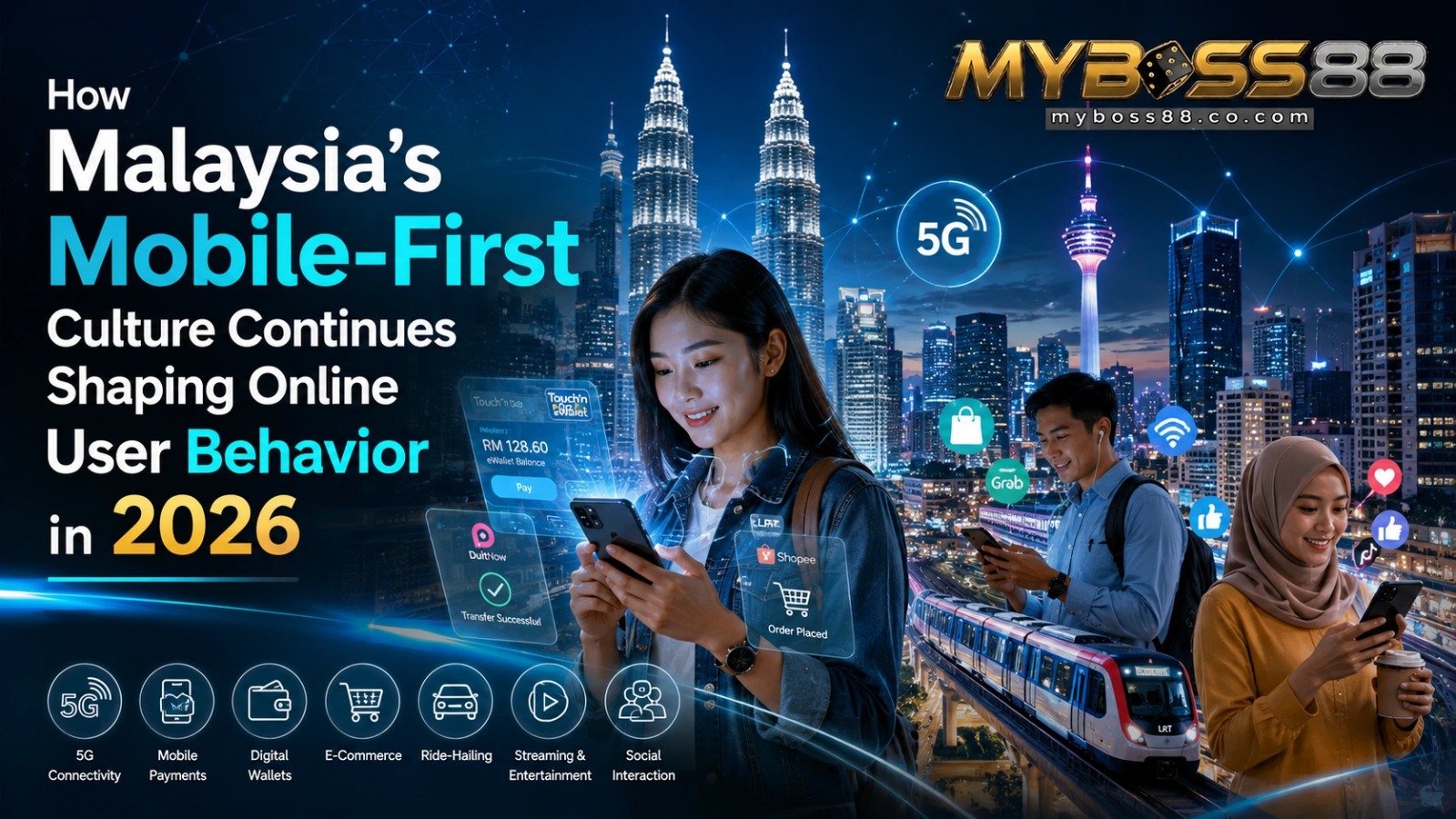
Malaysia’s digital economy has reached a stage where mobile access is no longer simply the preferred way of going online—it has become the default experience for millions of users.
Across the country, smartphones now serve as the primary gateway for communication, banking, transportation, shopping, entertainment, and information discovery. Services such as Grab, Touch ‘n Go eWallet, DuitNow, Shopee Malaysia, TikTok Shop, and Maybank MAE have become deeply integrated into daily routines, influencing not only how people access digital services but also what they expect from them.
As mobile technology becomes increasingly embedded in everyday life, user expectations continue evolving. Accessibility, speed, responsiveness, and simplicity are no longer viewed as competitive advantages. For many users, they have become baseline requirements.
Malaysia’s Digital Ecosystem Is Built Around Mobile Usage
The rapid adoption of mobile-first services has fundamentally changed how Malaysians interact with technology.
A growing percentage of daily activities now occur entirely through smartphones. Consumers can transfer funds through DuitNow, pay for purchases through Touch ‘n Go eWallet, book transportation through Grab, manage finances through banking applications, and complete online purchases through Shopee Malaysia without ever opening a laptop.
This shift has altered the way users evaluate digital platforms.
Instead of focusing exclusively on products or services, people increasingly pay attention to how efficiently a platform allows them to accomplish a task. Navigation complexity, excessive page transitions, and unnecessary friction become much more noticeable when users are accustomed to highly optimized mobile applications.
As a result, digital experiences are increasingly judged by usability rather than functionality alone.
5G Expansion Is Accelerating Behavioral Change
Malaysia’s telecommunications infrastructure continues playing an important role in supporting this evolution.
The nationwide rollout of 5G infrastructure through Digital Nasional Berhad (DNB), together with continued investment from Maxis, CelcomDigi, U Mobile, and Unifi Mobile, has significantly strengthened mobile connectivity across much of the country.
By 2026, 5G coverage has exceeded 80% of populated areas nationwide, while median mobile download speeds have surpassed 140 Mbps in many regions. These improvements have reduced many of the barriers that previously limited mobile engagement and encouraged users to rely on smartphones for an even broader range of online activities.
The impact extends beyond technical performance. Faster and more reliable connectivity has changed browsing behavior itself. Users increasingly access information, services, and content at the exact moment they need it rather than planning dedicated online sessions later in the day.
Real-World Mobile Usage Patterns Continue Reinforcing Mobile-First Design
The influence of mobile-first behavior can be observed throughout Malaysia’s busiest urban environments.
In locations such as KL Sentral, Bukit Bintang, Mid Valley Megamall, and along the Kelana Jaya LRT line, smartphone usage rarely revolves around a single application. Users frequently move between multiple digital services within the same browsing session. A commuter may check Grab for transport updates, approve a DuitNow transaction through a banking application, browse products on Shopee Malaysia, and continue consuming content through TikTok before arriving at their destination.
This pattern reveals an important reality for businesses operating online.
Modern users are no longer comparing a website only against its direct competitors. They are comparing every digital experience against the usability standards established by the applications they use most often.
As these expectations continue rising, accessibility and responsiveness are becoming critical factors influencing long-term engagement.
User Experience Standards Are Being Defined By Leading Digital Platforms
Many of Malaysia’s most widely used digital platforms have helped establish new expectations surrounding usability.
Applications such as Grab, Touch ‘n Go eWallet, Maybank MAE, TikTok, and Shopee Malaysia are designed around minimizing friction throughout the user journey. Features are easy to locate, interfaces remain consistent across devices, and users can typically complete actions with minimal effort.
Because these services are used repeatedly throughout the day, they effectively become reference points for evaluating other digital experiences.
When users encounter confusing layouts, unnecessary complexity, or poorly optimized mobile interfaces elsewhere, the difference becomes immediately apparent.
This influence now extends far beyond e-commerce and financial technology. Organizations across numerous industries are investing heavily in accessibility, navigation efficiency, and mobile responsiveness because user expectations continue rising.
Why Accessibility Has Become A Competitive Differentiator
As mobile-first behavior becomes increasingly dominant, accessibility is emerging as one of the most important factors shaping digital engagement.
Users expect information, services, and content to remain accessible regardless of screen size, device type, or network conditions. Platforms that reduce friction and simplify navigation often create stronger engagement because they align more closely with how people naturally browse today.
This trend is visible across media platforms, digital services, educational resources, and online entertainment environments.
Within the online entertainment sector, platforms such as MyBoss88 reflect the broader industry movement toward mobile accessibility, streamlined navigation, and user-focused browsing experiences designed for smartphone-first audiences.
Rather than treating mobile optimization as an additional feature, many modern platforms now view it as a fundamental component of overall user experience.
What Businesses Can Learn From Malaysia’s Mobile Culture
Malaysia provides a useful case study in how quickly digital behavior can evolve when mobile technology becomes deeply integrated into everyday life.
The success of services such as Grab, DuitNow, Touch ‘n Go eWallet, Shopee Malaysia, and Maybank MAE demonstrates that users consistently gravitate toward platforms that remove unnecessary complexity and prioritize efficiency.
For businesses operating online, the lesson is increasingly clear. Digital experiences should be designed around contemporary user behavior rather than assumptions formed during the desktop era.
Organizations seeking to understand how mobile-focused digital experiences continue evolving within modern online environments can also explore examples such as myboss88.co.com, where accessibility and navigation efficiency remain important aspects of the overall browsing experience.
Final Thoughts
Malaysia’s mobile-first culture continues reshaping online behavior throughout 2026.
The combination of expanding 5G infrastructure, widespread smartphone adoption, real-time payment systems, and highly optimized consumer applications has created a digital environment where convenience, accessibility, and usability are expected rather than appreciated as additional features.
As services become increasingly interconnected and users continue moving seamlessly between banking, transportation, shopping, communication, and entertainment platforms, the influence of mobile-first behavior is likely to become even more significant.
Organizations that understand these shifts and adapt accordingly will be better positioned to meet the expectations of modern users. In today’s digital environment, delivering a seamless mobile experience is no longer a competitive advantage—it is the standard against which every platform is evaluated.
