

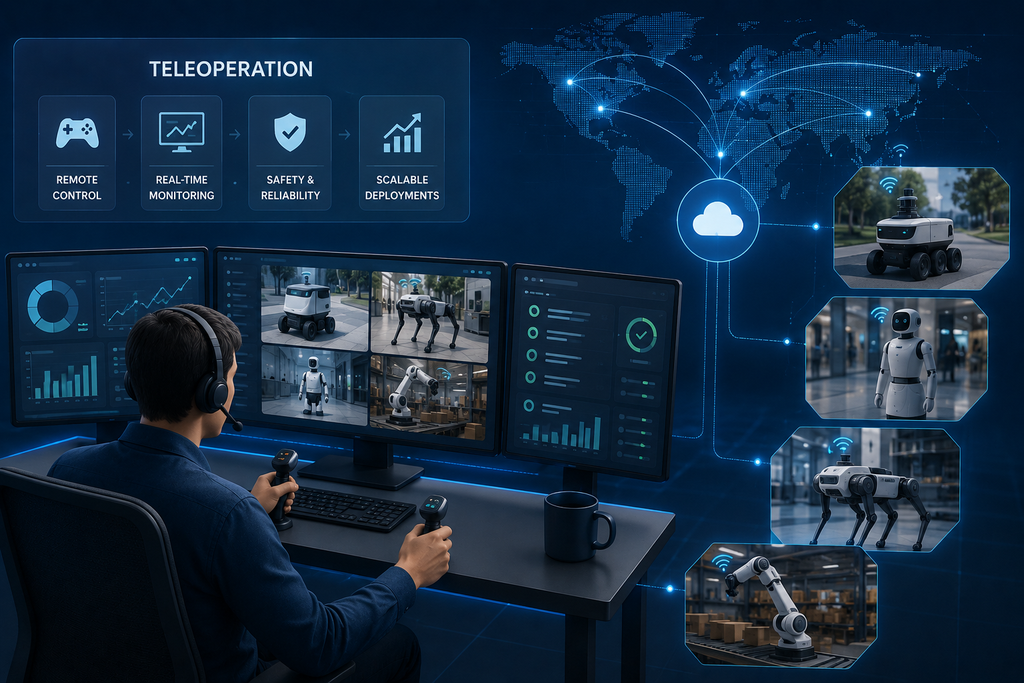
Robotics technology is transforming industries such as logistics, manufacturing, retail, security, healthcare, and autonomous delivery. As organizations expand their robotic operations, managing multiple robots across different locations becomes increasingly complex. While autonomous systems can perform many tasks independently, human oversight remains essential for handling unexpected situations and maintaining operational efficiency. Robot teleoperation provides the support businesses need to scale robotics deployments safely and effectively.
By combining autonomous technology with remote human expertise, organizations can deploy larger robot fleets while improving reliability, safety, and overall performance.
Why Robotics Deployments Need Human Support
Autonomous robots operate in dynamic environments where conditions can change rapidly. Obstacles, navigation challenges, equipment issues, and customer interactions often require human intervention.
Robot teleoperation allows trained operators to:
- Assist robots remotely
- Resolve navigation challenges
- Respond to unexpected situations
- Monitor system performance
- Reduce operational downtime
Human-in-the-loop support helps ensure robotic systems continue operating efficiently.
Scaling Robot Fleets with Confidence
As businesses increase the number of robots in operation, maintaining consistent oversight becomes more challenging. Remote teleoperation enables organizations to supervise multiple robots from centralized control centers without placing personnel on-site.
This approach helps businesses:
- Expand robot deployments efficiently
- Support multiple locations simultaneously
- Improve operational visibility
- Reduce staffing requirements
- Increase deployment flexibility
Centralized monitoring simplifies large-scale robotics management.
Improving Operational Efficiency
Unexpected interruptions can affect productivity and customer satisfaction. Remote operators can quickly intervene whenever autonomous robots encounter situations they cannot resolve independently.
Teleoperation improves efficiency by:
- Minimizing downtime
- Accelerating issue resolution
- Supporting continuous robot operation
- Optimizing fleet performance
Faster intervention helps organizations maintain consistent service levels.
Enhancing Safety and Reliability
Safety remains one of the highest priorities when deploying commercial robots. Human oversight provides an additional layer of protection by allowing operators to assess unusual situations and make informed decisions when necessary.
Benefits include:
- Safer robot navigation
- Improved operational reliability
- Better incident management
- Increased public confidence
Combining automation with human expertise creates more dependable robotic operations.
Supporting Diverse Industries
Robot teleoperation supports a wide range of commercial applications where remote assistance improves operational performance.
Industries benefiting from teleoperation include:
- Warehousing and logistics
- Retail automation
- Security patrol robotics
- Healthcare facilities
- Manufacturing operations
- Autonomous delivery services
Each industry benefits from improved oversight and faster response to operational challenges.
Reducing Operational Costs
Deploying on-site personnel at every robot location can become expensive as operations grow. Remote teleoperation allows organizations to manage multiple robots using centralized support teams, improving efficiency while reducing labor costs.
Organizations can benefit from:
- Lower operational expenses
- Better resource utilization
- More efficient workforce management
- Scalable support infrastructure
Remote support enables businesses to expand without proportionally increasing staffing costs.
The Value of Professional Robot Teleoperation Services
Many organizations rely on professional Robot Teleoperation services to support growing robotics deployments. Experienced remote operators monitor robot fleets, provide real-time assistance, respond to operational exceptions, and help maintain continuous performance across multiple locations.
Professional teleoperation services commonly include:
- Remote robot monitoring
- Navigation assistance
- Fleet management support
- Incident response
- Performance monitoring
These services help businesses maximize the effectiveness of their robotics investments while ensuring reliable day-to-day operations.
Building the Future of Robotics
As robotics adoption continues to accelerate, scalable support systems will become increasingly important. Organizations that combine autonomous technology with professional teleoperation can expand deployments more confidently while maintaining high standards of safety, efficiency, and customer service.
Human expertise remains a valuable complement to intelligent automation, enabling businesses to achieve greater operational success.
Conclusion
Robot teleoperation plays a critical role in scaling modern robotics deployments. By leveraging professional Robot Teleoperation services, businesses can improve fleet management, reduce downtime, enhance safety, and support efficient expansion across multiple locations. Combining remote human oversight with autonomous robotics creates a scalable and reliable solution that helps organizations maximize the value of their robotics operations.
