

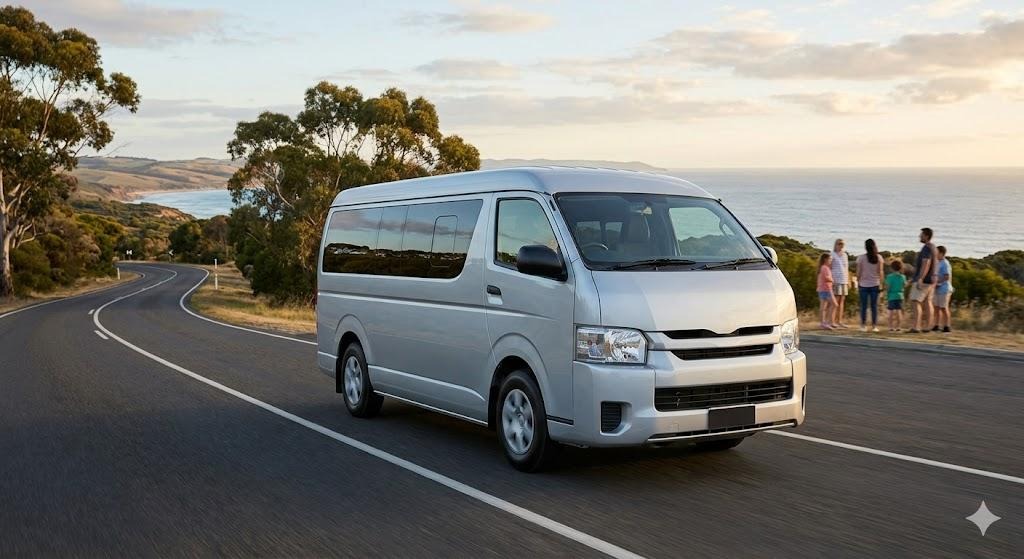
Australia has always had a strong relationship with the Toyota HiAce, but most local buyers only know the work-focused versions that were officially sold here. What many people do not realise is that Japan offered far more variety within the HiAce range, including passenger-focused wagons with more comfort, more seating flexibility, and drivetrain combinations that were never part of the normal Australian showroom lineup. That is exactly where the Toyota HiAce TRH219W becomes interesting.
For Australian buyers who want genuine people-moving space, Toyota reliability, and the added confidence of full-time 4WD, the TRH219W sits in a very specific sweet spot. It is not just another commercial van with extra seats thrown in. It is a HiAce Wagon built with passenger use in mind, usually pairing the 2.7-litre 2TR-FE petrol engine with a wide-body, long-wheelbase configuration and full-time 4WD. In practical terms, that gives buyers a large, durable Toyota people mover that feels more versatile than a typical commercial van and more robust than many family-oriented MPVs.
A HiAce With a Different Job to Do
The HiAce name in Australia usually brings one image to mind: a hard-working van used by tradies, couriers, or shuttle operators. The TRH219W belongs to a different branch of the HiAce family tree. In Japan, the H200-generation HiAce range included commercial vans as well as wagon variants, and the wagon versions were designed from the outset to move people rather than cargo. That distinction is important because it changes how the vehicle feels, how it is trimmed, and what kind of buyer it suits.
The TRH219W is commonly associated with the wide-body 4WD HiAce Wagon configuration. Instead of the stripped-back, work-first feel of a cargo van, this version was built to deliver passenger space, more glazing, proper interior trim, and seating arrangements that make sense for families, private owners, and transport use. It still carries the toughness and upright practicality the HiAce is known for, but it does so in a form that feels much more passenger-oriented.
That is a major part of its appeal as an import. For buyers who need real cabin volume but do not want to jump all the way into a super-long minibus footprint, the TRH219W offers a middle ground. It is large inside, easy to access, and practical for daily use, yet it avoids some of the bulk and bus-like character that can put people off larger commercial-based people movers.
What Makes the TRH219W Special
The TRH219W stands out because of its drivetrain and body combination. In most cases, you are looking at a HiAce Wagon powered by Toyota’s naturally aspirated 2.7-litre 2TR-FE petrol engine, paired with full-time 4WD. That may sound simple on paper, but simplicity is exactly why many Australian buyers find it attractive.
For Australian ownership, the petrol setup has a very clear benefit. Many imported diesel vehicles can make sense in the right use case, but diesel ownership can become less appealing when the vehicle spends its life doing short trips, school runs, stop-start urban driving, and long periods of idling. The TRH219W’s petrol drivetrain avoids much of that complexity. It gives buyers a straightforward Toyota mechanical package that suits mixed family, shuttle, and private-owner use without leaning on the modern diesel hardware that can be sensitive to usage pattern.
The full-time 4WD system adds another layer of appeal. This is not a hardcore off-road machine and should not be treated like one. The real advantage is extra security in wet conditions, improved confidence on gravel or uneven surfaces, and better traction for touring, regional travel, and mixed-condition driving. That makes it especially attractive in Australia, where buyers often want one vehicle to handle urban work during the week and longer family or business trips on the weekend.
Why It Works So Well in Australia
The Australian market has no shortage of SUVs, but there are still plenty of buyers who need something those SUVs cannot quite deliver. A large family may want easier third-row access, more vertical cabin space, and a more practical seating layout. A transport operator may need something that feels friendlier and more durable than a luxury people mover, but more comfortable than a bare commercial van. A regional owner may value traction, reliability, and cabin room more than image.
The other reason it works well here is that it fills a gap left by mainstream offerings. Toyota Australia never gave buyers this exact combination from the showroom floor. That means sourcing from Japan is not just about chasing something unusual for the sake of being different. It is about accessing a practical Toyota configuration that genuinely suits Australian use but was simply never sold locally in this form.
DX vs GL: Why Grade Matters
One of the most important things buyers need to understand is that TRH219W is a model code, not a full description of the vehicle. Two examples with the same code can feel very different depending on grade, seating layout, trim, equipment, and build era. That is why buying one properly means looking beyond the code and into the actual vehicle specification.
The biggest divide is usually between DX and GL.
The HiAce Wagon DX is the more basic, work-first grade. It is built for durability and function. You will often see unpainted black bumpers, simpler materials, vinyl or easy-clean surfaces, steel wheels, halogen lights, manual sliding doors, and a more stripped-back interior feel. For some buyers, that is exactly the point. If the vehicle is going into fleet use, staff transport, or a practical camper-style conversion, the DX can make a lot of sense because you are paying more for the mechanical package and less for trim.
The GL, by contrast, is the version most private buyers tend to prefer. It looks more finished, feels more refined, and usually offers better day-to-day comfort. Body-coloured bumpers, upgraded cabin trim, carpet flooring, softer seating materials, more insulation, and a generally calmer highway feel all help the GL justify its premium. Features like power sliding doors, improved climate control, and a more passenger-friendly interior layout often make it the stronger choice for family buyers, hotel operators, and anyone who wants their HiAce to feel less like a tool and more like a proper wagon.
That difference in grade has a direct effect on value. A good GL can feel like an entirely different ownership proposition from a basic DX, even though both share the same underlying platform. For import buyers, that means the smartest choice is not automatically the cheapest listing. It is the one that best matches the intended use.
The Late-2017 Update Buyers Should Notice
For safety-minded buyers, build year matters. One of the most useful dividing lines in the TRH219W market is late 2017, because that is when Toyota Safety Sense P became far more common across the Japanese-market HiAce range, including the Wagon. That can mean access to features such as pre-collision warning and braking, lane departure alert, and automatic high beam, depending on the exact car.
This is important because many buyers approach older Japanese vans and wagons assuming active safety tech will be minimal. In later TRH219W examples, that is not always true. A later-build vehicle can feel meaningfully more modern from a safety point of view, which may justify paying more for the right example. Again, this comes back to buying the actual vehicle, not just buying the code.
The Smart Way to Import One
The smart approach starts with confirming exactly what the vehicle is. That means checking the model code, build month, drivetrain, grade, seating layout, and equipment. It means reviewing the auction sheet properly, understanding condition notes, and looking beyond polished photos. It also means recognising that value is shaped by more than mileage alone. Interior wear, cooling-system health, rust history, service records, transmission era, and overall use history all matter.
Why Carbarn Australia Makes the Process Easier
For Australian buyers, the real challenge is not understanding why the TRH219W is appealing. The challenge is sourcing the right one.
That is where Carbarn Australia adds value. The goal is not just to locate any HiAce in Japan, but to help buyers source the right HiAce based on the exact configuration, condition, and purpose they need. That means checking the build details, reviewing the grade, confirming what equipment is actually fitted, and helping avoid the common mistake of assuming every TRH219W is basically the same.
A good import process should reduce uncertainty, not add to it. When handled properly, a TRH219W becomes more than just a grey import. It becomes a carefully chosen Toyota wagon with real practicality, clear ownership appeal, and a specification that genuinely fills a gap in the Australian market. That is why the Toyota HiAce TRH219W continues to make sense: it offers space, simplicity, traction, and Toyota durability in a form Australia never officially got, but many buyers still clearly want.
