

In machining, internal dimensions are often where precision matters most. While external features can be easier to measure and control, internal bores require specialized tooling and careful setup to achieve consistent, accurate results. This is where boring bars play a critical role in everyday machining operations.
A boring bar is not just another cutting tool—it’s a precision instrument used to refine internal diameters, improve surface finish, and hold tight tolerances. When paired with proper measurement tools like a dial bore gauge, it becomes a key part of maintaining accuracy throughout the machining process.
Understanding how boring bars function and how they influence your results is essential for building a reliable and efficient setup.
What Is A Boring Bar?
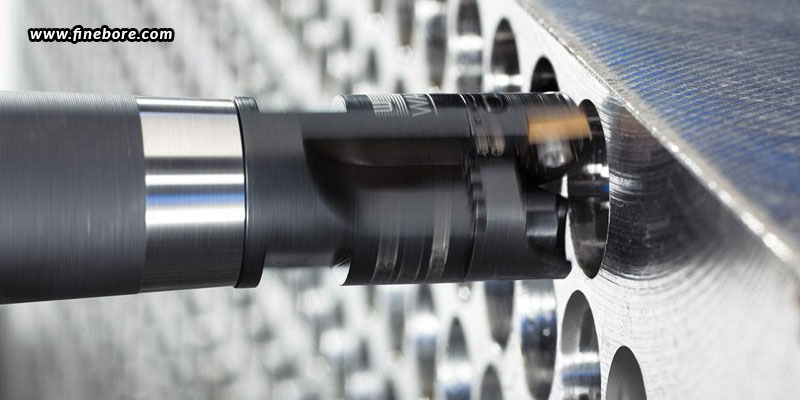
A boring bar is a cutting tool designed to enlarge and finish existing holes with a high degree of accuracy. Unlike drilling, which creates an initial hole, boring is used to refine that hole to precise dimensions and improve its overall quality.
At its core, a boring bar consists of a rigid shaft with a cutting insert mounted at the end. This design allows it to reach inside a workpiece and remove material from the internal surface.
Boring bars are commonly used for:
- Achieving tight internal tolerances
- Improving surface finish inside bores
- Correcting alignment or concentricity issues
- Fine-tuning hole size after drilling
Because they operate inside the part, rigidity is extremely important. Any deflection or vibration can lead to chatter, poor finishes, or dimensional inaccuracies. This is why selecting the right size, length, and material for your boring bar is critical.
Another important factor is how the workpiece is held during the operation. Using stable workholding solutions like a self centering vise ensures the part is properly aligned before machining begins. This alignment directly affects how accurately the boring bar can perform.
How Boring Bars Affect Machining
The performance of a boring bar has a direct impact on both the quality of your parts and the efficiency of your process. When used correctly, it allows you to achieve precise internal dimensions that would be difficult to maintain with other tools.
One of the biggest advantages of a boring bar is its ability to produce consistent results across multiple parts. Once your setup is dialed in, you can maintain tight tolerances with minimal variation, which is essential for production work.
However, the effectiveness of a boring bar depends heavily on setup and application. Factors such as tool overhang, cutting speed, and feed rate all influence performance. Excessive overhang, for example, can reduce rigidity and increase the likelihood of chatter.
Proper setup helps:
- Improve surface finish inside bores
- Maintain dimensional accuracy
- Reduce tool wear and vibration
- Increase overall process stability
Measurement also plays a key role here. Regularly checking your internal dimensions with a dial bore gauge ensures that your boring operation is producing the desired results. This allows you to make small adjustments before deviations become larger issues.
Another important consideration is how boring bars affect workflow. Because they are often used in finishing operations, their performance can determine whether a part meets final specifications. Any issues at this stage can lead to rework or scrap, making precision even more critical.
Experienced machinists understand that boring is not just about removing material—it’s about controlling the final outcome. Small adjustments in setup or tooling can lead to noticeable improvements in both accuracy and efficiency.
Over time, refining how you use boring bars can lead to more predictable results, better surface finishes, and improved confidence in your machining process. This is especially important when working with tight tolerances or complex internal features.
Conclusion
Boring bars play a vital role in everyday machining by allowing machinists to achieve precise internal dimensions and high-quality finishes. When combined with proper setup, stable workholding, and accurate measurement, they become one of the most effective tools for maintaining tight tolerances.
Understanding how boring bars function—and how they influence your results—helps you make better decisions in your machining process. From selecting the right tool to optimizing your setup, each step contributes to more consistent and reliable outcomes.
In machining, precision is built through control. And when it comes to internal features, a well-used boring bar is one of the most important tools for achieving that control.
