

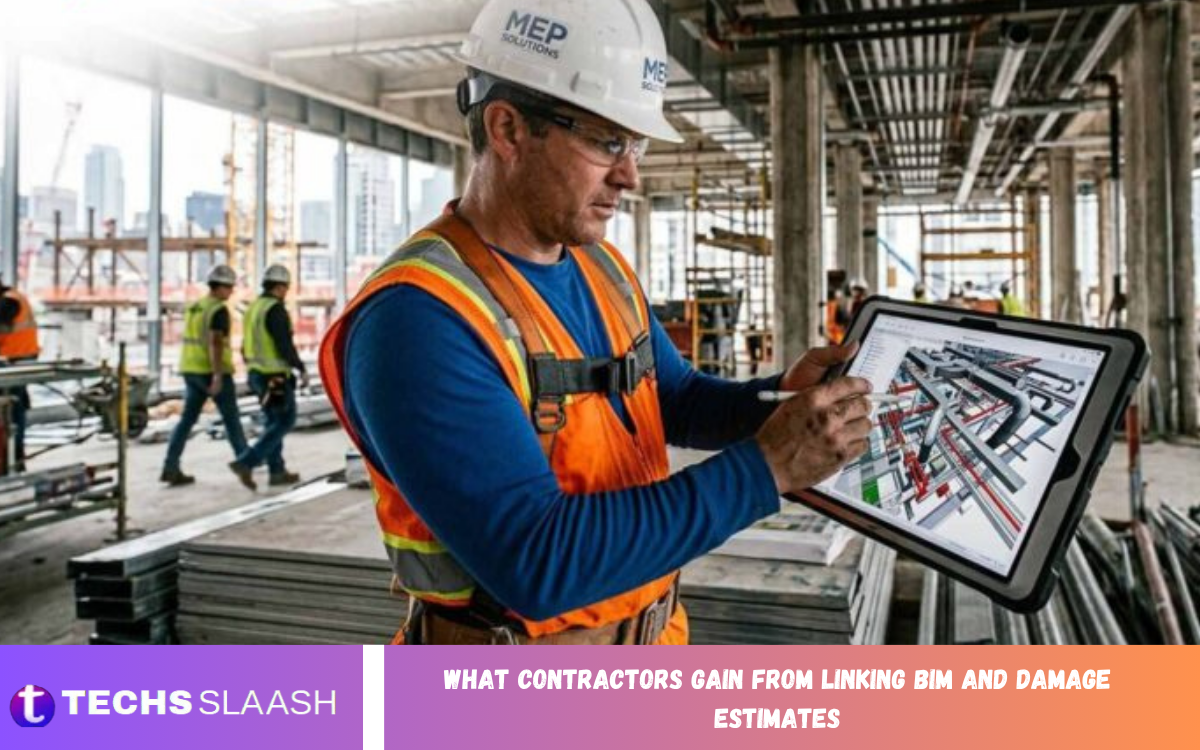
Contractors are under constant pressure to complete projects on time, stay within budget, and minimize costly errors. One of the most effective ways to achieve these goals is by integrating Building Information Modeling (BIM) with damage estimation processes.
By combining BIM models with damage estimates, contractors can quickly identify affected building components, calculate repair quantities, and generate more precise cost estimates. This integration reduces manual calculations, minimizes human error, and accelerates project timelines.
What is Damage Estimation?
Damage estimation involves evaluating a building’s condition after it has experienced deterioration, accidents, weather events, fire, flooding, earthquakes, or other incidents. The objective is to determine:
- Repair costs
- Material replacement quantities
- Labor requirements
- Structural impact
- Safety concerns
- Insurance claim values
- Restoration schedules
Traditional damage estimation often depends on manual inspections, handwritten notes, spreadsheets, photographs, and separate reports. These methods consume significant time and increase the likelihood of mistakes.
What Contractors Gain from Linking BIM and Damage Estimates?
Faster Damage Assessment
One of the biggest advantages is speed.
Instead of manually measuring damaged areas, contractors can use BIM models to immediately identify affected components.
This allows teams to:
- Inspect buildings faster
- Measure affected areas automatically
- Generate repair quantities
- Reduce site visits
- Produce reports quickly
Time savings become especially valuable after natural disasters, where rapid assessments are essential.
More Accurate Cost Estimates
Accurate estimates are critical for profitable construction projects.
When BIM provides exact quantities and links damage information directly to building components, contractors can generate highly reliable repair estimates.
Benefits include:
- Better material calculations
- Accurate labor estimates
- Reduced estimation errors
- Improved budgeting
- Fewer unexpected costs
Accurate estimates also strengthen contractor credibility with clients and insurers.
Better Quantity Takeoffs
Manual quantity takeoffs often require hours of calculations.
BIM automatically stores dimensions for every structural element, making quantity calculations much easier.
After damage occurs, contractors can instantly determine:
- Concrete volumes
- Brick quantities
- Steel requirements
- Flooring replacements
- Ceiling repairs
- Roofing materials
- Paint coverage
This automation significantly improves estimating efficiency.
Improved Project Planning
Linking BIM with damage estimation gives contractors a complete understanding of repair priorities.
Project managers can determine:
- Which areas need immediate attention
- Which repairs depend on others
- Material procurement schedules
- Labor allocation
- Equipment requirements
Improved planning reduces downtime and project delays.
Enhanced Collaboration
Construction projects involve many stakeholders.
These include:
- Owners
- Engineers
- Architects
- Insurance adjusters
- Contractors
- Restoration specialists
- Government agencies
Using one BIM model ensures everyone works from the same information.
This minimizes confusion while improving communication throughout the repair process.
Read Also: Cognitive Construction Planning
Reduced Human Errors
Manual estimating frequently introduces errors such as:
- Incorrect measurements
- Missing materials
- Duplicate calculations
- Inaccurate pricing
- Miscommunication
Because BIM contains precise digital information, contractors significantly reduce these mistakes.
Fewer errors translate into better project outcomes.
Improved Insurance Documentation
Insurance claims require substantial documentation.
Contractors must often provide:
- Damage photographs
- Quantity reports
- Cost breakdowns
- Repair schedules
- Material lists
A BIM-based damage estimate automatically organizes much of this information.
Insurance companies can review claims more efficiently because documentation becomes more detailed and transparent.
Better Risk Management
Every construction project carries financial risks.
Linking BIM and damage estimation allows contractors to identify vulnerable areas before problems escalate.
Risk management improves by:
- Detecting structural weaknesses
- Monitoring deterioration
- Predicting maintenance needs
- Reducing unexpected repairs
- Supporting preventive maintenance
This proactive approach protects project budgets.
Increased Productivity
Automation eliminates repetitive tasks.
Instead of spending days measuring damaged components, estimators can focus on analyzing repair strategies.
Higher productivity results in:
- Faster estimates
- Shorter project timelines
- Improved employee efficiency
- Greater project capacity
Contractors can manage more projects without increasing staffing levels.
Better Decision-Making
Modern contractors rely heavily on data.
BIM integrates geometry, material information, historical maintenance records, and damage assessments into one system.
This enables informed decisions regarding:
- Repair versus replacement
- Material selection
- Budget allocation
- Resource planning
- Construction sequencing
Better information leads to better decisions.
Advantages During Disaster Recovery
Natural disasters create enormous pressure on contractors.
Floods, earthquakes, fires, hurricanes, and storms require rapid assessments before rebuilding can begin.
Linked BIM and damage estimates help contractors:
- Prioritize damaged buildings
- Calculate repair costs quickly
- Coordinate restoration teams
- Order materials faster
- Support government recovery programs
- Prepare insurance documentation
Communities recover more quickly when contractors have reliable digital information.
Supporting Sustainable Construction
Sustainability has become a priority in modern construction.
Accurate damage estimation reduces unnecessary demolition and waste.
Contractors can identify:
- Components suitable for repair
- Materials that can be reused
- Areas requiring replacement
- Opportunities to reduce waste
This lowers environmental impact while reducing project costs.
Improving Client Satisfaction
Clients expect transparency throughout construction and restoration projects.
BIM-based damage estimates allow contractors to present:
- Visual damage models
- Interactive repair plans
- Accurate budgets
- Realistic timelines
- Progress updates
This improves trust and strengthens long-term client relationships.
Supporting Facility Management
The value of BIM extends beyond construction.
After repairs are completed, facility managers can continue using BIM models for maintenance planning.
Benefits include:
- Tracking repaired components
- Monitoring equipment performance
- Scheduling maintenance
- Recording inspections
- Planning future renovations
This creates a complete digital history of the building.
Future Technologies Expanding BIM Integration
Emerging technologies continue to increase BIM capabilities.
Contractors are beginning to combine BIM with:
- Artificial Intelligence
- Machine Learning
- Drones
- Laser scanning
- Digital twins
- Internet of Things (IoT)
- Cloud collaboration
- Augmented Reality
- Virtual Reality
These technologies make damage estimation even faster and more accurate.
Challenges Contractors Should Consider
Although the benefits are significant, successful BIM integration requires planning.
Potential challenges include:
- Initial software investment
- Employee training
- Data management
- System compatibility
- Standardized workflows
However, the long-term financial savings usually outweigh the initial costs.
Best Practices for Successful Integration
Contractors can maximize results by following several best practices:
- Keep BIM models updated throughout construction.
- Conduct regular digital inspections.
- Train estimating teams on BIM software.
- Standardize damage assessment procedures.
- Integrate cloud-based collaboration platforms.
- Maintain accurate material databases.
- Document repairs consistently.
- Review models after every major renovation.
These practices improve the reliability of both BIM and damage estimation.
Frequently Asked Questions
Can BIM improve the accuracy of repair cost estimates?
Yes. BIM provides precise building data, including dimensions and material quantities, allowing contractors to prepare highly accurate repair cost estimates while reducing the risk of calculation errors.
How does BIM help after natural disasters?
After events such as floods, earthquakes, fires, or storms, BIM helps contractors quickly identify damaged building components, estimate repair costs, prioritize restoration work, and prepare documentation for insurance claims.
Does BIM reduce construction project delays?
Yes. By providing real-time project information, improving coordination, and identifying potential issues early, BIM helps contractors minimize delays and complete projects more efficiently.
Is BIM useful for insurance claims?
Absolutely. BIM provides detailed digital records, quantity reports, and visual documentation that support faster and more accurate insurance claim preparation and verification.
What technologies work alongside BIM for damage estimation?
Technologies such as drones, laser scanning, Artificial Intelligence (AI), digital twins, cloud-based collaboration platforms, and IoT sensors can enhance BIM by improving damage detection and assessment accuracy.
What challenges do contractors face when implementing BIM?
Common challenges include software costs, employee training, data management, integration with existing workflows, and maintaining accurate project information. However, the long-term benefits often outweigh these initial investments.
Is linking BIM and damage estimation worth the investment?
Yes. Although implementation requires time and resources, integrating BIM with damage estimation improves efficiency, reduces costs, enhances collaboration, minimizes risks, and delivers more accurate project outcomes, making it a valuable long-term investment for contractors.
Conclusion
Understanding what contractors gain from linking BIM and damage estimates reveals why this integration is rapidly becoming a standard practice in the construction industry. By combining intelligent digital building models with detailed damage assessments, contractors achieve faster inspections, more accurate cost estimates, improved collaboration, better risk management, and enhanced project planning.
