

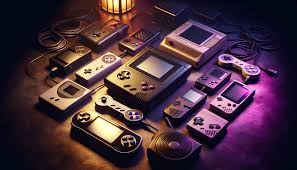
There is something happening across New Zealand right now that no one completely predicted. Living rooms in Auckland are filled with the sounds of 16-bit soundtracks. Office lunch breaks in Wellington are being spent hunched over small screens playing side-scrollers from the 1990s. School kids in Christchurch are asking their parents about games those parents played as children. Retro gaming has returned in a big way, and it shows no sign of slowing down.
This is not purely nostalgia. Yes, nostalgia plays a role, but the real story is about the format itself. Classic games were designed to be picked up and played instantly, no tutorials, no patches, no subscription fees, no hours-long story arcs to navigate before the fun begins. In a world where modern AAA games demand enormous time commitments, the classic pick-up-and-play formula feels genuinely refreshing to a growing number of players.
The hardware has caught up with the appetite, and that is what has made 2026 such a turning point. Whether you want to game on your TV, carry something in your pocket, or project your games onto a wall, purpose-built devices now exist to do exactly that. The options available through retro game consoles have never been broader, better built, or easier to access from New Zealand.
The Modern Retro Market Is Nothing Like It Used to Be
Cast your mind back to how retro gaming worked a decade ago. If you wanted to play the classics, you needed original hardware in working condition, the right cartridges or discs, the correct cables for modern televisions, and a fair bit of patience. Original cartridges were expensive, hardware failed with age, and getting everything to display properly on a flat-screen TV required adapters that introduced lag and picture quality issues.
Today, that friction has been almost entirely removed. The current generation of retro gaming devices packs thousands of pre-loaded games into compact, purpose-built hardware that connects to your existing setup in minutes. Authentication standards have improved, meaning buyers can now trust they are receiving genuine builds rather than the unreliable replicas that flooded the market in earlier years. Retailers like RetroGameConsoles.com have made it their mission to stock only authentic models, removing the guesswork for buyers who want confidence in what they are purchasing.
The range of available hardware has also diversified dramatically. There are devices built for living room gaming, devices built for portability, minimal plug-in sticks for convenience, and even projectors for shared play. Each format serves a different kind of player, and the best part is that the entry price is accessible compared to what modern gaming hardware typically costs.
Living Room Play Made Simple With Retro Game Consoles
The living room has always been the natural home of gaming, and the classic TV-connected setup remains one of the most satisfying ways to play. Dedicated retro game consoles bring that experience into the modern era with HDMI output, wireless controllers in many models, and pre-loaded libraries spanning multiple classic platforms.
What makes this format so compelling is the ceremony of it. You sit down on the couch, you grab the controller, and you are in the game within sixty seconds. There are no firmware updates demanding your attention before you can start, no account logins to navigate, and no notifications interrupting the session. It recreates the uncomplicated experience that made gaming so beloved in the first place.
Popular models like the G8 and G7 in this category offer the complete package for New Zealand homes, clean picture quality on modern screens, responsive controls, and game libraries that cover years of classic titles from multiple platforms. For households with younger children, these devices serve as a brilliant introduction to gaming history, offering age-appropriate content and straightforward gameplay that younger players can pick up without frustration.
For adult players, the living room retro setup often becomes a social activity. Multiplayer titles that were designed decades ago remain genuinely entertaining today precisely because they were built around shared, couch-based play. That design philosophy has not aged at all.
Portable Play on Your Terms With Retro Game Handhelds
Portable gaming has a longer history than many people realise. The original Game Boy launched in 1989 and demonstrated something that still holds true: players want convenience, battery life, and great games far more than they want cutting-edge processing power. That same principle underpins the modern handheld renaissance.
Current retro game handhelds take everything that worked about those early portable devices and elevate it significantly. Bright, sharp screens. Long battery life. Ergonomic forms that fit comfortably in adult hands as well as children’s. And most importantly, game libraries that span decades of classic titles without requiring any cartridges, downloads, or additional purchases.
For New Zealand players specifically, the handheld format is particularly well suited to daily life. Whether it is a long commute between suburbs, a domestic flight between cities, a camping trip where TV access is unavailable, or simply a preference for gaming in bed rather than the lounge, a quality retro handheld travels with you in a way that a TV console simply cannot.
The current lineup available in New Zealand spans a wide range of sizes, screen resolutions, and price points. Compact models like the Q21 and X53 offer an accessible entry point without sacrificing quality, while premium options like the G90 provide larger screens, more processing capacity, and expanded game libraries for players who want the best possible portable experience. The R50S sits comfortably in the middle ground, delivering a well-rounded experience that suits most players.
There is also something worth noting about the social dimension of retro handhelds. Because the games are universally familiar, they tend to generate conversation and connection. Pulling out a retro handheld on a flight and having the passenger next to you recognise what you are playing is a more common experience than you might expect.
The Rise of Retro Game Sticks and Minimal Setup Gaming
One of the most interesting developments in retro gaming has been the explosion of HDMI stick devices. These compact dongles contain everything needed to run a full retro gaming library and connect to any television or monitor with an HDMI port. The entire setup fits in a drawer, a bag, or even a pocket.
The appeal is clear: maximum gaming with minimum clutter. Renters, students, and players who move frequently appreciate not having a large console box taking up shelf space. Travellers can carry a full gaming library in a device smaller than a USB drive. And for households with limited entertainment unit space, a stick eliminates the problem entirely while delivering the same quality of play.
Models like the X9 Pro and X2 Ultra in this category represent the current state of the art. They output clean HD signals, support wireless or wired controllers depending on the model, and carry game collections that would have seemed impossible just a few years ago. The Y6 and Y5 options provide additional variety within the lineup, and the M88 represents a premium offering for players who want expanded storage and a broader game selection.
For New Zealand flat-dwellers and those who entertain regularly at different venues, the stick format has become a genuine favourite. It is gaming that travels, sets up in under a minute, and disappears just as quickly when the evening ends.
Game Nights Transformed With Retro Game Projectors
The projector category represents something entirely different in retro gaming: a shared, big-screen experience that fills an entire wall. For family game nights, gatherings with friends, or outdoor summer gaming sessions, a retro game projector transforms what would otherwise be a private activity into a communal event.
The key technical consideration with gaming projectors has historically been input lag, the delay between pressing a button and seeing the result on screen. Modern retro game projectors have addressed this with dedicated game modes that reduce processing delays to acceptable levels, particularly for the classic platformers, fighters, and shooters that make up most retro libraries. The result is a responsive, visually impressive experience that works even for genres that were once considered too timing-sensitive for projector play.
The HCS350 Pro, X10 Plus, P50 Max, and M300 MAX cover a range of budgets and use cases within this category. The M300 MAX in particular has attracted attention for delivering strong value relative to its specification, making big-screen retro gaming accessible to players who might have assumed projectors were out of reach financially.
What to Look for When Buying Retro Gaming Hardware in New Zealand
With so many options now available, choosing the right device can feel overwhelming. A few practical considerations help narrow it down quickly.
Start with how you actually game. If your primary play happens on the couch with a TV, a dedicated home console is the right starting point. If you spend a lot of time commuting or travelling, a handheld is going to deliver more value. If you entertain regularly and want something that disappears when not in use, a stick is worth considering. And if game nights are a social staple in your household, a projector might be the most impactful purchase of all.
Authenticity matters more in this market than in most others. The retro gaming space has historically been plagued by replica devices that look identical to genuine products in photos but deliver a noticeably inferior experience in person, with inconsistent button response, poor screen quality, and unstable software. Purchasing from a retailer that explicitly stocks and guarantees authentic models eliminates this risk entirely.
Shipping speed and support also deserve consideration. New Zealand buyers benefit from retailers that maintain warehouse stock rather than operating on a drop-ship model where your order might sit in a fulfilment queue for weeks. Responsive customer support matters too, particularly for hardware purchases where setup questions are common.
The Right Time to Start Playing Again
Retro gaming in New Zealand is at a genuinely exciting point. The hardware is better than it has ever been, the prices are accessible, the game libraries are vast, and the formats now cover every playing style imaginable. Whether you are reconnecting with games you played as a child, introducing your own children to gaming history, or simply looking for a form of entertainment that does not demand three hours and a headset, the retro gaming category has something worth considering.
The full range of devices, from living room consoles to portable handhelds, compact sticks to big-screen projectors, is available now with fast shipping to anywhere in New Zealand. Browsing the current selection takes minutes, and with every product being a genuine, authenticated model, the purchase decision is considerably less complicated than it might be elsewhere.
Sometimes the best gaming experience is not the newest one. It is the one you actually have time to enjoy.
