

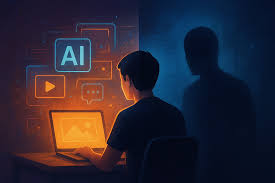
Creating video content used to require a camera, a crew, editing software, and hours of post-production work. For most individuals and small businesses, that barrier was simply too high. Today, that equation has changed dramatically. Text to video AI has emerged as one of the most disruptive technologies in the creative industry, allowing anyone to turn a written prompt into a polished, professional-looking video in minutes.
The shift is not just about convenience. It represents a fundamental change in how we think about video production. Whether you are a solo content creator trying to grow a YouTube channel, a marketer building a campaign on a tight deadline, or an educator developing training materials, AI-powered video generation removes the technical obstacles that once stood between an idea and its visual execution. This article explores what text to video AI is, how it works, and why it is quickly becoming an essential tool for modern creators.
What Is Text to Video AI?
Text to video AI refers to a category of artificial intelligence tools that generate video content directly from written descriptions. You type a prompt — a sentence, a paragraph, or a detailed scene description — and the AI interprets that text and produces a corresponding video clip. The output can range from short animated sequences to realistic cinematic footage, depending on the model and the specificity of the prompt.
This technology builds on advances in generative AI, particularly large language models and diffusion-based image synthesis. The same principles that allow AI to generate photorealistic images from text have been extended to the temporal dimension, enabling the creation of moving visuals that follow a coherent narrative or visual style. The result is a tool that bridges the gap between imagination and execution in a way that was not possible just a few years ago.
How the Technology Works
At its core, text to video AI uses a combination of natural language processing and video synthesis models. When you enter a prompt, the system first parses the text to understand the scene, mood, motion, and visual elements being described. It then generates a sequence of frames that are temporally consistent — meaning each frame flows naturally into the next, creating the illusion of smooth motion.
Modern systems also incorporate conditioning mechanisms that allow users to control aspects like camera movement, lighting style, and character behavior. Some platforms let you upload a reference image to guide the visual output, giving you more precise control over the final result. The more detailed and specific your prompt, the closer the output will be to your original vision.
The Benefits of Using Text to Video AI for Content Creation
The appeal of text to video AI goes beyond novelty. For creators working under real constraints — time, budget, technical skill — it offers practical advantages that directly affect the quality and volume of content they can produce.
Speed and Efficiency
Traditional video production involves scripting, storyboarding, filming, editing, and rendering. Even a simple one-minute video can take a full day to produce. With an AI video generator, that same concept can be visualized in minutes. This speed advantage is particularly valuable for social media content, where posting frequency directly impacts reach and engagement. Creators who once struggled to maintain a consistent upload schedule can now produce multiple pieces of content in the time it previously took to make one.
Accessibility for Non-Designers
Not everyone who has something valuable to say has the technical skills to produce professional video. Text to video AI democratizes content creation by removing the need for video editing expertise, motion graphics knowledge, or access to expensive equipment. A teacher who wants to create an explainer video, a startup founder who needs a product demo, or a blogger who wants to repurpose written content into video — all of these users can now create compelling visuals without hiring a production team.
Real-World Use Cases Across Industries
The versatility of text to video AI means it has found applications across a wide range of industries. Understanding where it fits best can help you identify the most effective ways to integrate it into your own workflow.
Marketing and Advertising
Marketing teams are among the earliest and most enthusiastic adopters of AI video creation tools. The ability to rapidly prototype ad concepts, generate multiple variations of a campaign, and test different visual styles without committing to a full production budget is enormously valuable. Brands can now produce localized video ads for different markets, seasonal content that would otherwise be too expensive to film, and personalized video messages at scale. The text to video AI workflow fits naturally into agile marketing pipelines where speed and iteration are priorities.
Education and Training
Educational content benefits enormously from visual explanation, but producing instructional videos has traditionally been resource-intensive. AI video generation allows educators, corporate trainers, and e-learning developers to create illustrated explanations, scenario-based training modules, and animated walkthroughs without a production crew. The result is richer learning experiences that can be updated and revised as content evolves, without the cost of reshooting entire segments.
How to Create Your First AI-Generated Video
Getting started with text to video AI is more straightforward than most people expect. The key is learning how to write effective prompts and understanding the capabilities and limitations of the tool you are using.
Start by defining the core visual concept you want to communicate. Be specific about the setting, the action, the mood, and any stylistic preferences. Instead of writing “a person walking,” try “a young woman walking through a sunlit forest in the early morning, slow cinematic movement, warm color grading.” The additional detail gives the AI more to work with and produces a more intentional result.
Next, consider the purpose of the video. Is it meant to inform, entertain, or persuade? The answer should shape your prompt. For marketing content, you might emphasize visual energy and brand-consistent aesthetics. For educational content, clarity and pacing matter more than cinematic flair. Platforms like Kling AI offer intuitive interfaces that let you experiment with different prompt styles and see results quickly, making the iteration process feel natural rather than technical.
Once you have a generated clip you are satisfied with, review it critically. Check for visual consistency, unintended artifacts, and whether the motion matches your intended narrative. Most AI video tools allow you to refine your prompt and regenerate, so treat the first output as a draft rather than a final product. Iteration is part of the process, not a sign that something went wrong.
Common Mistakes to Avoid When Using AI Video Generators
Even with a powerful tool, the quality of your output depends heavily on how you use it. Several common mistakes can undermine the effectiveness of AI-generated video content.
The most frequent issue is vague prompting. Generic descriptions produce generic results. If your prompt lacks specificity, the AI will fill in the gaps with default assumptions that may not align with your vision. Take the time to describe not just what is in the scene, but how it looks, moves, and feels. Think of your prompt as a director’s brief — the more clearly you communicate your intent, the more accurately the AI can execute it.
Another mistake is treating AI video as a finished product without review. AI models can produce visual inconsistencies, unnatural motion, or unexpected elements that require human judgment to catch. Always review generated content before publishing, and be prepared to iterate. The best results come from a collaborative process between human creative direction and AI execution, not from accepting the first output uncritically.
Finally, avoid ignoring the audio dimension. Video without sound feels incomplete, and many AI video platforms now offer integrated audio generation or allow you to add voiceover and music. A well-matched audio track can significantly elevate the perceived quality of an AI-generated video, making it feel more polished and intentional regardless of the visual complexity.
The Future of Video Creation Starts With a Prompt
Text to video AI is not a replacement for human creativity — it is an amplifier of it. By removing the technical and financial barriers that once made video production inaccessible, it opens the door for more voices, more stories, and more ideas to reach audiences in a visual format. The technology is still evolving rapidly, and the tools available today are already capable of producing results that would have seemed impossible just a few years ago.
Whether you are a seasoned content creator looking to scale your output or someone exploring video for the first time, the barrier to entry has never been lower. The most important step is simply to start experimenting. Write a prompt, generate a clip, and see what is possible. The creative potential of AI video generation is only beginning to be understood, and those who engage with it now will be best positioned to take advantage of where it is heading.
As AI-generated content continues to evolve, maintaining authenticity and quality remains a top priority for creators. While AI tools are powerful for streamlining production, it is equally important to ensure that the final output resonates with a human audience and remains unique. Whether you are crafting scripts or generating video assets, verifying the originality of your work is essential to build trust with your viewers. Incorporating a reliable gpt detector into your workflow can serve as a vital safety check, helping you identify areas that might need a more personal, human touch before you hit publish.
