

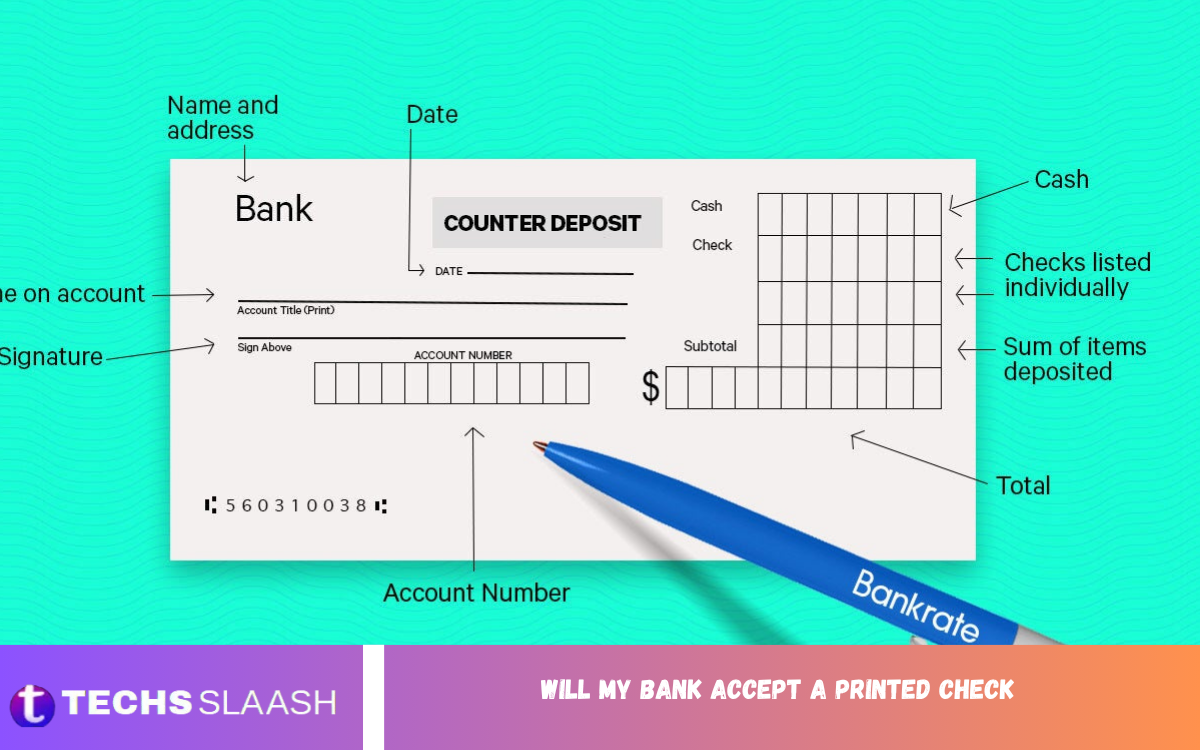
Printed checks have become increasingly popular as more individuals and businesses use digital tools to manage their finances. Instead of ordering traditional checkbooks from a bank, many people now print checks at home or through professional printing services.
Whether you’re paying bills, issuing payroll, or sending personal payments, understanding how printed checks work can help you avoid delays or rejected transactions. While most banks accept properly printed checks, poor print quality, missing security elements, or incorrect information can lead to processing issues.
What Is a Printed Check?
A printed check is a paper check created using check-printing software or an online service instead of being handwritten or ordered directly from a bank. Printed checks contain all the essential banking information, including:
- Bank name
- Account holder’s name
- Routing number
- Account number
- Check number
- Date
- Payee name
- Payment amount
- Signature
- MICR line at the bottom
Modern printed checks are commonly used by:
- Small businesses
- Large corporations
- Freelancers
- Landlords
- Accountants
- Payroll departments
- Individuals managing personal finances
When produced correctly, printed checks function exactly like traditional bank-issued checks.
Will My Bank Accept a Printed Check?
In most situations, yes.
Banks are not concerned with whether the check was printed at home or professionally. Instead, they verify whether the check complies with industry standards.
A bank typically accepts a printed check if it includes:
- Accurate banking information
- Proper MICR encoding
- Valid routing number
- Correct account number
- Authorized signature
- Readable print quality
- Standard check dimensions
- Required security features
If these requirements are met, the printed check is processed like any other check.
Why Banks Accept Printed Checks
Banks have transitioned to highly automated systems. Modern check processing depends on machine-readable information rather than handwritten documents.
The banking system primarily verifies:
- Account validity
- Available funds
- Routing information
- Check authenticity
- Fraud indicators
As long as your printed check successfully passes these verification steps, the bank usually processes it without issue.
How Banks Verify Printed Checks
Every printed check goes through several verification stages before funds are released.
1. MICR Verification
The MICR line contains:
- Routing number
- Account number
- Check number
Banks use Magnetic Ink Character Recognition technology to scan this information quickly.
2. Account Validation
The bank confirms that:
- The account exists.
- The account is active.
- The account has sufficient funds.
- The account has not been closed.
3. Fraud Detection
Banks also look for:
- Duplicate checks
- Altered checks
- Counterfeit documents
- Missing security features
- Suspicious payment patterns
4. Signature Review
Some checks receive manual verification, especially large payments.
Important Requirements for Printed Checks
To ensure acceptance, printed checks must follow banking standards.
Correct Check Size
Standard checks typically measure:
- 8.5 × 3.5 inches
Banks expect this size because automated equipment is calibrated for standard dimensions.
MICR Font
The routing and account numbers should be printed using MICR-compatible toner or ink.
Without a readable MICR line, automated processing may fail.
High Print Quality
Avoid:
- Smudged ink
- Crooked printing
- Low-resolution printers
- Faded text
Clear printing improves successful processing.
Correct Information
Always verify:
- Payee name
- Payment amount
- Date
- Account number
- Routing number
- Signature
Even one mistake can delay processing.
Security Features Banks Expect
Printed checks should include multiple security features to prevent fraud.
Popular security features include:
- Watermarks
- Microprinting
- Security screens
- Heat-sensitive ink
- Chemical protection
- Artificial watermark background
- Padlock icons
- Invisible fluorescent fibers
Professional check stock often includes these protections.
Can You Print Checks at Home?
Yes.
Many individuals and businesses legally print checks at home.
However, you should use:
- Quality check stock
- Approved check-printing software
- MICR toner
- Laser printer
Using ordinary printer paper increases the chance of rejection.
Read Also: Freedom Holding Corp: Driving Innovation in Investment Services
Is It Legal to Print Your Own Checks?
Yes. In many countries, including the United States, printing your own checks is completely legal.
Federal banking regulations do not require checks to be purchased from banks.
The printed checks simply need to comply with banking standards.
Why Would a Bank Reject a Printed Check?
Although banks generally accept printed checks, rejection can happen for several reasons.
Incorrect Routing Number
A wrong routing number prevents proper processing.
Invalid Account Number
Banks reject checks linked to closed or nonexistent accounts.
Poor Print Quality
Unreadable numbers can cause automated systems to reject the document.
Missing Signature
Unsigned checks are usually invalid.
Suspicious Appearance
Banks may reject checks that appear altered or counterfeit.
Low-Quality Paper
Checks printed on ordinary paper without security features may trigger additional verification.
Duplicate Check Number
Repeated check numbers may raise fraud concerns.
Personal Printed Checks vs Business Printed Checks
Both are accepted when properly prepared.
Personal Checks
Usually include:
- Individual name
- Personal bank account
- Residential address
Business Checks
Usually include:
- Business name
- Company logo
- Business account
- Employer Identification Number (optional)
Business checks often contain stronger security features.
Mobile Deposit and Printed Checks
Many banks allow customers to deposit printed checks through mobile banking apps.
However, the check must be:
- Clearly printed
- Properly signed
- Undamaged
- Easy to photograph
Blurry images or damaged checks may be rejected during mobile deposit.
Are Payroll Printed Checks Accepted?
Yes.
Payroll companies routinely issue printed checks.
Examples include:
- Employee salaries
- Contractor payments
- Bonus checks
- Commission payments
Banks process these every day.
Do Cashiers Accept Printed Checks?
Retail policies vary.
Some retailers accept printed personal checks.
Others refuse all checks regardless of printing method.
Acceptance depends on the merchant rather than the bank.
Advantages of Printed Checks
Printed checks offer several benefits.
Professional Appearance
Printed information looks clean and organized.
Better Record Keeping
Most software automatically stores payment history.
Faster Payment Processing
Accurate printing reduces banking errors.
Improved Security
Modern check stock includes advanced anti-fraud features.
Convenience
Checks can be printed whenever needed.
Cost Savings
Businesses save money by printing checks internally instead of ordering expensive checkbooks.
Disadvantages of Printed Checks
Despite their benefits, printed checks have a few drawbacks.
Equipment Costs
Businesses may need:
- MICR toner
- Laser printer
- Check stock
- Accounting software
Security Risks
Improper storage may expose account information.
Printing Errors
Formatting mistakes can delay payment.
Tips to Ensure Your Printed Check Is Accepted
Follow these best practices:
Use High-Quality Check Stock
Never print checks on ordinary copy paper.
Verify Banking Information
Double-check every number before printing.
Print Clearly
Use a quality laser printer.
Use MICR Toner
Proper MICR printing improves automated processing.
Protect Blank Checks
Store unused check stock securely.
Keep Software Updated
Modern accounting software follows current banking standards.
Avoid Manual Corrections
Do not write over printed information.
Sign Every Check
An unsigned check is often rejected.
Common Myths About Printed Checks
Myth 1: Banks Only Accept Bank-Issued Checks
False.
Banks accept properly printed checks that meet industry standards.
Myth 2: Home-Printed Checks Are Illegal
False.
Printing checks at home is legal when banking guidelines are followed.
Myth 3: Printed Checks Are Less Secure
False.
Many professionally printed checks are more secure than handwritten checks due to advanced security features.
Myth 4: Every Printed Check Requires Manual Approval
False.
Most printed checks are processed automatically through banking systems.
Best Software for Printing Checks
Many businesses use dedicated check-printing software that integrates with accounting systems.
Popular features include:
- Automatic check numbering
- Bank account management
- Payroll integration
- Security templates
- Digital record keeping
- Bulk printing
Using trusted software minimizes formatting errors and improves compliance with banking requirements.
How Businesses Benefit from Printed Checks
Businesses of every size use printed checks because they provide:
- Faster accounts payable processing
- Better financial organization
- Improved cash flow management
- Reduced ordering costs
- Easier payroll distribution
- Professional branding
For growing companies, printed checks remain an efficient payment method alongside electronic transfers.
Frequently Asked Questions
Why would a printed check be rejected?
Common reasons include incorrect account information, poor print quality, missing signatures, insufficient funds, or suspected fraud.
Are printed business checks legal?
Yes. Businesses regularly print their own checks for payroll, vendor payments, and other transactions.
Can I deposit a printed check using mobile banking?
In most cases, yes. The check must be clearly printed, signed, and meet your bank’s mobile deposit requirements.
Is special paper required for printed checks?
Yes. Security check stock is recommended because it includes anti-fraud features and is designed for banking equipment.
Are printed checks as secure as traditional checks?
They can be. High-quality printed checks with proper security features offer strong protection against fraud.
Can retailers refuse printed checks?
Yes. Merchants set their own payment policies, even if banks would accept the check.
Are printed checks still widely used?
Yes. Despite the growth of digital payments, printed checks remain common for payroll, business payments, rent, and personal transactions.
Conclusion
If you’re wondering, “Will My Bank Accept a Printed Check?”, the answer is yes in most cases. Banks routinely process printed checks as long as they meet established banking standards, contain accurate account information, and include the necessary security features.
To avoid delays or rejected payments, use standard check stock, print with clear formatting, verify all account details, and include a valid signature.
