

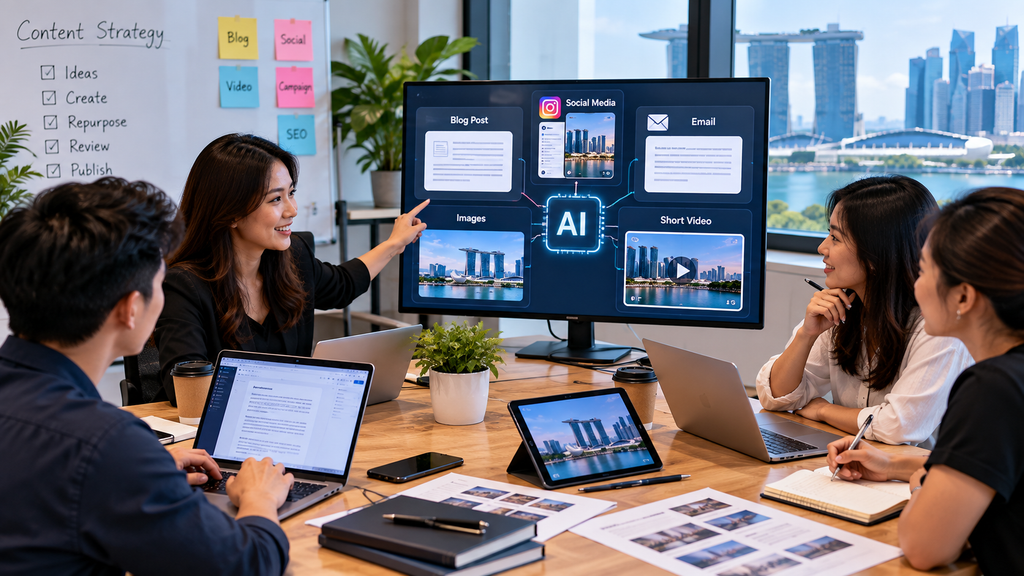
Marketing teams across Singapore are under pressure to produce more content for more platforms, often without extra headcount. Generative AI can help close that gap, but only if the team knows how to use it well. Buying tool subscriptions is easy; building real skills takes more deliberate effort.
Here are five AI content skills that make the biggest difference for marketing teams this year, and why structured training helps build them faster than experimenting alone.
1. Prompting for Clear Briefs
The quality of AI output depends heavily on the quality of the prompt. Teams that get the best results write prompts the way a manager writes a brief: stating the audience, the goal, the format, the tone and any facts that must be included.
This skill sounds simple, but it takes practice. A team that shares a library of tested prompt templates will produce more consistent work and spend less time rewriting drafts.
2. Drafting Copy Faster Without Losing Brand Voice
AI can produce first drafts of captions, emails, product descriptions and web copy in seconds. The challenge is keeping that copy on-brand. Skilled teams feed the AI examples of approved content, use consistent style guidance, and always treat the output as a draft that needs human editing.
When this is done well, writers spend their time refining ideas rather than staring at a blank page. That shift alone can free up hours every week.
3. Repurposing One Idea Across Channels
Most teams create content for several platforms at once, from Instagram and TikTok to LinkedIn and email. Repurposing is one of the most valuable AI skills because it turns a single strong idea into multiple formats.
A team member can take a blog post and use AI to produce social captions, a short video script and a newsletter summary, each adjusted for its channel. This multiplies output without multiplying effort, and it keeps messaging consistent across platforms.
4. Creating Visuals and Short Videos

Visual content no longer has to wait for a designer’s availability. AI-powered design and video tools allow marketers to create social graphics, posters and short-form videos quickly. The skill lies in knowing when a quick AI-assisted visual is good enough and when a project needs professional design support.
Teams that build this skill can respond faster to trends and campaign needs. Examples of the kind of work beginners can produce after short training are often shared publicly, such as on this collection of student content projects, which helps set realistic expectations. Seeing real examples also makes it easier for managers to judge what the team can realistically produce in-house.
5. Reviewing and Editing AI Output
The most important skill may be the least glamorous: reviewing AI output critically. AI tools can produce confident but inaccurate claims, generic phrasing or content that does not fit the brand. Every team needs a clear review step and people who know what to check for.
This includes verifying facts, checking brand consistency, and making sure no confidential customer or company information is entered into public tools. Strong review habits protect a brand’s reputation while still allowing the team to move quickly.
Why Structured Team Training Works Better

Many teams try to pick up these skills informally, with each person experimenting on their own. The result is usually uneven: a few enthusiastic users get good results, while others give up or use AI inconsistently.
Structured training changes this by giving the whole team a shared method, shared language and shared templates. In-person sessions are especially effective because staff can practise on real company examples and ask questions immediately. Some training providers now offer team AI skills training in Singapore that is built around group bookings and company funding.
Funding also makes team training more accessible than many managers expect. WSQ-accredited courses, such as a two-day WSQ course on transforming content creation with AI, qualify for course fee subsidies for Singaporean and PR employees. Eligible companies can also apply SkillsFuture Enterprise Credit and claim Absentee Payroll for training hours.
Making the Skills Stick
Training is only the starting point. To keep the new skills in use, teams should:
- Share prompt templates and examples in a common folder
- Agree on which AI tools are approved for work use
- Set a review step for every AI-assisted piece before publishing
- Track time saved on key tasks to measure the impact
A short check-in after 30 and 90 days helps teams spot problems early and share what is working.
What to Do Next
AI will not replace good marketers, but marketers who use AI well will have a clear advantage. Building these five skills across a team is one of the most practical investments a Singapore business can make this year.
For teams looking for hands-on, accredited training, Websentials Academy offers in-person AI content courses designed for working professionals. Its courses are WSQ-accredited, which opens up subsidies for eligible employees. Starting with two or three team members is often the easiest way to begin.
