

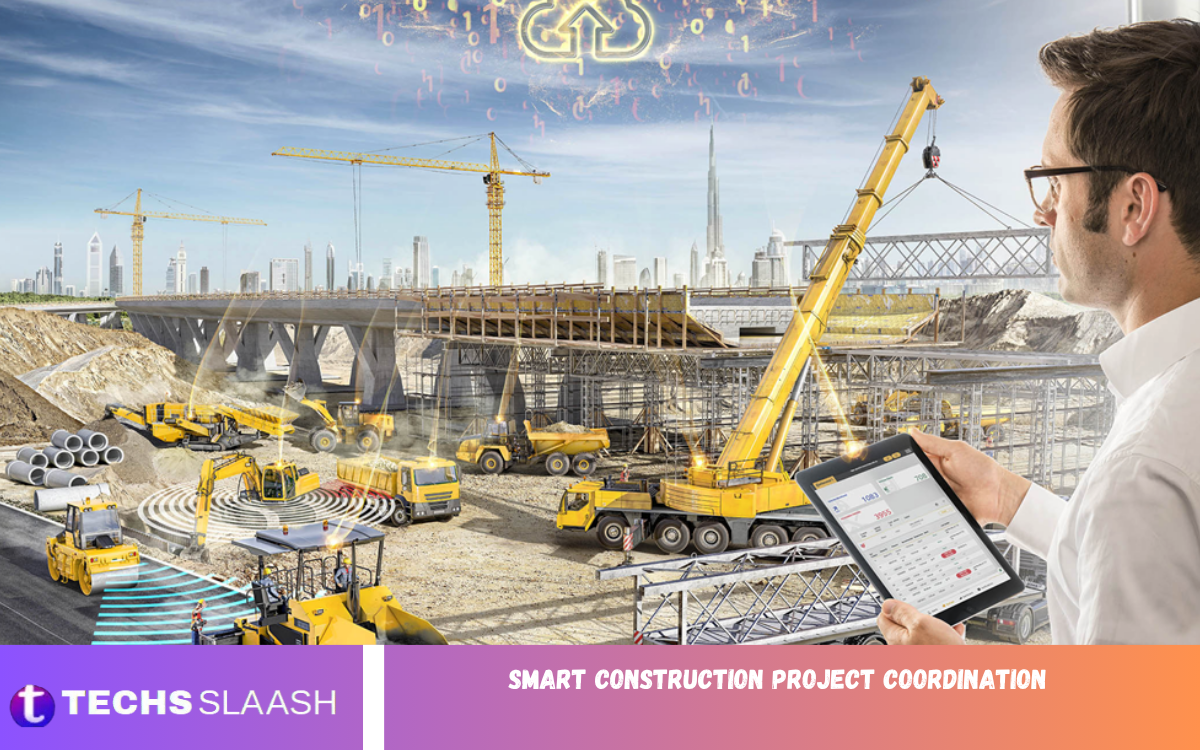
Smart Construction Project Coordination is the integration of advanced digital technologies, intelligent management systems, and collaborative communication tools to improve the planning, execution, monitoring, and completion of construction projects.
Effective coordination ensures that architects, engineers, contractors, suppliers, and project managers work together efficiently while minimizing delays, reducing costs, and improving construction quality. Real-time information sharing enables stakeholders to identify potential risks, monitor project progress, allocate resources effectively, and respond quickly to unexpected issues.
What Is Smart Construction Project Coordination?
Smart Construction Project Coordination refers to the use of digital technologies, intelligent software, and integrated communication systems to manage every stage of a construction project. Rather than relying solely on traditional management practices, project teams use real-time information to coordinate planning, scheduling, procurement, budgeting, quality control, and site operations.
The primary objective is to ensure that every stakeholder has access to accurate project information at the right time. This minimizes misunderstandings, prevents costly mistakes, and improves collaboration across multiple teams working simultaneously.
Why Smart Construction Project Coordination Matters?
Construction projects involve hundreds of moving parts, including workers, equipment, suppliers, subcontractors, permits, budgets, and timelines. Without proper coordination, even small communication failures can create significant delays.
Smart coordination provides several advantages:
- Improved communication between project stakeholders
- Faster decision-making using real-time project data
- Better resource allocation
- Reduced project delays
- Increased productivity
- Improved safety management
- Lower construction costs
- Higher quality standards
- Enhanced project transparency
These benefits contribute directly to higher customer satisfaction and improved business profitability.
Key Technologies Used in Smart Construction Project Coordination
Building Information Modeling (BIM)
Building Information Modeling serves as the digital foundation for many smart construction projects. BIM creates a detailed 3D digital model containing architectural, structural, electrical, plumbing, and mechanical information.
Project managers can identify design conflicts before construction begins, reducing expensive rework and improving collaboration among all stakeholders.
Artificial Intelligence (AI)
Artificial Intelligence analyzes large volumes of construction data to support better decision-making. AI can predict project risks, optimize schedules, estimate costs, and identify potential safety hazards before they become major issues.
Machine learning algorithms continue improving predictions as additional project data becomes available.
Internet of Things (IoT)
IoT devices collect real-time information from construction sites using connected sensors.
Common applications include:
- Equipment monitoring
- Worker safety tracking
- Environmental monitoring
- Material inventory management
- Structural health monitoring
- Energy consumption analysis
This continuous flow of information enables project managers to respond quickly to changing site conditions.
Cloud-Based Project Management
Cloud platforms allow project teams to access documents, schedules, blueprints, contracts, and reports from anywhere.
Benefits include:
- Instant document sharing
- Version control
- Remote collaboration
- Faster approvals
- Centralized communication
- Secure data storage
Cloud technology ensures every stakeholder works with the latest project information.
Drones
Construction companies increasingly use drones for site inspections, surveying, progress tracking, and aerial photography.
Drone technology helps project managers:
- Monitor construction progress
- Measure site conditions
- Improve safety inspections
- Generate accurate maps
- Reduce manual survey time
Data Analytics
Modern construction software generates enormous amounts of project data.
Analytics transforms this information into valuable insights regarding:
- Budget performance
- Labor productivity
- Material usage
- Equipment efficiency
- Project forecasting
- Risk assessment
These insights help managers make informed decisions throughout the project lifecycle.
Read Also: Essential Interview Skills to Land Your Next Job
Benefits of Smart Construction Project Coordination
Better Collaboration
Construction projects involve numerous organizations working together.
Smart coordination improves collaboration through:
- Shared project dashboards
- Digital document management
- Instant messaging
- Video conferencing
- Centralized communication
Everyone stays informed regardless of their physical location.
Improved Project Scheduling
Digital scheduling software automatically updates project timelines whenever tasks change.
Managers can quickly identify:
- Critical path activities
- Resource conflicts
- Labor shortages
- Weather impacts
- Equipment availability
Accurate scheduling minimizes downtime and improves overall efficiency.
Cost Control
Construction budgets often exceed expectations due to poor coordination.
Smart systems continuously monitor:
- Labor expenses
- Material costs
- Equipment usage
- Contractor payments
- Budget forecasts
Early detection of financial issues allows corrective actions before costs escalate.
Enhanced Safety
Worker safety remains one of the highest priorities in construction.
Smart coordination improves safety through:
- Wearable technology
- Site monitoring cameras
- AI-powered hazard detection
- Digital safety inspections
- Automated compliance reporting
These technologies help reduce workplace accidents and improve regulatory compliance.
Higher Productivity
Automating repetitive administrative tasks allows project managers to focus on strategic decision-making.
Workers spend less time searching for documents, resolving communication issues, or correcting errors.
The result is improved productivity across every phase of construction.
Challenges of Traditional Construction Coordination
Many construction companies still depend on outdated coordination methods.
Common problems include:
- Paper documentation
- Email overload
- Poor communication
- Duplicate data entry
- Manual scheduling
- Slow approvals
- Limited project visibility
- Frequent misunderstandings
These inefficiencies increase project risks and reduce profitability.
How Smart Coordination Solves These Challenges
Digital coordination systems create a connected construction environment.
Every stakeholder receives immediate updates regarding:
- Design revisions
- Schedule changes
- Material deliveries
- Safety incidents
- Budget adjustments
- Inspection reports
- Project milestones
Real-time visibility allows teams to solve problems before they become expensive delays.
Applications Across Construction Sectors
Smart Construction Project Coordination benefits numerous industries, including:
Residential Construction
Builders manage housing developments more efficiently through digital scheduling, customer communication, and automated inspections.
Commercial Construction
Office buildings, shopping centers, hotels, and mixed-use developments require extensive coordination among multiple contractors.
Smart technologies improve workflow management and reduce project complexity.
Industrial Construction
Factories, manufacturing facilities, warehouses, and power plants involve highly technical installations.
Digital coordination ensures engineering teams remain synchronized throughout construction.
Infrastructure Projects
Roads, bridges, airports, railways, and public utilities require long-term planning and coordination among government agencies and contractors.
Smart systems improve transparency and accountability for large-scale infrastructure projects.
The Role of Project Managers
Modern project managers now rely on technology as much as leadership skills.
Their responsibilities include:
- Coordinating project teams
- Monitoring progress
- Managing budgets
- Identifying risks
- Communicating with stakeholders
- Ensuring regulatory compliance
- Reviewing project analytics
- Supporting continuous improvement
Digital tools enhance decision-making rather than replacing human expertise.
Best Practices for Successful Smart Construction Project Coordination
Organizations should follow these best practices:
- Adopt integrated project management software.
- Standardize digital documentation.
- Invest in employee training.
- Encourage collaboration across departments.
- Monitor project performance using dashboards.
- Automate repetitive workflows.
- Maintain accurate project data.
- Implement strong cybersecurity measures.
- Regularly evaluate project outcomes.
- Continuously improve digital processes.
Following these practices increases the likelihood of successful project delivery.
Future Trends in Smart Construction Project Coordination
The future of construction coordination will become increasingly intelligent.
Emerging trends include:
- AI-powered autonomous project management
- Digital twins for real-time building simulation
- Robotics for automated construction tasks
- 5G-enabled construction sites
- Predictive maintenance systems
- Blockchain-based contract management
- Extended Reality (XR) for project visualization
- Fully connected smart construction ecosystems
These innovations will further improve efficiency, sustainability, and project quality.
Frequently Asked Questions
How does Building Information Modeling (BIM) support project coordination?
BIM creates a digital 3D model of a construction project, enabling architects, engineers, and contractors to collaborate effectively, detect design conflicts early, and improve project planning.
Can Smart Construction Project Coordination reduce construction costs?
Yes. By improving planning, reducing errors, minimizing material waste, optimizing labor productivity, and preventing costly delays, smart coordination helps lower overall construction expenses.
How does Smart Construction Project Coordination improve safety?
It uses technologies such as wearable devices, IoT sensors, drones, AI-powered monitoring systems, and real-time reporting to identify hazards, monitor workers, and improve compliance with safety regulations.
Which construction projects benefit from Smart Construction Project Coordination?
It is suitable for residential, commercial, industrial, infrastructure, and government construction projects of all sizes, especially those involving multiple teams and complex workflows.
What are the biggest challenges when implementing Smart Construction Project Coordination?
Common challenges include high initial investment, employee training, resistance to adopting new technology, cybersecurity concerns, data integration issues, and the need to maintain accurate project information.
What skills do project managers need for Smart Construction Project Coordination?
Project managers should have knowledge of digital construction tools, leadership, communication, scheduling, risk management, budgeting, data analysis, and problem-solving to successfully coordinate modern construction projects.
What is the future of Smart Construction Project Coordination?
The future includes greater adoption of Artificial Intelligence, Digital Twins, robotics, blockchain, 5G connectivity, predictive analytics, and automated project management systems, making construction projects more efficient, sustainable, and data-driven.
Conclusion
Smart Construction Project Coordination has become a fundamental requirement for modern construction projects. By combining advanced technologies with effective communication and collaborative management practices, organizations can significantly improve project efficiency, reduce costs, enhance safety, and deliver higher-quality results.
