

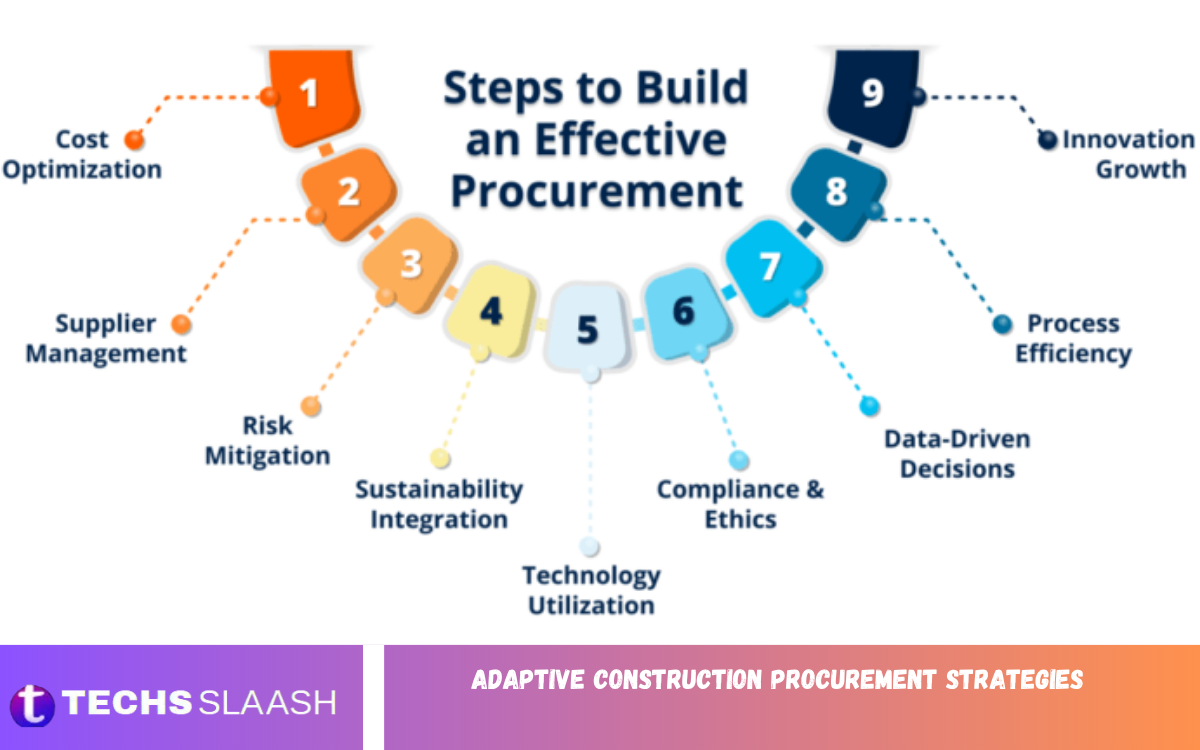
Adaptive Construction Procurement Strategies are modern approaches that enable construction projects to respond effectively to changing project requirements, market conditions, technological advancements, and stakeholder expectations.
The primary objective of adaptive procurement is to improve project performance by selecting procurement methods that align with project-specific goals, client requirements, and external environmental factors.
What Are Adaptive Construction Procurement Strategies?
Adaptive Construction Procurement Strategies are flexible procurement methods that allow project owners, contractors, consultants, and suppliers to adjust procurement decisions in response to changing project conditions. Instead of following a rigid procurement framework, adaptive procurement encourages continuous evaluation throughout the project lifecycle.
These strategies combine risk management, collaboration, digital technologies, market intelligence, and contractual flexibility to achieve better project outcomes.
The primary objective is to create procurement systems that can quickly respond to:
- Supply chain disruptions
- Material price fluctuations
- Labor shortages
- Design modifications
- Regulatory changes
- Environmental requirements
- Economic uncertainty
- Client expectations
Adaptive procurement recognizes that no two construction projects are identical. Every project requires procurement decisions tailored to its unique objectives and constraints.
Why Adaptive Procurement Matters?
Construction projects frequently encounter unforeseen events that can affect budgets, schedules, and quality. Traditional procurement methods often lack the flexibility needed to manage these situations effectively.
Adaptive Construction Procurement Strategies help organizations:
- Improve project efficiency
- Reduce procurement delays
- Strengthen supplier relationships
- Increase transparency
- Support innovation
- Improve risk allocation
- Enhance project collaboration
- Achieve better value for money
By adapting procurement decisions throughout the project lifecycle, organizations can maintain greater control over project performance.
Key Principles of Adaptive Construction Procurement Strategies
Successful adaptive procurement is built upon several important principles.
Flexibility
Procurement plans should be adaptable as project requirements evolve. Flexible contracts allow adjustments without causing significant delays or legal disputes.
Collaboration
Owners, contractors, consultants, suppliers, and subcontractors should work together from the earliest project stages. Early collaboration improves planning and reduces misunderstandings.
Risk Management
Adaptive procurement identifies potential risks before they become major problems. Responsibilities are distributed fairly among project participants to reduce financial exposure.
Continuous Improvement
Lessons learned from ongoing projects are continuously incorporated into procurement decisions, improving future performance.
Technology Integration
Digital procurement platforms improve communication, document management, supplier evaluation, contract administration, and purchasing efficiency.
Common Adaptive Procurement Models
Different construction projects require different procurement methods. Adaptive strategies often combine several procurement models.
Design-Build Procurement
Under this model, one contractor is responsible for both design and construction. This approach improves communication, reduces delays, and shortens project schedules.
Construction Management
Construction managers coordinate contractors throughout the project while maintaining flexibility in procurement decisions.
Integrated Project Delivery (IPD)
IPD promotes collaboration among all stakeholders from project inception through completion. Shared risks and rewards encourage teamwork and innovation.
Framework Agreements
Long-term agreements with suppliers allow organizations to purchase materials and services quickly without repeating lengthy tendering processes.
Public-Private Partnerships (PPP)
Governments collaborate with private organizations to finance, build, and maintain infrastructure projects while sharing risks and responsibilities.
Benefits of Adaptive Construction Procurement Strategies
Organizations adopting adaptive procurement experience numerous operational and financial advantages.
Better Risk Allocation
Adaptive procurement ensures risks are assigned to the parties most capable of managing them.
Improved Cost Control
Continuous market monitoring helps organizations respond quickly to material price increases and labor cost changes.
Faster Decision-Making
Collaborative procurement structures reduce approval delays and improve communication among stakeholders.
Enhanced Project Quality
Early contractor involvement enables better planning, improved constructability, and higher construction standards.
Increased Innovation
Adaptive procurement encourages contractors and suppliers to introduce innovative construction techniques and technologies.
Greater Sustainability
Procurement decisions increasingly prioritize environmentally friendly materials, energy efficiency, and sustainable construction practices.
Improved Supplier Relationships
Long-term collaboration creates trust, better pricing, and reliable supply chains.
Read Also: Smart Construction Project Coordination
Digital Technologies Supporting Adaptive Procurement
Technology plays a critical role in modern procurement management.
Building Information Modeling (BIM)
BIM improves collaboration by allowing all stakeholders to access accurate project information throughout construction.
Artificial Intelligence
AI helps analyze supplier performance, predict procurement risks, and optimize purchasing decisions.
Cloud Procurement Platforms
Cloud-based procurement systems improve accessibility, document management, contract administration, and supplier communication.
Data Analytics
Real-time procurement analytics provide valuable insights into spending patterns, supplier performance, and project costs.
Blockchain Technology
Blockchain enhances procurement transparency by creating secure and traceable records of contracts and transactions.
Risk Management in Adaptive Procurement
Risk management is central to adaptive procurement.
Organizations identify risks through:
- Supplier evaluations
- Market research
- Financial analysis
- Schedule monitoring
- Contract reviews
- Regulatory assessments
Common procurement risks include:
- Material shortages
- Inflation
- Contractor insolvency
- Labor disputes
- Transportation disruptions
- Environmental regulations
- Political uncertainty
Adaptive procurement enables organizations to develop contingency plans before risks impact project performance.
Sustainable Procurement Practices
Environmental sustainability has become a major procurement objective.
Adaptive procurement supports sustainability through:
- Green building materials
- Energy-efficient equipment
- Local supplier selection
- Waste reduction strategies
- Recycled construction materials
- Carbon footprint reduction
- Ethical sourcing policies
Sustainable procurement not only protects the environment but also improves long-term project value.
Challenges of Adaptive Construction Procurement Strategies
Although adaptive procurement offers many benefits, organizations also face several challenges.
Organizational Resistance
Some organizations prefer traditional procurement methods and resist process changes.
Contract Complexity
Flexible contracts require careful drafting to avoid legal disputes.
Technology Investment
Digital procurement platforms require financial investment and employee training.
Supplier Readiness
Not every supplier has the capability to participate in collaborative procurement systems.
Regulatory Compliance
Public sector procurement regulations may limit procurement flexibility.
Despite these challenges, organizations that invest in adaptive procurement often achieve stronger long-term performance.
Best Practices for Successful Implementation
Organizations can maximize procurement success by following proven best practices.
- Develop clear procurement objectives.
- Perform detailed market analysis.
- Engage stakeholders early.
- Invest in procurement technology.
- Build strong supplier partnerships.
- Monitor procurement performance regularly.
- Review procurement risks continuously.
- Encourage transparent communication.
- Train procurement professionals.
- Measure outcomes using key performance indicators (KPIs).
Continuous evaluation allows procurement strategies to evolve alongside changing project requirements.
The Future of Adaptive Construction Procurement Strategies
The future of construction procurement will become increasingly data-driven, collaborative, and technology-enabled.
Emerging trends include:
- AI-powered procurement automation
- Predictive procurement analytics
- Smart contracts
- Digital twins
- Blockchain-based procurement systems
- Sustainable sourcing standards
- Autonomous supplier management
- Real-time project monitoring
As construction projects become larger and more complex, adaptive procurement will continue to improve efficiency, reduce costs, and strengthen collaboration across the industry.
Frequently Asked Questions
How does technology support Adaptive Construction Procurement Strategies?
Technology supports adaptive procurement through Building Information Modeling (BIM), artificial intelligence (AI), cloud-based procurement platforms, data analytics, blockchain technology, and digital project management tools, thereby improving communication and decision-making.
What challenges can organizations face when implementing Adaptive Construction Procurement Strategies?
Organizations may encounter challenges such as resistance to change, complex contract management, technology implementation costs, supplier readiness issues, regulatory compliance requirements, and the need for skilled procurement professionals.
How do Adaptive Construction Procurement Strategies improve risk management?
These strategies improve risk management by identifying potential risks early, distributing responsibilities fairly among project stakeholders, continuously monitoring market conditions, and developing contingency plans for unexpected events.
Are Adaptive Construction Procurement Strategies suitable for all construction projects?
Yes, adaptive procurement strategies can be applied to projects of all sizes, including residential, commercial, industrial, and infrastructure developments. The procurement approach should be tailored to the project’s complexity, budget, timeline, and objectives.
How do Adaptive Construction Procurement Strategies contribute to sustainability?
Adaptive procurement supports sustainability by promoting environmentally friendly materials, ethical sourcing, local suppliers, waste reduction, energy-efficient construction methods, and compliance with green building standards.
What is the future of Adaptive Construction Procurement Strategies?
The future of Adaptive Construction Procurement Strategies includes greater use of artificial intelligence, predictive analytics, blockchain, smart contracts, digital twins, automated procurement systems, and data-driven decision-making to improve efficiency, transparency, and project success.
Conclusion
Adaptive Construction Procurement Strategies have transformed the way construction projects are planned, managed, and delivered. Unlike traditional procurement models, adaptive approaches prioritize flexibility, collaboration, innovation, and continuous improvement.
By integrating advanced technologies, effective risk management, sustainable procurement practices, and collaborative contractual frameworks, organizations can improve project performance while responding effectively to changing market conditions.
