

You walk away from a car crash feeling okay. Nothing hurts. You wonder if a trip to the emergency room is really needed. This is one of the most important health questions a crash victim faces, and the answer surprises many people.
The short answer is yes, you should get checked. Feeling fine does not mean you are unhurt.
In Houston, many people decline emergency evaluation after what seems like a minor collision. They exchange insurance information, drive home, and expect the soreness to fade. Days, weeks, or even months later, they begin experiencing persistent neck pain, numbness, headaches, dizziness, or other symptoms that trace back to the original crash. The same delayed pattern is even more common after traumatic injuries following a truck accident, where greater impact forces can damage muscles, ligaments, nerves, and internal structures before symptoms fully develop.
Learning about common car accident injuries explains why this happens. The video features Sutliff & Stout, a firm that routinely reviews medical records and other evidence to document injuries that are not immediately apparent after a collision.
This article explains the health reasons to get checked, based on how the body responds to a crash.
Why you can feel fine and still be hurt
The reason is biology. In a crash, your body floods with adrenaline. This chemical prepares you to handle a crisis. It speeds your heart, sharpens your focus, and dulls your pain. That last effect is why you can feel okay right after a wreck.
The adrenaline is masking the pain so you can function. It is a survival response. But it wears off over hours. As it fades, the pain it hid starts to surface. A person who felt fine at the scene may ache that night and hurt badly the next day.
So feeling fine right after a crash proves very little. Your body may simply be hiding the harm. This is the core reason a medical check matters even when you feel okay.
The injuries that hide
Several serious injuries are known for hiding at first. Whiplash is the classic example. The force of a crash strains the neck, but the pain often does not hit until a day or two later, as swelling builds. By then, the injury is real and painful.
Concussions and brain injuries hide, too. A person can seem alert and clear right after a crash, then develop headaches, confusion, or memory problems over the next hours and days. A brain injury does not always show at the scene.
Internal injuries are the most dangerous hidden harm. A crash can cause bleeding or organ damage inside the body. These can build slowly and turn life-threatening before clear symptoms appear. Belly pain, dizziness, or weakness after a crash can signal something serious inside.
Why prompt care protects your health
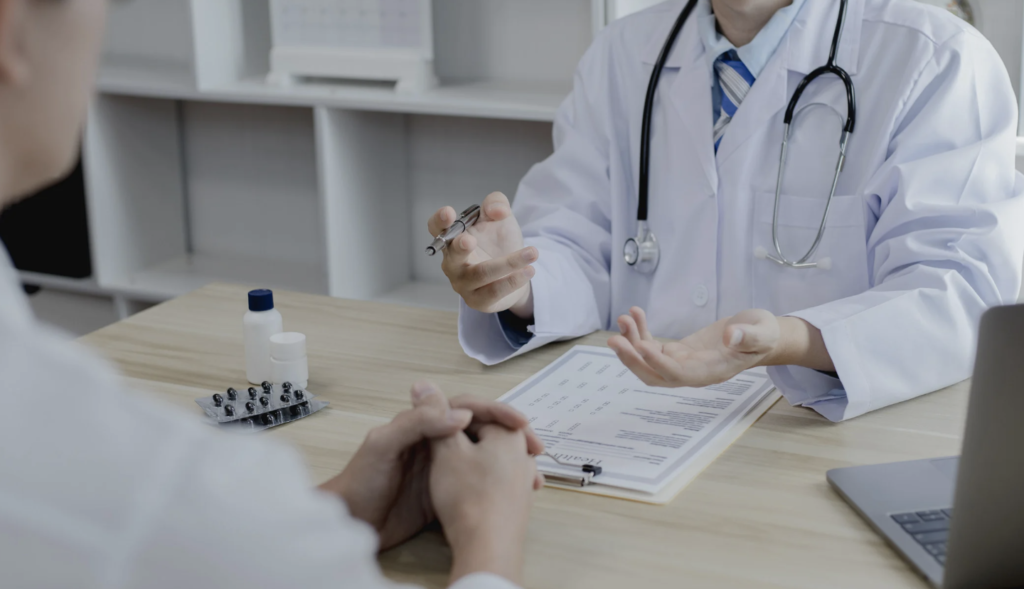
Getting checked quickly is first and foremost about your health. A doctor can catch a hidden injury early, when treatment works best. Some conditions, like internal bleeding, are emergencies. Catching them fast can save your life.
A medical professional knows what to look for. They can run tests, watch for warning signs, and spot trouble you cannot feel. What seems fine to you may show a problem to a trained eye. That is the value of a prompt exam.
Waiting carries real risk. A hidden injury left untreated can worsen. A concussion that goes unmanaged can have lasting effects. Prompt care catches problems while they are most treatable. Your health is the first and best reason to get checked.
The second reason, your records
There is a second reason to get checked promptly, and it matters for any claim. A medical visit creates a record. That record links your injury to the crash. Without it, proving the connection later is much harder.
Insurers are quick to dispute injuries. If you wait a week to see a doctor, the company may argue your injury came from something else. A medical record made soon after the crash closes that door. It documents your condition and ties it to the wreck.
This is where careful documentation matters. A firm that works deeply in medical records can use them to prove injuries that do not show on a simple scan. The record built from a prompt visit becomes the backbone of proving a hidden injury is real and crash-related.
ER, urgent care, or your doctor?
You have options for getting checked, and the right one depends on your situation. For serious warning signs, the emergency room is the place. Severe headache, belly pain, trouble breathing, numbness, or confusion all call for immediate ER care.
For milder concerns, urgent care or your own doctor may work. If you feel mostly okay but want to be safe, a prompt visit to a doctor can catch a hidden issue. The key is to get checked soon after the crash, wherever you go.
Do not simply wait and hope. Even if you skip the ER, see someone promptly. The goal is a professional evaluation while any hidden injury is still early. Getting checked, in whatever setting fits, is what protects both your health and your records.
Trust the process, not just the feeling
The hardest part is that you must act against your feelings. You feel fine, so getting checked seems unnecessary. But the feeling is exactly what the adrenaline creates. Trusting it over a medical exam is a gamble with your health.
Think of the exam as insurance for your body. Most of the time, it may confirm you are okay, which brings peace of mind. But the one time it catches a hidden injury, it can change everything. The small effort of getting checked is worth it for that protection. Do not let a temporary good feeling talk you out of a smart precaution.
The takeaway
Feeling fine after a crash does not mean you are unhurt. Your body’s adrenaline can mask real injuries for hours. Whiplash, concussions, and internal harm are all known for hiding at first, and some are dangerous if missed.
Getting checked promptly protects your health by catching these injuries early. It also creates the record that links any injury to the crash, which matters for a claim. Whether you go to the ER, urgent care, or your doctor, the message is the same. Get checked soon, even if you feel okay. It is one of the most important things you can do after a Houston crash, for your health and your peace of mind.
So the answer to the question is clear. Yes, get checked after a crash, even if you feel fine. Your health is worth the small effort, and your future claim may depend on the record. The adrenaline that makes you feel okay is the very reason to be cautious. A prompt visit is one of the wisest things you can do after any Houston crash.
