

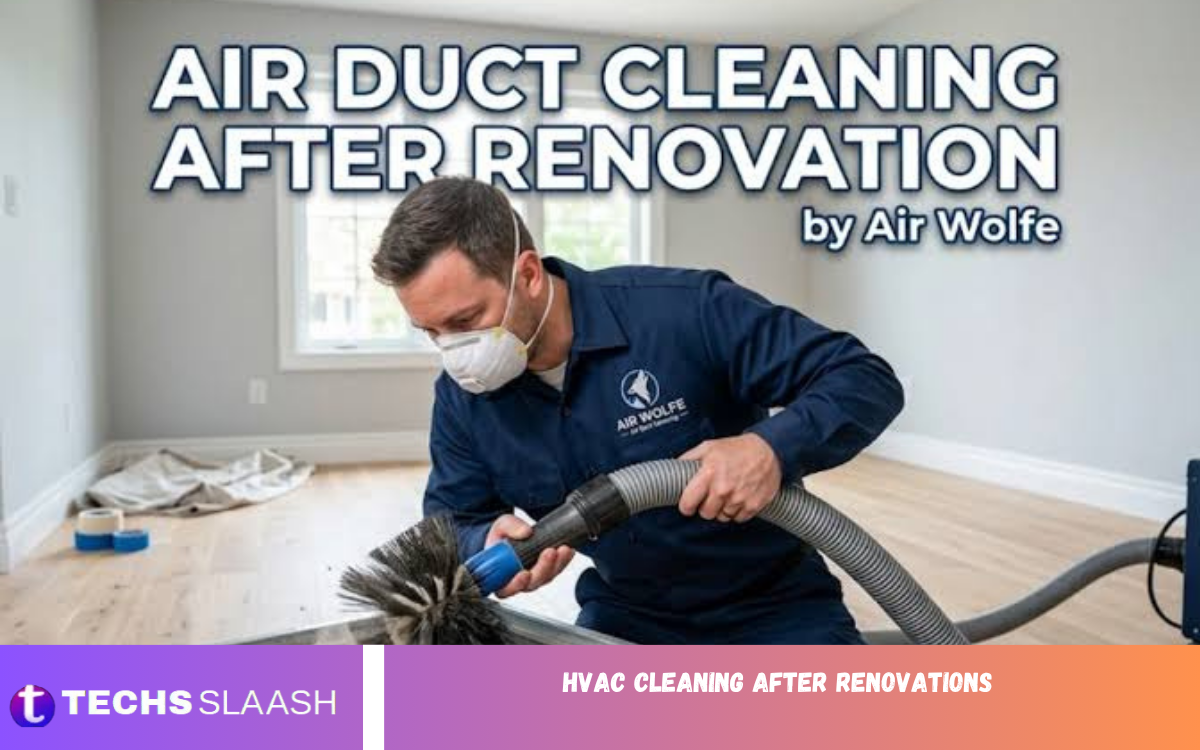
Renovating a home or commercial property can dramatically improve its appearance and functionality, but it often leaves behind a significant amount of dust, debris, and construction particles. While floors, walls, and furniture are usually cleaned after the work is completed, one area that is often overlooked is the HVAC (Heating, Ventilation, and Air Conditioning) system.
HVAC cleaning after renovations is an essential step in restoring a clean, healthy, and comfortable indoor environment. Professional cleaning removes accumulated dust, allergens, and debris from the ductwork, vents, coils, and filters, helping the system operate more efficiently while improving airflow.
Why HVAC Cleaning After Renovations Is Important?
Construction activities generate enormous amounts of fine dust and debris. Even when contractors use protective coverings, microscopic particles travel through the air and enter HVAC systems.
Common renovation contaminants include:
- Drywall dust
- Sawdust
- Cement particles
- Paint residue
- Insulation fibers
- Wood chips
- Metal shavings
- Adhesive particles
- Plastic debris
Once these materials enter the HVAC system, they settle inside ductwork, air filters, evaporator coils, blower motors, and vents. Every time the HVAC system operates, contaminated air circulates throughout the property.
Professional HVAC cleaning removes these contaminants before they become an ongoing indoor air quality problem.
How Renovation Dust Affects HVAC Systems
Construction dust is finer than normal household dust. Because of its microscopic size, it easily bypasses clogged filters and accumulates deep inside HVAC components.
Common problems include:
Reduced Airflow
Dust buildup blocks airflow inside air ducts and vents, forcing the HVAC system to work harder.
Higher Energy Bills
Restricted airflow increases energy consumption because the equipment must run longer to reach the desired temperature.
Shorter Equipment Lifespan
Motors, fans, and compressors experience additional strain, leading to premature wear.
Dirty Indoor Air
Every HVAC cycle spreads construction dust into living spaces.
Increased Maintenance
Dirty systems require more frequent filter replacements, repairs, and servicing.
Ignoring HVAC cleaning after renovations often leads to long-term maintenance costs that exceed the price of professional cleaning.
Health Risks of Post-Renovation HVAC Contamination
Indoor air quality directly affects health. Renovation dust contains particles that can irritate the respiratory system.
Potential health concerns include:
- Allergic reactions
- Asthma flare-ups
- Eye irritation
- Dry throat
- Skin irritation
- Persistent coughing
- Sneezing
- Sinus congestion
Children, elderly individuals, and people with respiratory conditions are especially vulnerable.
Professional HVAC cleaning significantly reduces airborne contaminants and creates a healthier indoor environment.
Signs Your HVAC Needs Cleaning After Renovation
Some warning signs appear immediately after construction.
These include:
- Visible dust blowing from vents
- Persistent construction odors
- Dust settling quickly on furniture
- Reduced airflow
- Higher electricity bills
- Dirty HVAC filters shortly after replacement
- Increased allergy symptoms
- Strange odors when the HVAC system starts
Even if these signs are absent, professional inspection remains recommended after major remodeling work.
What Professional HVAC Cleaning Includes?
A complete HVAC cleaning involves much more than vacuuming air vents.
Professional technicians typically clean:
Air Ducts
High-powered vacuum systems remove accumulated debris throughout supply and return ducts.
Air Vents
Registers and grilles are cleaned to eliminate visible dust buildup.
Blower Assembly
Dust-covered blower fans lose efficiency and distribute contaminants.
Air Handler
Cleaning the air handler improves airflow and prevents dirt accumulation.
Evaporator Coils
Clean coils improve cooling efficiency and reduce energy consumption.
Drain Pans
Cleaning prevents mold growth caused by standing moisture.
Air Filters
Filters are replaced after renovation to ensure clean airflow.
HVAC Cabinet
Interior compartments are vacuumed and sanitized where necessary.
Professional equipment ensures contaminants are removed rather than redistributed.
The HVAC Cleaning Process
Professional cleaning generally follows several important steps.
Initial Inspection
Technicians inspect:
- Ductwork
- Air handler
- Filters
- Vents
- Blower
- Coils
This assessment determines contamination levels.
System Preparation
The HVAC system is safely shut down before cleaning begins.
Protective coverings prevent dust from spreading into occupied areas.
Negative Pressure Vacuuming
Industrial vacuum equipment creates negative pressure inside ductwork, pulling contaminants into sealed collection units.
This prevents dust from escaping during cleaning.
Mechanical Agitation
Specialized brushes, compressed air tools, and rotating equipment loosen stubborn debris inside ducts.
Component Cleaning
Technicians clean:
- Blower fans
- Motors
- Coils
- Drain systems
- Registers
- Air handler
Filter Replacement
New high-quality HVAC filters replace construction-contaminated filters.
Final Testing
Airflow, system operation, and cleanliness are verified before completion.
Benefits of HVAC Cleaning After Renovations
Professional HVAC cleaning delivers several immediate and long-term advantages.
Better Indoor Air Quality
Removing construction dust prevents continuous circulation of airborne particles.
Improved HVAC Efficiency
Clean systems move air more effectively, reducing workload.
Lower Utility Costs
Improved airflow decreases energy consumption.
Longer Equipment Life
Reduced strain minimizes wear on expensive components.
Cleaner Living Spaces
Less dust exits air vents, reducing household cleaning.
Odor Removal
Construction odors gradually disappear once contaminated dust is removed.
Healthier Environment
Cleaner indoor air supports better respiratory health.
Read Also: How the Wrong Flooring Can Ruin Your Kitchen Remodel
When Should HVAC Cleaning Be Performed?
The ideal time is immediately after construction finishes and before regular occupancy resumes.
Recommended sequence:
- Complete all renovation work.
- Perform thorough building cleaning.
- Schedule professional HVAC cleaning.
- Install new HVAC filters.
- Begin normal HVAC operation.
Cleaning too early allows additional construction dust to enter the system.
DIY vs Professional HVAC Cleaning
Some homeowners consider cleaning vents themselves.
Basic DIY tasks include:
- Changing filters
- Wiping vent covers
- Vacuuming visible dust
However, DIY cleaning cannot access deep ductwork or internal HVAC components.
Professional services use:
- HEPA filtration systems
- High-pressure vacuum equipment
- Rotary brushes
- Inspection cameras
- Specialized air tools
Professional cleaning provides far more comprehensive results.
How Often Should HVAC Systems Be Cleaned?
Most residential HVAC systems do not require annual duct cleaning.
However, cleaning is recommended after:
- Major home renovations
- Fire damage
- Flood restoration
- Mold remediation
- Pest infestations
- New construction
- Extensive remodeling
Routine inspections help determine whether additional cleaning is necessary.
Choosing the Right HVAC Cleaning Company
Selecting an experienced contractor ensures effective cleaning without damaging the system.
Look for companies offering:
- Certified technicians
- Modern cleaning equipment
- Transparent pricing
- Positive customer reviews
- Written estimates
- HVAC system expertise
- Insurance coverage
- Satisfaction guarantees
Ask about the cleaning process before scheduling service.
Cost of HVAC Cleaning After Renovations
Costs vary depending on:
- Property size
- Number of HVAC systems
- Duct length
- Accessibility
- Level of contamination
- Geographic location
Small residential properties generally cost less than large commercial buildings.
Although professional cleaning requires an upfront investment, improved efficiency and reduced maintenance often offset the expense over time.
Preventing HVAC Contamination During Future Renovations
Prevention minimizes cleaning requirements.
Helpful strategies include:
- Turn off HVAC equipment during heavy construction.
- Seal supply and return vents with protective covers.
- Isolate construction zones using plastic barriers.
- Use HEPA-equipped construction vacuums.
- Replace HVAC filters immediately after construction.
- Schedule professional duct inspection after project completion.
Preventive measures reduce dust entering the HVAC system.
Common Mistakes to Avoid
Many property owners unknowingly create additional HVAC problems after remodeling.
Avoid these mistakes:
- Operating HVAC during drywall sanding.
- Ignoring clogged filters.
- Skipping professional inspection.
- Delaying post-renovation cleaning.
- Assuming visible cleanliness means clean ductwork.
- Hiring inexperienced contractors based solely on price.
Proper maintenance protects your HVAC investment.
Long-Term Maintenance Tips
Maintain HVAC performance with these best practices:
- Replace filters every 1–3 months.
- Schedule annual HVAC maintenance.
- Keep vents unobstructed.
- Vacuum around air registers regularly.
- Monitor indoor humidity levels.
- Inspect ductwork periodically.
- Seal duct leaks promptly.
- Address unusual odors immediately.
Consistent maintenance keeps systems operating efficiently for years.
Frequently Asked Questions
Is HVAC cleaning necessary after every renovation?
Minor cosmetic updates may not require complete duct cleaning, but projects involving drywall, demolition, flooring, insulation, or extensive construction generally warrant professional HVAC cleaning.
Can renovation dust damage HVAC equipment?
Yes. Fine construction dust can clog filters, coat coils, restrict airflow, and increase wear on motors and other mechanical components.
How long does HVAC cleaning take?
Most residential systems can be cleaned within several hours, while larger homes or commercial buildings may require a full day or longer depending on the system size and level of contamination.
Does HVAC cleaning improve air quality?
Yes. Removing dust, debris, and contaminants from the HVAC system reduces the circulation of airborne particles and helps create a cleaner indoor environment.
Should filters be replaced after renovations?
Absolutely. Construction dust quickly clogs HVAC filters, making replacement essential once renovation work is complete.
Conclusion
HVAC Cleaning After Renovations is one of the most valuable steps you can take to protect your indoor air quality and preserve the performance of your heating and cooling system. Renovation projects generate fine dust and debris that can infiltrate ductwork, filters, coils, and other critical HVAC components.
Investing in professional post-renovation HVAC cleaning ensures cleaner air, better airflow, lower operating costs, and a longer-lasting HVAC system.
