

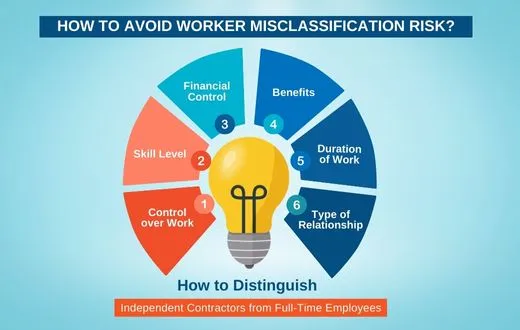
The classification of workers as independent contractors versus employees has substantial legal and financial implications for both workers and employers. Employer misclassification of workers as independent contractors when they should legally be classified as employees deprives workers of various protections and benefits while providing employers with cost advantages. Understanding classification rules helps workers evaluate whether they may have been misclassified. Working with an experienced unpaid wages attorney can help workers pursue claims when misclassification has occurred.
The Legal Significance of Classification
Employee classification triggers various legal protections and benefits that independent contractor classification does not. Employees are covered by minimum wage and overtime protections, unemployment insurance, workers’ compensation, various discrimination protections, and various other legal frameworks. Independent contractors generally lack these protections and must handle related matters themselves.
Employers face different obligations for employees versus independent contractors. Employee status triggers payroll tax obligations, benefit obligations, workers’ compensation insurance requirements, and various other employer responsibilities. These cost differences create financial incentives for employers to classify workers as independent contractors even when employee classification is legally required.
The Various Classification Tests
Different legal frameworks apply different tests for worker classification. The IRS uses a common law test focused on behavioral control, financial control, and relationship factors. The Department of Labor applies an economic reality test for FLSA purposes. Various state agencies apply their own tests. California has adopted the ABC test for various purposes that presumes employee status.
Understanding which classification test applies to specific claims affects classification analysis. Workers may be independent contractors under some tests and employees under others based on the same facts. Attorneys can help workers understand which tests apply to their specific claims and how their situations analyze under applicable tests.
The California ABC Test
California’s ABC test presumes worker classification as employees unless employers can prove three specific factors: the worker is free from control and direction, performs work outside the usual course of the hiring entity’s business, and is customarily engaged in an independently established trade. Meeting all three factors is required for independent contractor classification.
The ABC test is substantially more restrictive than prior classification tests and has resulted in reclassification of many workers previously treated as independent contractors. Various industry-specific exceptions apply, but the general rule strongly favors employee classification. Workers in California should understand ABC test implications for their situations.
Common Misclassification Situations
Various work arrangements commonly involve misclassification. Workers labeled as independent contractors who actually perform work integral to employer operations, who are subject to substantial employer control, who cannot realistically pursue independent business, or who show various other indicators of employee status may be misclassified. Understanding these patterns helps identify potential misclassification.
Gig economy work arrangements have generated particular misclassification concerns. Various rideshare, delivery, and various other gig platforms have faced substantial litigation over classification of their workers. Legal frameworks continue to evolve as these classification issues receive continued attention. Workers in gig arrangements should understand their potential classification claims.
Financial Impact of Misclassification
Misclassified workers face various financial impacts including loss of overtime pay for hours worked over 40 in a workweek, loss of minimum wage protections, obligation to pay both employee and employer shares of payroll taxes, loss of employer contributions to Social Security and Medicare, loss of unemployment insurance coverage, loss of workers’ compensation coverage, and various other financial impacts.
Reclassification claims can support recovery of these various financial impacts. Damage calculations can be substantial for workers who have been misclassified for extended periods. Attorneys can help workers understand their potential recovery based on specific work histories and circumstances.
Employer Motivations for Misclassification
Understanding employer motivations for misclassification helps evaluate specific situations. Cost savings on payroll taxes, workers’ compensation insurance, benefits, and various other employer obligations create substantial financial incentives for misclassification. Some employers misclassify workers deliberately while others misclassify based on misunderstanding of classification requirements.
Employer intent affects damage recovery in some respects but does not typically affect fundamental liability for misclassification. Both deliberate and negligent misclassification generate liability. Attorneys evaluating misclassification claims focus primarily on whether classification was legally correct rather than on employer intent.
Documentation Supporting Misclassification Claims
Effective misclassification claims require documentation supporting employee status factors. Evidence of employer control over work methods and timing, integration of work into employer operations, employer provision of tools and equipment, ongoing relationship rather than project-based engagement, and various other factors support misclassification claims.
Workers should preserve documentation from their engagements including agreements, communications, work materials, and various other evidence. Attorneys can help workers evaluate documentation and identify additional evidence that would support claims. This documentation dimension often affects claim viability substantially.
The Role of Written Agreements
Written agreements labeling workers as independent contractors do not determine actual classification. Courts and agencies look beyond labels to actual work relationships. However, written agreements can affect analysis in various ways including establishing certain baseline arrangements and creating expectations that affect interpretation of ambiguous facts.
Workers should carefully review any classification-related agreements before signing and consult with attorneys about implications when significant work relationships are involved. Attorneys can advise on both agreement negotiation and interpretation of existing agreements. This document review is important for workers entering new engagements.
IRS Section 530 Considerations
Section 530 of the Revenue Act of 1978 provides safe harbor for employers who consistently treated workers as independent contractors based on reasonable basis. This provision can affect IRS assessment of employer tax obligations even when workers should have been classified as employees for tax purposes. Understanding Section 530 helps evaluate specific tax-related classification claims.
Section 530 provides employer protection for tax purposes but does not affect various other legal frameworks. Workers can pursue claims under wage and hour law, unemployment insurance, workers’ compensation, and various other frameworks even when Section 530 protects employers from certain tax assessments. Attorneys can advise on the specific interaction of Section 530 with various worker claims.
Wage Claims by Misclassified Workers
Workers reclassified as employees can pursue various wage claims including minimum wage claims, overtime claims, meal and rest break claims, expense reimbursement claims, and various other wage-related claims that would not apply to independent contractors. These claims can substantially supplement the direct financial impact of misclassification itself.
Comprehensive wage claim analysis for reclassified workers requires attention to all applicable wage and hour requirements. Attorneys evaluating misclassification claims typically also evaluate related wage claims to develop comprehensive recovery strategies. This integrated approach maximizes recovery for workers affected by misclassification.
Class Action Approaches
Misclassification often affects multiple workers with similar arrangements, creating potential class action claims. Class actions can efficiently address widespread misclassification and create substantial accountability for employer practices. Many significant misclassification cases have proceeded as class actions.
Attorneys with class action experience can evaluate whether class approaches would benefit specific situations. Class actions involve specific procedural requirements and considerations that require experienced representation. Workers affected by misclassification should consider whether their situations may support class approaches alongside individual claims.
The Contractor’s Perspective
Not all workers benefit from employee classification. Some workers prefer independent contractor status for various reasons including business autonomy, tax advantages of business expense deductions, ability to work with multiple clients, and various other considerations. These workers may resist reclassification even when it would otherwise be legally required.
Individual worker preferences do not affect legal classification requirements, though they may affect worker willingness to pursue misclassification claims. Attorneys can help workers evaluate both classification realities and their personal preferences to make informed decisions about how to proceed.
Industry-Specific Considerations
Various industries have distinctive classification patterns and considerations. Construction, healthcare, transportation, technology, professional services, and various other industries have specific practices that affect classification analysis. Industry-specific expertise supports effective analysis of specific worker situations.
Attorneys familiar with specific industries can bring valuable perspective to classification analysis. Understanding industry patterns, common misclassification practices, and specific legal developments affecting particular industries supports effective representation. Workers in specific industries may benefit from attorneys with relevant industry experience.
The Evolution of Classification Law
Worker classification law continues to evolve substantially. New legislation, court decisions, regulatory guidance, and various other developments continue to shape this area. Attorneys who stay current with these developments can advise workers based on current rules rather than outdated approaches. Workers facing classification issues benefit from working with attorneys committed to continuing education in this evolving area.
The Broader Labor Market Implications
Misclassification affects broader labor markets in ways that extend beyond individual workers. Employer cost advantages from misclassification create competitive pressures affecting properly classifying employers. Reduced tax revenues from misclassification affect public services. Various other broader effects justify continued enforcement attention to misclassification practices. This broader dimension provides additional motivation for pursuing meritorious misclassification claims that contribute to overall labor market fairness.
The Practical Impact on Working Lives
Beyond legal considerations, worker classification substantially affects working lives. Employee status typically provides more stable working relationships, various benefit access, and various other advantages. Independent contractor status provides autonomy but requires workers to handle various matters that employees do not need to address.
Understanding the practical realities of different classifications helps workers make informed decisions about work arrangements when they have choices. Attorneys can help workers understand both legal and practical implications of various work arrangements.
