

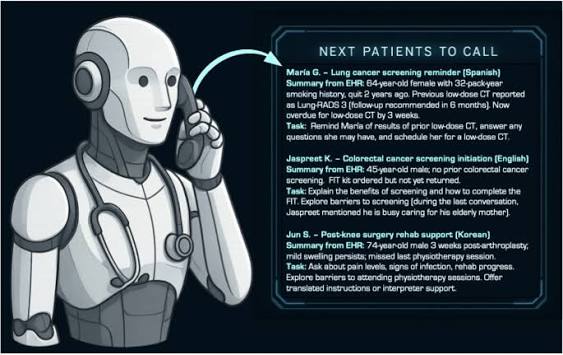
For most of the last decade, “voice technology” in a business setting meant one of two things. An IVR tree that routed calls badly. Or a chatbot wearing a voice skin, which is arguably worse, because it pretends to listen. Neither did much actual work. They answered. They redirected. They occasionally frustrated a customer straight into hanging up. That era is closing, and not slowly.
What’s replacing it isn’t a smarter chatbot. It’s something closer to staff. A Voice AI Agent, the kind being deployed across enterprises right now, can carry a conversation, pull data from three different backend systems mid-call, make a judgment call within defined limits, and close out a task without a human ever stepping in. That’s the shift this piece is really about: tool to worker.
The Line Between a Voice Bot and a Voice AI Agent
Worth being precise here, honestly, because the market throws around “AI agent” fairly loosely these days.
A voice bot follows a script. Step outside it, and you get “I’m sorry, I didn’t understand that” on loop, if you let the call run long enough. No memory beyond the current turn. No real ability to reason about what the caller actually wants.
A Voice AI Agent is built differently. At minimum, it combines:
- Automatic Speech Recognition (ASR) tuned for real-world audio accents, background noise, people talking over each other
- A reasoning layer, usually a large language model underneath, that works out intent rather than matching keywords off a list
- Tool-calling ability, so it can query a CRM, check an order, update a record while the call is still happening
- Memory and context retention, within a session and, increasingly, carried across sessions
- Natural, low-latency Text-to-Speech that doesn’t sound like it’s reading off a card someone handed it
Put those together, and you get an agent that can hold a conversation roughly the way a competent employee would. Not flawlessly. Not infinitely flexibly. But well enough that something actually gets resolved by the end of the call.
Why “Digital Workforce” Isn’t Just Marketing Language
I’ll say this plainly: the phrase gets overused, and a fair amount of skepticism toward it is earned. But there’s a real technical basis for it here, and it comes down to task completion rather than task response.
A workforce doesn’t just talk to people. It closes tickets. Updates records. Escalates the cases that actually deserve escalation. Does all of it at whatever volume the business happens to throw at it that day. A modern Voice AI Agent is built around that same expectation, not around sounding pleasant on the phone.
Autonomous, Multi-Step Task Execution
Older systems handled one thing at a time. “What’s my balance?” gets an answer, and that’s the end of it. A digital-workforce-grade agent handles multi-step flows instead: verifying identity, checking eligibility across two backend systems, applying a policy rule, confirming an outcome, all inside a single call, with no handoff required.
Persistent Context Across Touchpoints
An agent that remembers a customer called yesterday about a delayed shipment, and opens today’s conversation already aware of that, starts to behave less like software and more like a team member with actual continuity. This matters more than it sounds like it should. For enterprises evaluating vendors, continuity of context is often the single detail that separates a working demo from a system that survives real deployment.
Escalation With Judgment, Not Just Rules
A well-built agent doesn’t hand off every ambiguous input to a human that would defeat the point. It’s tuned instead to recognize the situations that genuinely need a person: fraud indicators, real emotional distress, anything compliance-sensitive. Everything else, it just handles.
Where This Is Actually Being Deployed
Set the theory aside for a moment. The deployment pattern across industries is fairly consistent, and it maps almost exactly to where call volume is high and the underlying task, while repeatable, isn’t trivial to automate badly.
Banking and financial services
Balance inquiries, transaction disputes, card-block requests, loan status checks: high volume, procedural, sensitive enough that accuracy matters far more than charm. Voice AI Agents in this space are judged almost entirely on compliance adherence and error rate, not conversational polish.
Healthcare
Appointment scheduling, prescription refill confirmations, and pre-visit intake are increasingly handled by agents integrated directly into scheduling systems, cutting no-show rates without adding a single new hire.
Logistics and D2C
Order status checks, delivery rescheduling, return initiation. About as close to a perfect fit as this technology gets: structured data, clear resolution paths, and call volumes most human teams simply can’t absorb.
Recruitment
Initial candidate screening, availability, basic qualification checks, and scheduling the first round are being automated at the top of the funnel more and more, which frees up recruiters for the evaluation work that actually needs a human judgment call.
Call Center Automation
Broadly speaking, it is the umbrella most of these use cases fall under. It’s also the fastest-growing category of deployment, for a fairly obvious reason: contact centers are where repetitive, high-cost human labor sits most visibly, and most expensively.
The Technical Backbone: What Enterprises Should Actually Evaluate
Vendor pitches tend to converge once you sit through enough of them. The real differentiation shows up in the architecture, not the demo. A few things worth checking properly before anyone signs anything:
- Latency under real network conditions: Sub-second response in a controlled demo means very little once it degrades under actual production call volume. Ask for load-tested numbers. Not the lab numbers.
- Language and dialect coverage: For deployment in India specifically, this matters more than most vendors are willing to admit upfront. A system trained mostly on US English audio will struggle with regional accents, and with the code-switching between English and Hindi or other regional languages that happens mid-sentence in real calls, constantly.
- Integration depth: Can the agent actually write back to your CRM, or does it only read from it? Read-only agents are, functionally, expensive answering machines.
- Data residency and compliance posture: For BFSI and healthcare especially, where the voice data physically sits and how it’s processed isn’t a footnote in the contract. It’s often the deciding factor.
- Human-in-the-loop configurability: Better systems let you tune escalation thresholds per use case. Not as one fixed global setting that ignores the fact that a fraud call and a delivery query aren’t the same risk category.
None of this is exotic. It’s basic due diligence that a lot of enterprises skip anyway, mostly because the demo sounded convincing enough in the room.
E-E-A-T Considerations for Enterprise Buyers
Trust, in the context of Voice AI Agents, isn’t some vague quality you either feel or don’t. It’s measurable, and it comes down to roughly three things:
- Experience: has the vendor actually run this at production call volume, in a comparable industry, or is the case study really just a pilot dressed up as proof?
- Accuracy under pressure: when the system is genuinely uncertain, does it guess, or does it defer to a human?
- Auditability: can every decision the agent made mid-call be traced back, reviewed, and explained afterward? Regulators are increasingly expecting this as the default, not something you produce only when asked.
Enterprises adopting Voice AI Agents at any real scale should treat these three as non-negotiable, not as a nice-to-have on a vendor scorecard somewhere near the bottom.
What Comes Next
Conversational polish, at this point, is largely a solved problem. What isn’t solved yet, not really, is orchestration. Getting multiple agents to coordinate across a single customer journey, instead of each one operating as its own isolated point solution. A voice agent closes a call and hands context to an email follow-up agent, which then hands it to a scheduling system, with no human stitching any of it together in between. Some vendors are further along here than others, and it’s a fair line of questioning for any enterprise buyer to raise directly, rather than take on faith. That handoff, done properly, is what turns “digital workforce” from a phrase in a sales deck into something an operations team can actually depend on, day to day, without babysitting it. Call Center Automation is increasingly becoming part of this broader orchestration layer as voice agents move from isolated call handling toward end-to-end operational workflows.
Conclusion
Voice AI Agents have moved well past the pilot stage at this point. The bar isn’t whether they can hold a conversation anymore; most credible vendors cleared that a while back. It’s whether they can complete work end to end, reliably, under audit, and at whatever volume a real contact center throws at them. That’s a genuinely different evaluation than what enterprises were running two or three years ago, and it deserves to be treated that way rather than folded into the same old vendor checklist. For organizations still weighing adoption, the more useful question probably isn’t whether the technology is ready. It’s which process, internally, makes sense to hand over first, and what governance needs to exist before that handover happens.
