

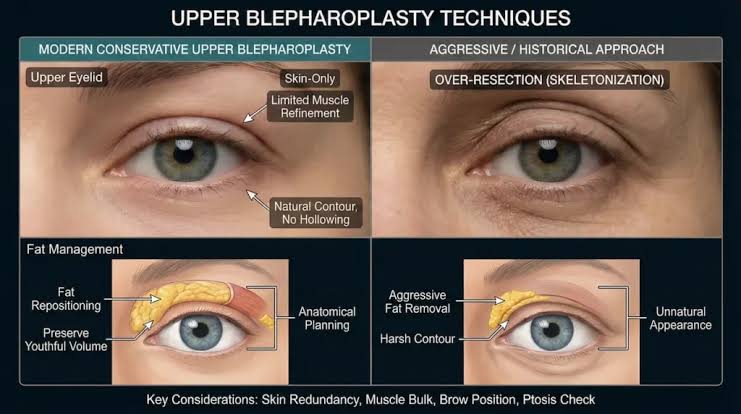
Blepharoplasty, also known as eyelid surgery, is a procedure that focuses on improving the appearance and function of the eyelids. It may be considered by patients who experience concerns such as excess eyelid skin, drooping eyelids or under-eye bags that affect their facial appearance or, in some cases, their vision.
As the eyes are one of the most noticeable features of the face, changes around the eyelids can influence how refreshed or tired a person appears. Some patients seek blepharoplasty for aesthetic reasons, while others may consider the procedure when excess skin affects their field of vision.
Before undergoing eyelid surgery, it is important to understand what the procedure involves, who may be suitable, what results to expect and the factors involved in recovery.
What Is Blepharoplasty?
Blepharoplasty is a surgical procedure that involves removing or repositioning excess skin, fat and tissue around the eyelids.
Depending on the patient’s concerns, eyelid surgery may involve:
Upper Eyelid Surgery
Upper eyelid surgery focuses on the upper eyelids and may address:
- Excess skin folds
- Drooping eyelid appearance
- Heavy eyelids
- Reduced visibility caused by overhanging skin
Lower Eyelid Surgery
Lower eyelid surgery focuses on the area beneath the eyes and may address:
- Under-eye bags
- Puffiness
- Excess skin
- Changes in the lower eyelid contour
Some patients may require upper eyelid surgery, lower eyelid surgery or a combination of both depending on their concerns and anatomy.
Why Do Patients Consider Blepharoplasty?
People consider eyelid surgery for different reasons. Common concerns include:
Tired-Looking Eyes
Excess skin or changes around the eyelids may make the eyes appear tired or aged, even when a person feels well-rested.
Drooping Upper Eyids
Age-related changes may cause the upper eyelid skin to become heavier or fold over the eyelid crease.
Under-Eye Bags
Lower eyelid changes may result in puffiness or fullness beneath the eyes.
Functional Concerns
In some cases, excess upper eyelid skin may affect peripheral vision or make certain daily activities more difficult.
A consultation helps determine whether the concern is mainly cosmetic, functional or a combination of both.
What Causes Eyelid Ageing?
The appearance of the eyelids changes naturally over time due to several factors.
These may include:
Loss of Skin Elasticity
As collagen and elastin levels decrease with age, the skin may become less firm.
Changes in Fat Distribution
Fat around the eyes helps provide support and shape. Over time, changes in fat position may contribute to puffiness or under-eye bags.
Muscle Changes
The muscles responsible for eyelid movement may weaken or change over time, contributing to eyelid drooping.
Genetics
Some individuals naturally have eyelid features that make them more likely to develop certain concerns earlier.
Who May Be Suitable for Blepharoplasty?
Suitability depends on the individual’s anatomy, concerns and overall health.
A patient may be considered suitable if they:
- Have realistic expectations
- Are generally healthy
- Are concerned about excess eyelid skin or under-eye changes
- Understand the limitations and possible outcomes
- Are seeking improvement rather than perfection
During consultation, a plastic surgeon will assess:
- Eyelid structure
- Skin quality
- Muscle function
- Facial proportions
- Medical history
- Desired outcomes
What Happens During a Blepharoplasty Consultation?
A consultation is an important step before deciding whether eyelid surgery is appropriate.
The plastic surgeon may discuss:
Your Concerns and Goals
Patients may explain what they would like to improve, such as:
- Heavy upper eyelids
- Under-eye bags
- Tired-looking appearance
- Facial balance
Eyelid Assessment
The surgeon may assess:
- Amount of excess skin
- Eyelid position
- Symmetry
- Muscle function
- Brow position
- Eye shape
Treatment Options
Depending on findings, options may include:
- Upper eyelid surgery
- Lower eyelid surgery
- Non-surgical treatments
- Combination procedures
The recommended approach depends on the individual rather than a standard procedure for everyone.
How Is Blepharoplasty Performed?
The technique used depends on the area being treated.
Upper Eyelid Surgery
During upper eyelid surgery, an incision is typically made within the natural crease of the eyelid.
The surgeon may remove or adjust:
- Excess skin
- Fat deposits
- Tissue affecting eyelid appearance
The goal is to create a balanced eyelid contour while preserving natural eyelid function.
Lower Eyelid Surgery
Lower eyelid surgery may involve:
- Removing or repositioning fat
- Addressing excess skin
- Improving the transition between the lower eyelid and cheek
In some cases, a transconjunctival approach may be used, where the incision is made inside the lower eyelid.
The suitable technique depends on the patient’s anatomy and concerns.
How Long Does Blepharoplasty Surgery Take?
The duration of eyelid surgery varies depending on:
- Whether upper or lower eyelids are treated
- Whether multiple procedures are combined
- The complexity of the case
During consultation, the surgeon can provide more specific information based on the planned procedure.
Recovery After Blepharoplasty
Recovery varies between individuals, but patients can generally expect some temporary changes after surgery.
Common early effects may include:
- Swelling
- Bruising
- Tightness around the eyelids
- Mild discomfort
- Dryness or irritation
These effects usually improve gradually during the healing process.
What Should Patients Expect During Recovery?
First Few Days
Patients may experience:
- Swelling around the eyes
- Bruising
- Sensitivity
- Difficulty opening the eyes comfortably
Cold compresses and prescribed aftercare measures may help with comfort.
First Few Weeks
As healing progresses:
- Bruising usually reduces
- Swelling gradually improves
- Incisions begin healing
- Normal activities can often be resumed based on medical advice
Longer-Term Healing
Final results may take several months as swelling continues to settle and tissues fully heal.
Factors to Consider Before Eyelid Surgery
Before deciding on blepharoplasty, patients should consider:
1. Realistic Expectations
Blepharoplasty can improve eyelid appearance but does not stop the natural ageing process.
The goal is usually to achieve a refreshed and balanced appearance.
2. Choosing a Qualified Plastic Surgeon
Patients should consider:
- Specialist qualifications
- Experience with eyelid procedures
- Surgical approach
- Communication style
- Understanding of patient goals
3. Understanding Recovery Requirements
Patients should plan for:
- Time away from work
- Follow-up appointments
- Activity restrictions
- Post-operative care
4. Medical History
Patients should inform their surgeon about:
- Eye conditions
- Previous eye procedures
- Medication use
- Health conditions
This helps the surgeon assess suitability and plan treatment safely.
Finding a Plastic Surgery Clinic for Blepharoplasty in Singapore
Choosing the right clinic and surgeon is an important part of the decision-making process. Patients should consider the surgeon’s experience, qualifications, treatment approach and whether they provide a thorough consultation before recommending surgery.
For patients considering blepharoplasty, consulting with different plastic surgery clinics in Singapore can help them better understand their options. One example is Astrid Plastic Surgery, which is headed by Dr Jonah Kua and Dr Chia Hui Ling, where patients can discuss their eyelid concerns and explore whether blepharoplasty is suitable for their individual needs.
Blepharoplasty can help address concerns related to excess eyelid skin, drooping eyelids and under-eye changes. However, deciding whether eyelid surgery is suitable requires careful assessment of each patient’s anatomy, goals and overall health.
Understanding the procedure, expected recovery, potential risks and available options can help patients make more informed decisions before surgery.
A consultation with a qualified plastic surgeon is an important step for anyone considering blepharoplasty in Singapore, as it allows patients to discuss their concerns and understand the most appropriate approach for their individual needs.
This article is for general information only and should not replace medical advice from a qualified healthcare professional.
