

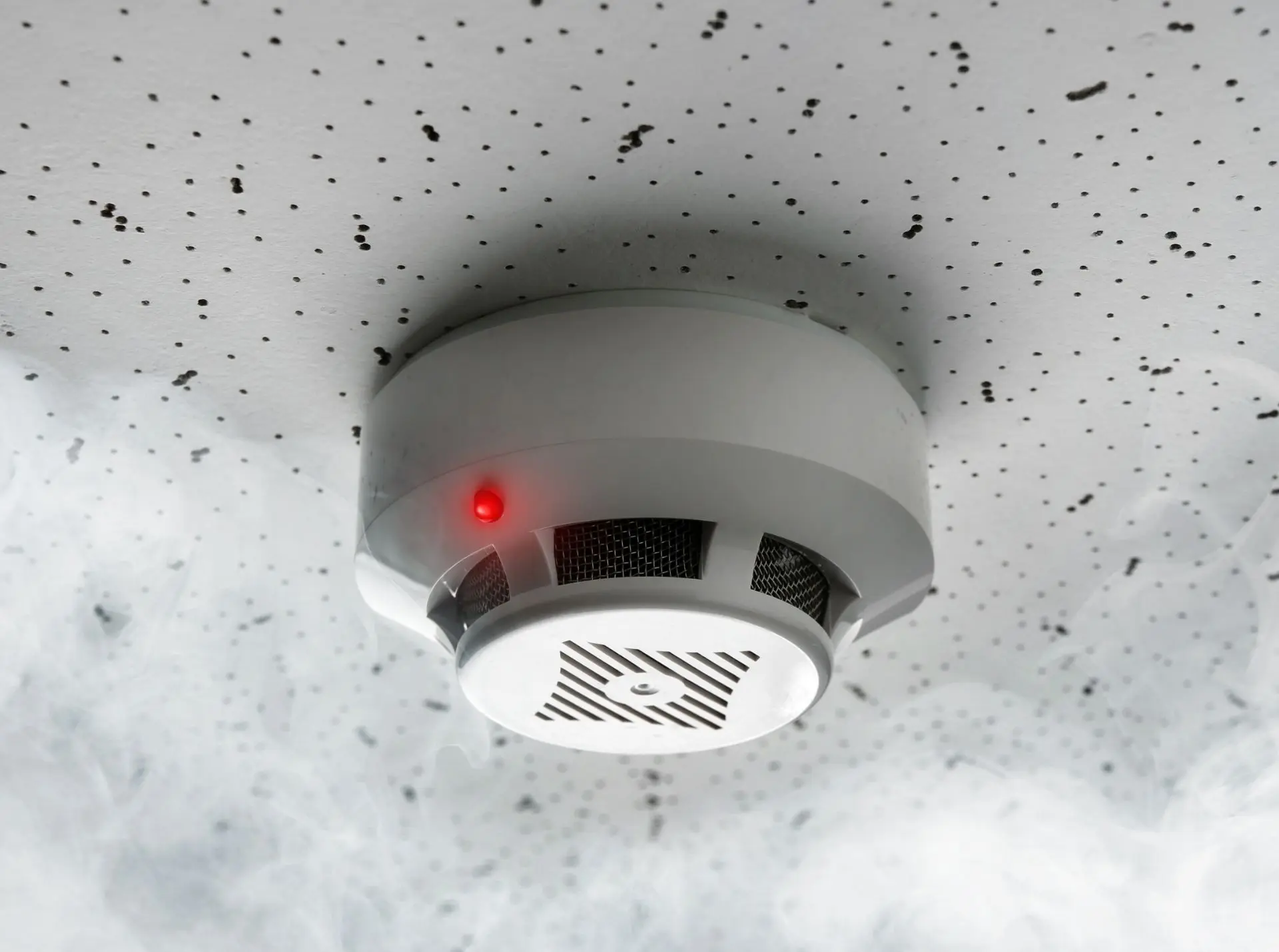
Two small devices do more to protect a household from electrical harm and house fires than almost anything else in the home. One sits quietly in the switchboard. The other sits on the ceiling. Most people only think about them when a real estate agent mentions compliance, a tenant calls about a beeping noise, or a sale is about to settle and a certificate is suddenly needed.
This guide explains what safety switches and smoke alarms actually do, what the rules in Western Australia say, who is responsible when a property is rented, and how to keep both working properly. It is written for homeowners, landlords and anyone buying or selling in Perth.
The Short Answer
Safety switches, formally called residual current devices or RCDs, cut the power in a fraction of a second if electricity leaks through a faulty appliance or a person. Smoke alarms detect smoke early and give the household time to get out. In Western Australia, both are a legal requirement in key situations.
When a home is sold or leased, it needs a minimum of two RCDs protecting the power and lighting circuits, and it needs mains powered smoke alarms that are in working order and no more than 10 years old. Installation or connection of mains powered smoke alarms must be done by a licensed electrical contractor. Landlords carry the overall responsibility, while tenants look after simple upkeep such as testing.
At a Glance
| ItemWhat It DoesKey WA RequirementWho Handles It | |||
| Safety switch (RCD) | Cuts power instantly if current leaks | Minimum of two RCDs before sale or lease | Licensed electrician installs; occupants test |
| Smoke alarm | Detects smoke and sounds an alert | Mains powered, working, no more than 10 years old | Licensed electrician installs; landlord responsible; tenant tests |
| Testing | Confirms devices work | Test safety switches regularly and smoke alarms using the test button | Occupants |
| Replacement | Keeps protection current | Replace faulty RCDs immediately and alarms at 10 years | Landlord or owner |
What a Safety Switch Actually Does
A circuit breaker protects the wiring from overload. A safety switch protects people. It continuously compares the current going out to an appliance with the current coming back. If even a tiny amount is missing, because it is flowing through a person, a damaged cord or a wet appliance, the switch trips in around 30 milliseconds. That speed is quick enough to prevent a serious or fatal shock.
Older homes often have only one safety switch, or none. A single switch may protect just the power points, leaving lighting or other circuits unprotected. Modern boards typically have a safety switch covering each group of circuits, so a fault in one area does not cut the whole house, and nothing is left without protection.
Safety Switch Rules in Western Australia
State guidance sets out when RCDs must be in place:
- Homes for sale. RCDs must be fitted to protect all circuits supplying power points and lights before title transfers, with a minimum of two.
- Rental properties. Landlords must have the required RCDs installed before the property is leased.
- Short stay accommodation. RCDs must be installed at the switchboard before guests arrive.
The same guidance recommends testing every three months by pressing the test button, which is marked with a T. The switch should flip off immediately, and you can then switch it back on. If it does not trip, it is faulty and must be replaced straight away by a licensed electrical contractor.
What a Smoke Alarm Needs to Meet the Rules
Smoke alarms are simple devices, but the rules around them are quite specific. In Western Australia, the requirements include:
- Mains power. Alarms must be permanently connected to the mains. Battery alarms with sealed 10 year batteries are only permitted where mains installation is genuinely impossible, such as certain concrete construction, and local government approval may be needed.
- Licensed installation. A licensed electrical contractor must connect or disconnect mains powered alarms.
- Age limit. An alarm must be no more than 10 years old and within its expiry date.
- Working order. It must function, which means regular testing and prompt replacement of faulty units.
- Standards. Alarms must meet the relevant Australian Standard. Photoelectric and ionisation types are both accepted, though authorities recommend photoelectric models because they respond better to smouldering fires.
- Placement. Alarms should be on or near the ceiling, at least 300 millimetres from the corner where the wall meets the ceiling, with different spacing for sloped ceilings. Coverage generally needs to include hallways outside bedrooms and every level of the home.
Penalties exist for non compliance. A property without smoke alarms can attract an on the spot fine, and sellers or landlords can face significantly larger penalties. Local councils investigate and enforce the rules.
Smoke Alarm Installation Perth Owners Should Plan Before Selling or Leasing
Many compliance problems appear at the worst possible time, such as the week before settlement or the day before a new tenant moves in. Planning ahead avoids stress, and the simplest approach is to book an electrician for a combined check of both safety switches and smoke alarms.
A good visit usually covers:
- Inspecting the switchboard to see how many safety switches are installed and which circuits they protect
- Testing every safety switch to confirm it trips correctly
- Checking each smoke alarm for age, type, position and whether it is mains connected
- Replacing or adding alarms where there are gaps in coverage, or where units are expired or faulty
- Providing paperwork that records the work for the agent, buyer or property manager
If the board is old, the electrician may recommend a switchboard upgrade so that safety switches can be added properly. That is common in older homes where there is no space, or where the existing board is not suitable for modern protection devices.
Landlords and Tenants: Who Is Responsible for What
Rental properties are where confusion is most common. A clear split of responsibilities helps everyone.
What Landlords Must Do
- Ensure the property has the required number of RCDs before the tenancy begins
- Ensure mains powered smoke alarms are installed by a licensed electrician, are in working order and are within the 10 year age limit
- Replace faulty devices promptly
- Arrange repairs or replacement through a licensed electrical contractor
- Keep records of the work, including dates and invoices
What Tenants Should Do
- Test smoke alarms using the test button and report any that do not work
- Change batteries where an alarm has accessible replaceable batteries
- Test safety switches regularly and report any that fail to trip
- Never remove, disable or cover a smoke alarm
- Avoid attempting electrical repairs themselves
A tenant who finds a faulty alarm or safety switch should notify the landlord or property manager in writing. A landlord who delays risks both a safety incident and a compliance breach. Because both sides share the benefit of working protection, regular communication keeps things simple.
Common Reasons Smoke Alarms and Safety Switches Fail
Understanding why devices fail helps you prevent problems:
- Age. Smoke alarm sensors degrade, and units past 10 years may not detect smoke reliably.
- Dust and insects. Build up inside the alarm can cause false alarms or prevent detection.
- Removed batteries. Occupants sometimes remove batteries after nuisance alarms and forget to replace them.
- Wiring faults. Loose connections or damaged cables can cause an alarm to lose power.
- Mechanical failure of RCDs. Safety switches contain moving parts that can stick or wear over time, which is why regular testing matters.
- Moisture and corrosion. Humid or damp conditions can affect electrical components, including those in outdoor or garage switchboards.
- Poor installation. An alarm too close to a kitchen, bathroom or air vent can trigger false alarms, and incorrect spacing can reduce effectiveness.
Nuisance alarms are a frequent complaint, and the solution is rarely to remove the alarm. Moving it to a better location, choosing an appropriate type or cleaning it can solve the problem while keeping the household protected.
Choosing the Right Type of Smoke Alarm
Not all smoke alarms behave the same way. The two main types are:
- Photoelectric alarms. These use a light beam and sensor to detect smoke particles. They respond well to slow, smouldering fires that produce a lot of smoke, such as a cigarette in a couch or an overheated cable. Authorities generally recommend them for most areas of the home.
- Ionisation alarms. These use a small amount of radioactive material to detect the tiny particles from fast flaming fires. They are more prone to nuisance alarms near kitchens.
Many households choose photoelectric alarms for bedrooms, hallways and living areas. Where practical, linking alarms so that all sound together when one is triggered gives extra warning, particularly in larger or multi storey homes. An electrician can advise on a layout that suits your home and meets the rules.
How Often Should You Test Everything?
A simple routine keeps both devices reliable:
- Smoke alarms: test using the test button regularly, and clean the cover gently with a vacuum or soft brush
- Safety switches: test every three months by pressing the test button
- Replacement: note the manufacture date on each alarm and replace it before it reaches 10 years
- After events: test devices after a power outage, storm or any electrical work
- Before inspections: test everything before a routine rental inspection or a home sale
Write the dates in your calendar or a note on your phone. A reminder every three months for both tasks takes seconds and could prevent a tragedy.
Older Homes and Extra Considerations
Older Perth homes tend to need more attention. Ceilings may have limited roof space for cabling, switchboards may be crowded or built for another era, and previous owners may have fitted a mix of alarm types over the years. None of this is unusual, and an experienced electrician will usually find a practical solution.
If your home is older, consider the following:
- Mixed alarm ages. Alarms installed at different times will expire at different times. Replacing them together simplifies your records and keeps coverage consistent.
- Limited wiring access. Some ceilings, such as concrete slabs or flat roofs, make running new cable difficult. Your electrician can advise whether an approved alternative applies and whether local government approval is needed.
- Renovations. Adding a bedroom, enclosing a verandah or finishing a granny flat changes where alarms should go. Update the layout whenever the floor plan changes.
- Switchboard condition. If the board cannot accommodate additional safety switches, upgrading it may be the most sensible way to meet the rules and prepare for future needs.
Planning Your Family’s Response to an Alarm
A working alarm only helps if everyone knows what to do when it sounds. It takes a few minutes to talk through a simple plan: how to leave each room, where to meet outside, and who helps children or elderly relatives. Practise it once or twice a year, and make sure everyone can recognise the sound of the alarm.
Landlords can support tenants by providing a short note at the start of a tenancy explaining where the alarms are, how to test them and who to call if one stops working. It costs nothing and reduces confusion later.
What a Compliance Check Typically Costs
Costs vary depending on the number of alarms, the type of ceiling, the state of your switchboard and whether new wiring is needed. A straightforward replacement of a few alarms in an accessible home is a modest job, while adding safety switches to an old board, running new cabling or upgrading the switchboard can cost more. The best approach is to ask for a written quote that itemises each part of the work. Getting both safety switches and smoke alarms checked in a single visit often saves on call out time.
Mistakes Owners and Landlords Commonly Make
- Assuming battery smoke alarms bought from a hardware store meet the rules, when mains powered alarms are generally required
- Leaving expired alarms in place because they still beep when tested
- Installing alarms themselves, which must be done by a licensed electrician when mains connected
- Having only one safety switch and assuming the whole house is protected
- Forgetting to test safety switches, so a failed unit goes unnoticed
- Waiting until just before settlement or a new tenancy to check compliance
- Painting over or covering alarms during renovations
- Disabling an alarm because of nuisance triggers instead of fixing the cause
Your Compliance Checklist
- Count the safety switches on your board and note which circuits they protect
- Press the test button on every safety switch and confirm it trips
- Locate every smoke alarm and check the manufacture date on each
- Confirm alarms are mains powered and located correctly, including outside bedrooms and on each level
- Replace any alarm that is expired, damaged or not working
- Use a licensed electrical contractor for all installation and repairs
- Keep invoices and certificates for your records
- Set reminders to test and replace on schedule
Final Word
Safety switches and smoke alarms are inexpensive compared with what they protect. They are easy to forget until the moment they matter, and by then it is too late to do anything about them. A short check now, done properly by a licensed professional, gives you compliance, peace of mind and a safer home for whoever lives in it.
Are you looking for smoke alarm installation Perth homeowners and landlords can rely on, from a licensed electrician who services Kelmscott, Byford, Bedfordale, Bull Creek and surrounding suburbs? Get in touch with our team to arrange a combined safety switch and smoke alarm check and a clear written quote.
Frequently Asked Questions
1. How many safety switches does a Perth home need?
For a home being sold or leased, WA rules require RCDs protecting all circuits that supply power points and lights, with a minimum of two. Larger or older homes may need more depending on how the circuits are arranged, so an electrician can confirm what your board needs.
2. Do smoke alarms have to be hardwired in Western Australia?
Generally yes. Alarms must be permanently connected to mains power, and a licensed electrical contractor must connect or disconnect them. Battery alarms with sealed 10 year batteries are only allowed where mains installation is not possible, and local government approval may apply.
3. How long do smoke alarms last?
Alarms must be no more than 10 years old and within their expiry date. Check the manufacture date printed on the unit and replace it before it reaches 10 years, even if it still seems to work.
4. Who is responsible for smoke alarms in a rental property?
The landlord is responsible for making sure compliant, working alarms are installed and maintained. Tenants are generally responsible for simple upkeep such as testing the alarm with the test button and changing accessible batteries, and they should report faults promptly.
5. How often should I test my safety switches and smoke alarms?
Test safety switches every three months by pressing the test button, and test smoke alarms regularly using theirs. If a safety switch does not trip, or an alarm does not sound, arrange for a licensed electrician to replace it as soon as possible.
