

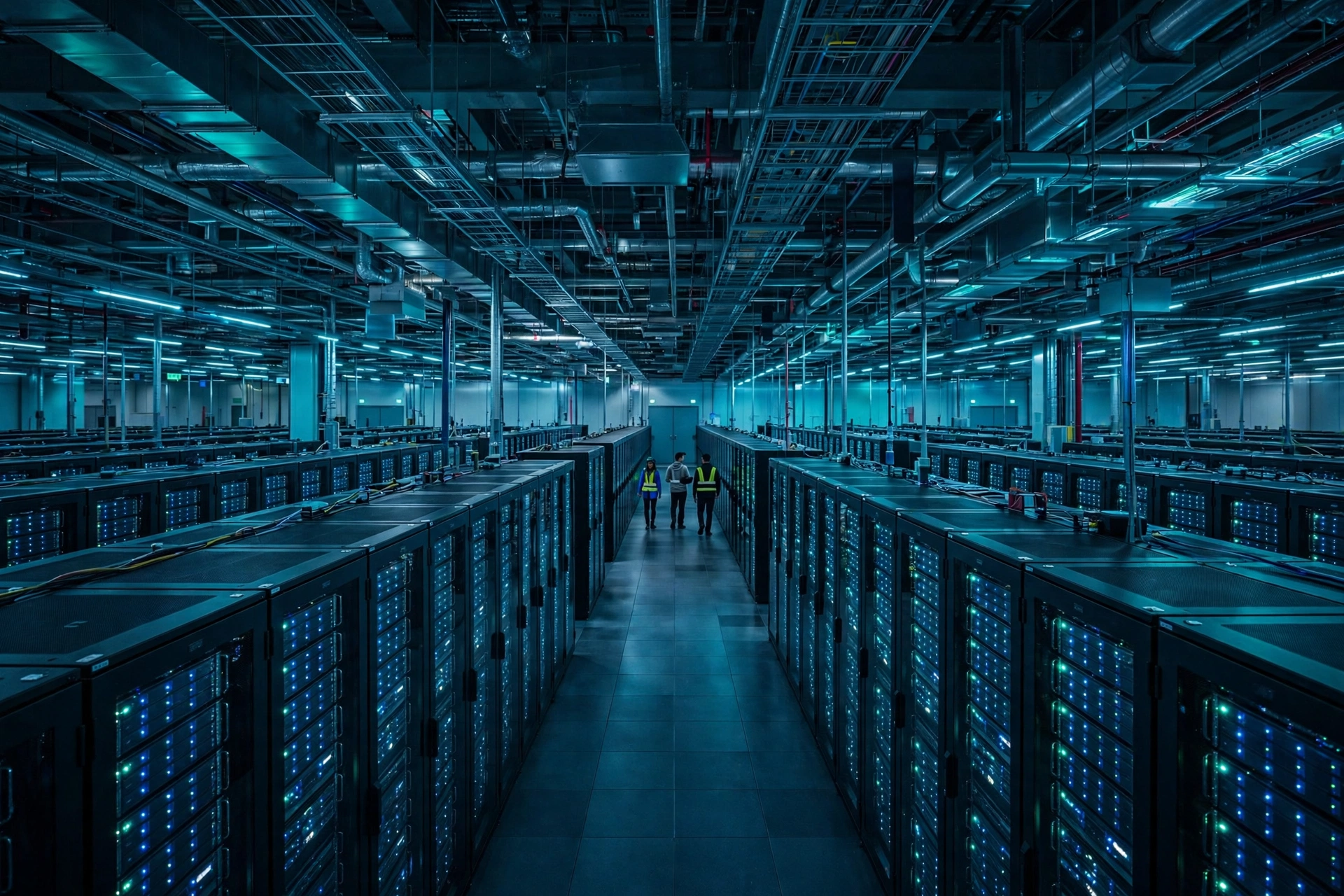
The race to build artificial intelligence infrastructure has become one of the largest construction stories in modern business. Technology companies are pouring hundreds of billions of dollars into data centers filled with advanced chips, yet a growing debate asks a simple question: will the revenue from AI services arrive fast enough to justify the spending? Analysts tracking the boom warn that forecast infrastructure costs are beginning to outstrip the income the industry realistically expects to earn in the same period.
A Building Boom Unlike Any Other
Across the United States and beyond, farmland and industrial parks are being converted into server farms at remarkable speed. Each new facility demands enormous quantities of electricity, cooling water, networking equipment and, above all, graphics processing units that train and run large AI models. Industry estimates suggest the total bill for this global build-out could run into the trillions of dollars over the coming years, a figure so large that commentators have compared its financing to the output of entire national economies.
The logic behind the spending is easy to understand. Demand for AI assistants, coding tools, image generators and enterprise automation is rising quickly, and no major technology firm wants to be caught without enough computing capacity. As our coverage of new advances in AI research shows, the models themselves keep growing more capable — and more hungry for computing power.
Where the Money Goes
Chips are only part of the story. Operators must also pay for land, construction, power grid connections, backup generators and highly skilled staff. Electricity has become a particular bottleneck: in several regions, new data centers wait years for grid connections, and utilities are racing to add generation capacity. Reporting by The Register highlights how these combined costs are pushing total spending forecasts well beyond earlier projections, even as the biggest buyers insist the investment is unavoidable.
The Revenue Question
Sceptics make a straightforward argument. Subscriptions to AI tools, advertising income and cloud contracts are growing, but from a much smaller base than the capital now being committed. If adoption slows, or if cheaper and more efficient models reduce the need for massive computing clusters, some facilities could sit underused while their owners service large debts. The comparison with earlier technology booms — railways, fibre-optic cables and dot-com data centers — is frequently raised, because those episodes also paired genuinely transformative technology with overbuilding.
Supporters counter that the fibre-optic precedent actually proves their point: infrastructure that looked excessive in 2001 became the backbone of the modern internet. They argue that AI computing capacity will find uses we cannot yet predict, from scientific discovery to robotics, and that efficient new hardware keeps lowering the cost of each calculation. Recent work on next-generation battery technology also hints at how quickly the supporting technologies around computing can improve.
Power, Planning and Public Pushback
Communities near proposed sites are asking harder questions about electricity prices, water use and noise. Some local governments now demand that operators fund renewable energy or grid upgrades as a condition of approval. Analysis published by PostQuantum underlines the sheer scale of the labour and capital involved, estimating that paying for the planned build-out at average wages would require more workers than the entire US labour force contains — a vivid illustration of how stretched the programme has become.
Investors Start Asking Harder Questions
Shareholders, too, are changing their tone. In earnings calls this year, executives at the largest cloud providers have faced repeated questions about depreciation, energy contracts and the timeline for returns, rather than the uncritical enthusiasm of earlier phases. Some investors welcome the discipline, arguing that clear payback targets will separate durable platforms from speculative ventures. Others worry that competitive pressure makes restraint almost impossible: the first firm to slow down risks losing developers, enterprise customers and talent to rivals who keep building. That tension explains why spending announcements keep escalating even as the financial debate grows louder and more detailed.
What Happens Next
Most observers expect the spending to continue through 2026, driven by competition rather than short-term profit. The likely outcome is neither total triumph nor collapse, but a sorting process: operators with real customers, efficient designs and secured power will thrive, while speculative projects may be delayed or cancelled. For businesses buying AI services, the practical advice is to focus on value rather than hype — choose tools that solve measurable problems today, and let the infrastructure giants worry about paying for the boom.
