

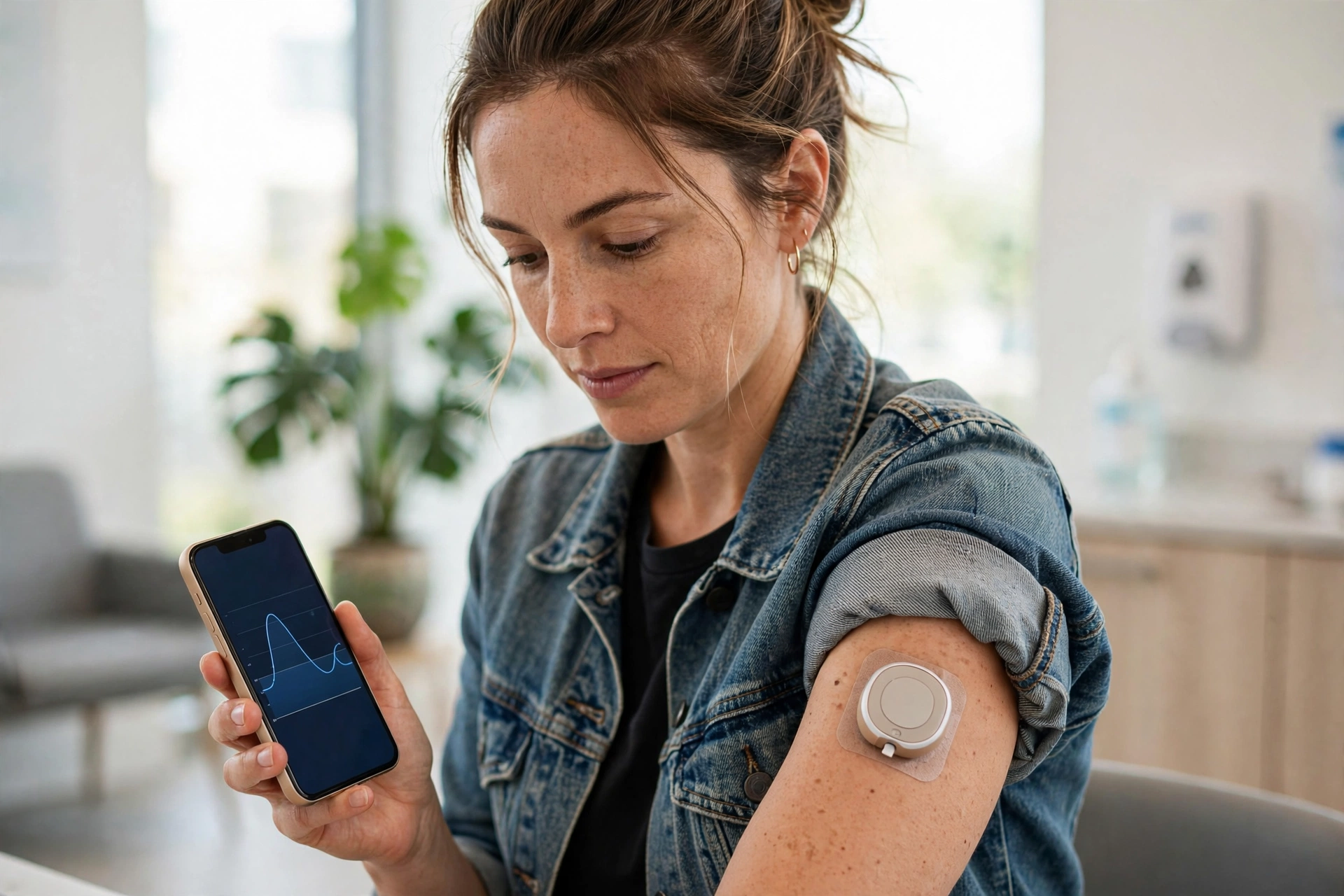
For millions of adults living with type 2 diabetes, checking blood sugar has traditionally meant finger-prick tests a few times a day — snapshots that miss everything happening in between. Now the largest clinical trial of its kind, published in the New England Journal of Medicine, has found that continuous glucose monitors (CGMs) can make a striking difference even for people who do not use insulin: participants spent roughly five more hours each day within their target blood sugar range.
What the Trial Found
Continuous glucose monitors are small wearable sensors, usually placed on the arm or abdomen, that measure glucose levels every few minutes and send the readings to a phone or receiver. Until now, the strongest evidence for their benefit came from studies of people using insulin, and insurers have often restricted coverage to that group. The new research, reported by the University of Colorado Anschutz Medical Campus, extends the evidence to the much larger population managing type 2 diabetes with medication, diet and lifestyle changes alone.
Spending more time in range matters because it is directly linked to lower risks of the complications patients fear most, including eye, kidney and nerve damage, as well as cardiovascular disease. Five additional hours a day in the healthy zone is, clinicians say, a clinically meaningful improvement rather than a marginal one.
Why Continuous Data Changes Behaviour
The power of a CGM lies less in the sensor than in the feedback loop it creates. A finger-prick test tells you where your glucose is; a continuous monitor shows you where it is heading, and how a particular meal, walk or stressful meeting affected it. Patients in the trial could see in real time that a short walk after dinner blunted a glucose spike, or that a favourite breakfast sent levels soaring — knowledge that turns abstract dietary advice into personal, actionable evidence.
This kind of health technology is advancing quickly, as our reporting on wearable and mobile technology regularly shows: smaller sensors, longer battery life and better phone integration are making medical-grade monitoring practical for everyday use.
What It Means for Patients and Doctors
For doctors, continuous data transforms appointments. Instead of relying on a single HbA1c measurement every few months, clinicians can review weeks of patterns, spot dangerous overnight lows or post-meal spikes, and adjust medication with far greater precision. For patients, the effect can be motivating rather than discouraging — progress becomes visible day by day, not just at quarterly check-ups.
Researchers discussing the findings on r/science also noted the trial’s scale: as the largest study of its kind, it gives regulators and insurers a firmer basis for decisions about who should receive these devices.
The Barriers That Remain
Cost and coverage are the biggest obstacles. Sensors must be replaced every ten to fourteen days, and without insurance support the annual expense can run into thousands of dollars. There are also practical questions about data overload, skin irritation, and ensuring that older or less tech-confident patients get the training they need. Health systems will need clear guidance on interpreting CGM data so that the information leads to better decisions rather than anxiety.
A Broader Shift in Chronic Care
The findings also reflect a wider change in how chronic conditions are managed. Diabetes, heart disease and hypertension were once reviewed only during occasional clinic visits, with treatment adjusted a few times a year. Continuous monitoring turns care into an ongoing conversation between patient, device and clinician, supported by alerts when levels drift dangerously and by software that spots patterns a human might miss. Advocates say this model can prevent emergencies rather than merely respond to them, while critics caution that health systems must protect patients from data overload, unequal access and the stress of constant self-surveillance. The trial’s results give that debate fresh, concrete evidence to work with.
The Bottom Line
The trial strengthens a shift already under way in diabetes care: from occasional testing toward continuous, personalised management. If coverage expands to match the evidence, continuous glucose monitors could become a standard tool for type 2 diabetes, much as home blood-pressure cuffs did for hypertension. Anyone considering a CGM should discuss it with their care team — but for many patients, five healthier hours a day is a compelling reason to ask the question. As digital health tools mature, stories like this — and our wider coverage of how health and technology products reach the market — suggest the clinic of the future will be as much about data as about medicine.
