

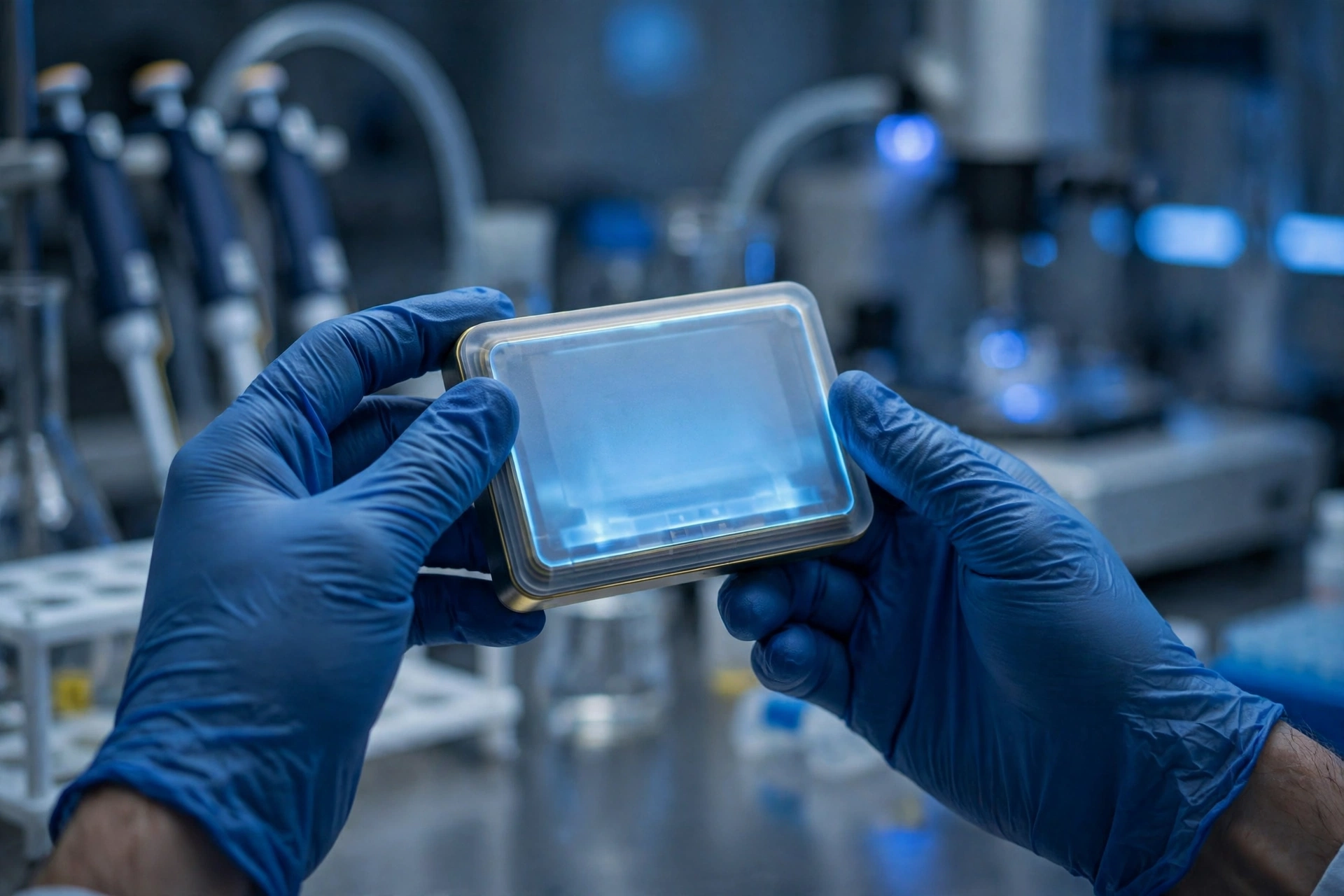
Every smartphone owner knows the ritual: the afternoon hunt for a charger. The lithium-ion battery has improved steadily for thirty years, but it is approaching its physical limits. Its long-promised successor — the solid-state battery — is finally stepping out of the laboratory and into production lines.
The idea is simple. Today’s batteries shuttle lithium ions through a flammable liquid electrolyte. A solid-state cell replaces that liquid with a thin ceramic or sulfide layer. The result is a battery that stores far more energy in the same space, charges faster, lasts longer and is dramatically harder to set on fire.
Why it took so long
Solid-state batteries have been “five years away” for two decades. The problems were brutally practical: solid layers crack as they expand and contract, tiny metal filaments called dendrites grow through them and short the cell, and factories built for liquid batteries cannot simply be switched over. Coverage of the field at IEEE Spectrum has chronicled each of these hurdles in detail.
What changed is manufacturing. New dry-coating and pressure techniques, borrowed partly from semiconductor production, now let companies build stable cells at pilot scale. Research journals such as Nature have published a stream of results showing cycle lives that finally rival — and beat — conventional cells.
What it means for your phone
For smartphones, the headline numbers are compelling: potentially double the capacity in the same volume, or the same capacity in a much thinner phone. Charging to 80 percent in under ten minutes without cooking the battery, and a lifespan of thousands of cycles instead of a few hundred, are realistic targets rather than marketing fantasy.
Expect the technology to arrive first where price matters least — flagship phones, wearables and premium earbuds — before costs fall. We track these shifts across the industry on Techsslaash, and our recent explainer on how fast platform technology now evolves shows how quickly “experimental” becomes “standard”.
Cars are the bigger prize
Phones are the shop window, but electric vehicles are the real market. A solid-state pack could give a family EV a genuine 900-kilometre range, slash charging stops and remove the fire risk that haunts today’s packs. Carmakers have poured billions into the race, and the first limited-production models are the industry’s most watched milestone.
What has to happen before prices fall
Three gates stand between today’s announcements and a solid-state phone in every pocket. The first is yield: pilot lines must produce millions of good cells, not thousands, without defect rates eating the margin. The second is cost — early cells will carry a premium that only flagship devices can absorb. The third is the supply chain for new materials, from specialist ceramics to high-purity lithium metal foil, which barely exists at consumer-electronics scale today.
Recycling is the quieter challenge. A battery chemistry designed to be safer and longer-lived also needs an end-of-life plan, and regulators in Europe are already asking manufacturers how solid-state packs will be recovered and processed. Companies that solve recycling early may find it becomes a selling point rather than a burden.
A realistic timeline
Analysts who follow the sector expect a staggered arrival: limited solid-state or hybrid cells in premium devices first, wider adoption as second-generation factories open, and mass-market prices towards the end of the decade. That timeline has slipped before, and it could slip again — a single manufacturing problem can cost a year. But unlike previous false dawns, money, factories and working products now exist simultaneously. The question has narrowed from “if” to “how fast”, and for anyone tired of the daily charging ritual, that is genuine progress worth watching.
There is also a durability dividend for the planet: a battery that survives two or three thousand cycles instead of five hundred means fewer replacements, less mining pressure over a device’s lifetime and less electronic waste heading to landfill — benefits that rarely make headlines but matter at global scale.
Scepticism is still healthy. Pilot lines are not gigafactories, and costs remain high. But the direction is no longer in doubt. The battery that defined the mobile era is finally getting a successor — and your next upgrade may be where you first feel it.
