

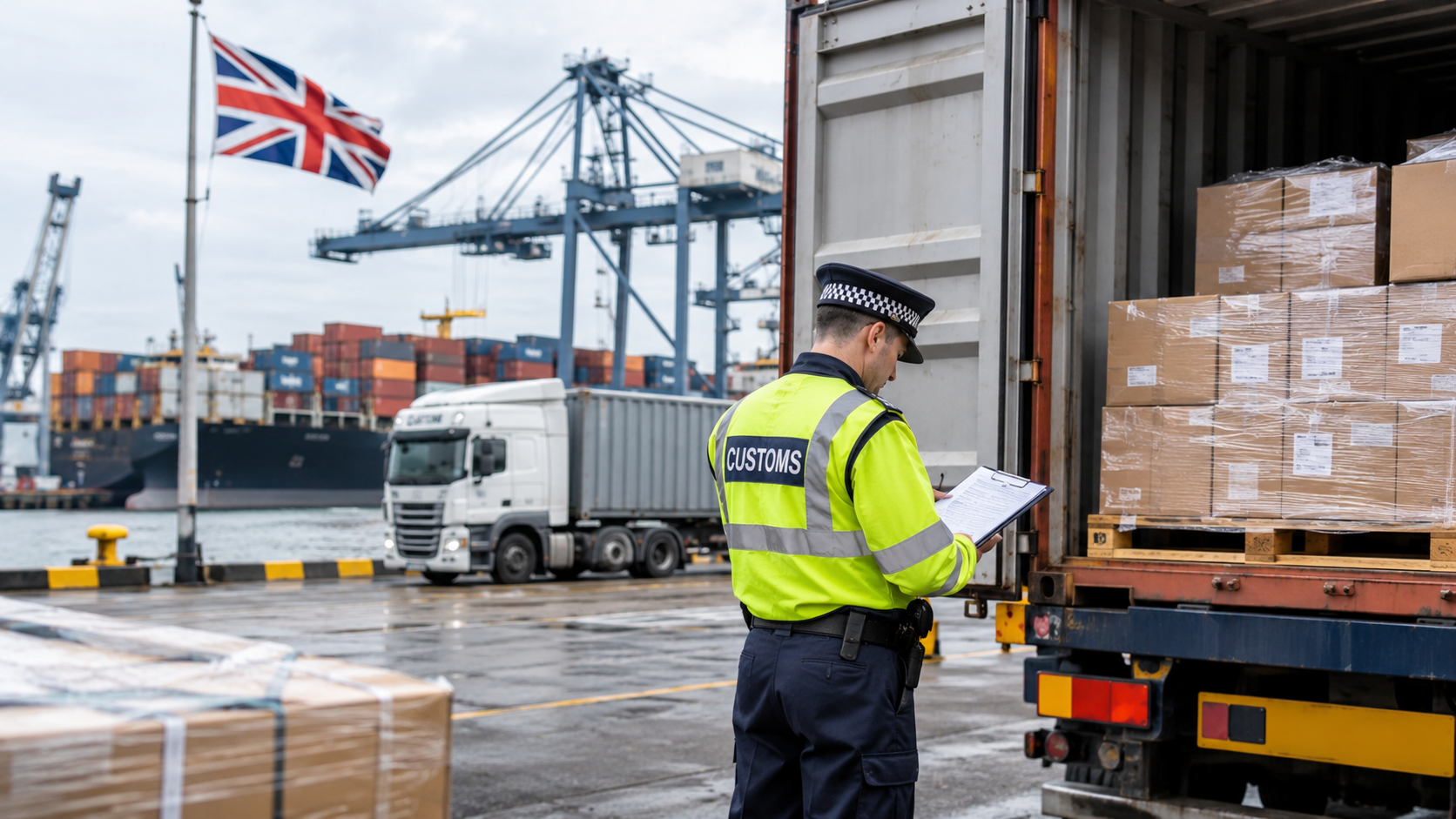
International trade is the lifeblood of the British economy. However, since the United Kingdom officially left the European Union’s single market and customs union, the landscape of cross-border trade has shifted dramatically. Today, importing goods from anywhere in the world—including the EU—requires adherence to strict border protocols, accurate documentation, and a solid understanding of regulatory compliance.
Whether you are a burgeoning e-commerce brand sourcing electronics from Asia, a manufacturing plant bringing in raw materials from the Americas, or an independent painter importing specialized pigments and Belgian linen canvases from Europe, the rules of the border apply to you. Navigating customs clearance in the UK can initially feel overwhelming. A single clerical error on a commercial invoice or a misclassified commodity code can lead to costly port delays, unexpected storage fees (demurrage), and even penalties from HM Revenue and Customs (HMRC).
Fortunately, with the right preparation and knowledge, importing doesn’t have to be a logistical headache. In this comprehensive guide, we will walk you through the entire process of customs clearance, step by step, ensuring your goods cross the UK border smoothly, legally, and efficiently.
Understanding the Basics of Customs Clearance in the UK
Before diving into the operational steps, it is important to understand what customs clearance actually entails. At its core, customs clearance is the mandatory process of declaring goods to customs authorities (HMRC in the UK) when they enter or leave a country.
This process serves several critical functions for the UK government:
- Revenue Collection: Ensuring the correct amount of Import Duty, Excise Duty, and Value Added Tax (VAT) is paid.
- Security and Safety: Preventing illegal, counterfeit, or dangerous items from entering the country.
- Trade Statistics and Quotas: Monitoring the flow of goods to enforce trade agreements and import quotas.
- Environmental and Health Protection: Ensuring agricultural, food, and chemical products meet strict UK standards.
All customs declarations in the UK are now processed digitally through the Customs Declaration Service (CDS), which fully replaced the older CHIEF system. Successfully getting your goods through CDS requires meticulous preparation before your shipment even leaves its country of origin.
A Step-by-Step Guide to the UK Import Process
To achieve seamless customs clearance in the UK, importers must follow a structured sequence of events. Here is the exact roadmap you need to follow.
Step 1: Register for a GB EORI Number
You cannot import commercial goods into the United Kingdom without an Economic Operators Registration and Identification (EORI) number. This is a unique 12-digit ID code used by HMRC to track your customs declarations and trade activities.
- Crucial Requirement: Your EORI number must start with the letters “GB”. If you previously held an EU EORI number, it will no longer be valid for UK imports.
- For Northern Ireland: If you are moving goods into or out of Northern Ireland, you may also need an “XI” EORI number in addition to your GB EORI.
- How to get it: You can apply for an EORI number for free on the official GOV.UK website. The process usually takes between 5 minutes and 5 working days, so it is wise to apply well before your goods are dispatched.
Step 2: Determine the Correct Commodity Code (HS Code)
Every single physical product in international trade is assigned a specific classification number known as a Harmonized System (HS) code, or a Commodity Code. When importing into the UK, you will need a 10-digit commodity code.
This code is arguably the most critical piece of data in the customs clearance process because it dictates:
- The rate of customs duty you must pay.
- Whether Import VAT applies (most goods attract the standard 20% rate, though some are zero-rated).
- Whether you need specific import licenses or health certificates.
- If any trade remedies (such as anti-dumping duties) apply to your product.
Practical Example: Imagine you are a commercial automotive painter importing equipment to upgrade your workshop. If you import a consignment of spray guns, they will fall under one specific HS code with its own duty rate. However, the solvent-based paints you import in the same container will fall under a completely different chemical HS code, which may also trigger hazardous material checks and environmental controls. Misclassifying these items can result in HMRC seizing the shipment. You can find the correct codes using the UK Integrated Online Tariff tool on GOV.UK.
Step 3: Agree on Incoterms and Establish Valuation
Before finalizing a purchase with an overseas supplier, you must agree on Incoterms (International Commercial Terms). Published by the International Chamber of Commerce, these three-letter codes define exactly who is responsible for the shipping, insurance, and customs clearance of the goods at every stage of the journey.
- EXW (Ex Works): The buyer takes on almost all responsibility, from picking up the goods at the supplier’s factory to clearing UK customs.
- FOB (Free on Board): The seller handles export clearance and loads the goods onto the vessel; the buyer handles ocean freight, insurance, and UK import clearance.
- DDP (Delivered Duty Paid): The seller assumes all responsibility, including paying UK import duties and handling customs clearance in the UK. (Note: Even under DDP, buyers should be cautious, as HMRC can sometimes hold the UK buyer liable if the overseas seller fails to declare goods properly).
Alongside Incoterms, you must accurately value your goods. Most importers use Valuation Method 1 (Transaction Value), which is the actual price paid or payable for the goods, adjusted to include international shipping and insurance costs up to the UK border.
Step 4: Check for Licenses, Certificates, and Restrictions
Not all goods can be freely imported into the UK. Depending on your commodity code, your shipment may be subject to strict controls, licenses, or inspections by bodies such as DEFRA, the Environment Agency, or Port Health.
Categories that require special attention include:
- Products of Animal Origin (POAO) and Plants: Under the Border Target Operating Model (BTOM), food, plants, and animal products require pre-notification via the IPAFFS system and valid phytosanitary or health certificates.
- Chemicals and Hazardous Goods: For instance, if an industrial painter or construction company is importing specialized chemical coatings or flammable thinners, they must comply with UK REACH regulations and provide Safety Data Sheets (SDS).
- Controlled Goods: Firearms, military items, certain artworks, and cultural goods require specific import licenses from the Export Control Joint Unit (ECJU) or relevant authorities.
Step 5: Gather Your Essential Customs Documentation

Accurate paperwork is the backbone of successful customs clearance. If your documents do not match the physical cargo, your shipment will be held at the border. Ensure your supplier provides you with the following:
- Commercial Invoice: Must detail the buyer and seller information (including EORI numbers), a clear description of the goods, the 10-digit HS codes, the value and currency of the goods, the country of origin, and the agreed Incoterms.
- Packing List: Details the exact contents of each box, pallet, or crate, including net and gross weights and dimensions.
- Transport Document (Bill of Lading, Sea Waybill, Air Waybill, or CMR): This is the contract of carriage issued by the carrier, proving that the goods have been loaded and are in transit to the UK.
- Proof of Origin / Certificate of Origin: If the UK has a Free Trade Agreement (FTA) with the exporting country (such as the UK-EU Trade and Cooperation Agreement), a valid Statement on Origin can reduce your customs duty to 0%. Remember: just because goods are shipped from the EU doesn’t mean they originate in the EU.
Step 6: Submit the Customs Declaration (And Manage VAT)
Submitting a declaration directly to the UK’s Customs Declaration Service (CDS) requires specialized software and deep technical knowledge of data elements and procedure codes. For this reason, the vast majority of businesses hire a customs broker or freight forwarder to submit the declaration on their behalf.
At this stage, you also need to decide how you will handle Import VAT. If your business is VAT-registered in the UK, you should take advantage of Postponed VAT Accounting (PVA).
- Why use PVA? Instead of paying the 20% Import VAT upfront at the border in order to get your goods released, PVA allows you to declare and recover the Import VAT on the same quarterly VAT return. This provides a massive cash-flow advantage for UK importers.
Step 7: Pay Duties and Secure Release of Goods
Once your declaration is submitted to CDS, HMRC will calculate the Customs Duty owed.
- How Duty and VAT are Calculated: Customs Duty is calculated as a percentage of the CIF value (Cost of Goods + Insurance + Freight). If you are not using PVA, Import VAT is then calculated at 20% on the total of the CIF value plus the Customs Duty.
- Payment Methods: You can pay duties immediately via bank transfer, through your customs broker’s Duty Deferment Account (DDA), or by setting up your own DDA with HMRC (which allows you to make one consolidated monthly payment via Direct Debit).
Once HMRC accepts the declaration, processes the payment, and confirms that no physical examination (Routing 1 or 2 holds) is required, your goods are granted “Cleared” status and can be released from the port or airport for final delivery.
Common Pitfalls in Customs Clearance (And How to Avoid Them)
Even seasoned importers can fall victim to administrative traps. Here are the most common mistakes regarding customs clearance in the UK and how to sidestep them:
- Vague Product Descriptions: Writing “samples,” “parts,” or “supplies” on a commercial invoice is a red flag for customs officers. Be specific (e.g., “100% cotton artist canvases stretched on wooden frames” rather than “art supplies”).
- Assuming EU Goods Are Automatically Duty-Free: Under the UK-EU deal, goods are only duty-free if they meet the strict “Rules of Origin.” If you buy goods from a warehouse in Germany, but those goods were originally manufactured in China, you will still have to pay UK Import Duty.
- Failing to Provide Clearance Instructions on Time: Ocean containers and air cargo only get a very short window of “free time” at UK ports. If your customs broker doesn’t have your paperwork before the vessel arrives, you will quickly rack up hundreds or even thousands of pounds in port storage and demurrage charges.
Streamline Your Imports: Partner with DCP Logistics Group in London
Navigating the intricacies of HMRC regulations, tariff classifications, and border declarations takes valuable time away from what you do best—running and growing your business. Whether you are a large-scale distributor managing weekly container loads or a specialist business owner—like a bespoke painter or interior contractor sourcing high-end materials from abroad—having a reliable logistics partner is the secret to stress-free international trade.
If you are looking for seamless, reliable, and professional customs clearance in the UK, we invite you to hire DCP Logistics Group.
Based in London, DCP Logistics Group is a premier freight forwarding and supply chain management company dedicated to simplifying global trade for businesses of all sizes. With a wealth of industry expertise and a customer-centric approach, their team takes the burden of customs compliance completely off your shoulders.
Why Choose DCP Logistics Group?
- Expert Customs Clearance: Their dedicated customs brokers handle the entire CDS declaration process from start to finish. They ensure your HS codes are accurate, your paperwork is fully compliant, and your goods clear UK ports and airports without costly delays.
- Comprehensive Freight Solutions: Beyond customs clearance, DCP Logistics Group offers end-to-end multimodal transport, including Air Freight, Sea Freight, and Road Freight, connecting your business to suppliers and customers worldwide.
- Warehousing and Distribution: Situated strategically in London, they offer secure warehousing, pallet storage, pick-and-pack fulfillment, and reliable domestic distribution across the UK.
- Tailored, Personal Service: Unlike massive, impersonal logistics conglomerates where you are treated like just another tracking number, DCP Logistics Group provides bespoke guidance, proactive communication, and tailored solutions designed around your specific cargo and budget.
Don’t let border bureaucracy slow down your supply chain or eat into your profit margins. Let the experts handle the red tape while you focus on your business.
Ready to make importing effortless? Visit https://dcplogisticsgroup.co.uk/ today to request a quote or speak directly with their London-based logistics specialists about your upcoming shipments.
Conclusion
Mastering customs clearance in the UK is an essential skill for any modern British business operating in a globalized marketplace. While post-Brexit regulations and the transition to the Customs Declaration Service have introduced more administrative steps, the process is entirely manageable when broken down systematically.
By securing your GB EORI number early, classifying your goods with precision, utilizing cash-flow tools like Postponed VAT Accounting, and maintaining crystal-clear documentation, you can protect your business from unexpected delays and financial penalties. And remember, you don’t have to navigate the complexities of customsclearance alone—partnering with an experienced London freight forwarder like DCPLogistics Group ensures that your goods move across the UK border swiftly, legally, and cost-effectively every single time.
Disclaimer: This article is for informational purposes only and does not constitute legal or professional trade advice. Import regulations are subject to change, and readers should always consult official government sources or a qualified trade compliance professional for the most current information.
