

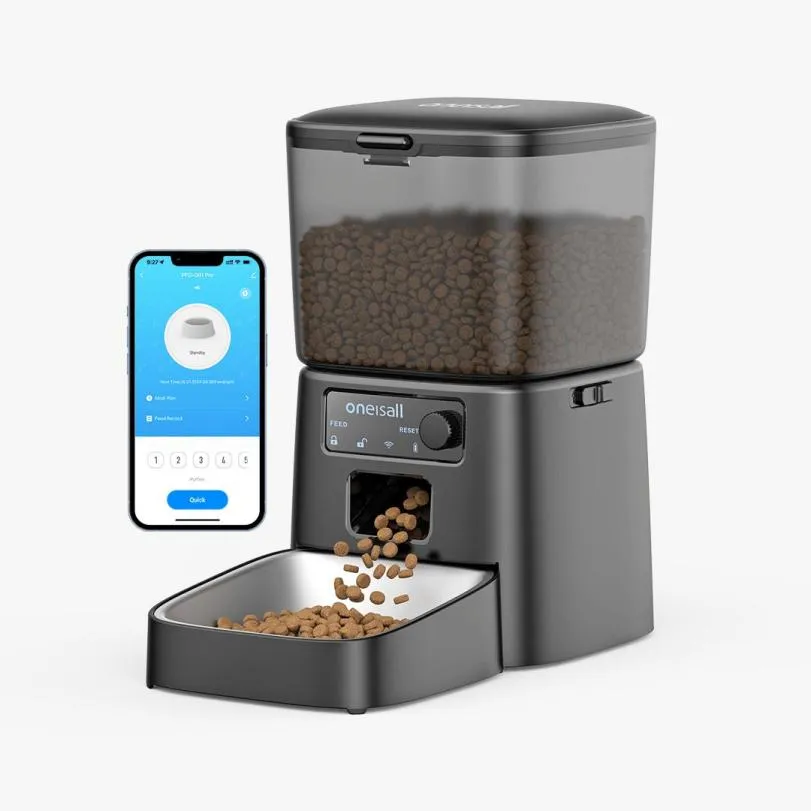
Automatic cat feeders with app control make daily feeding more consistent, especially for busy owners, multi-cat homes, and anyone who wants better visibility into mealtimes. The best models do more than release food on a timer. They let you schedule portions remotely, review feeding history, and in some cases watch your cats eat through a built-in camera. This guide compares five app-controlled feeders worth considering, with a focus on practical differences such as two-cat suitability, monitoring features, portion control, and how easily each model fits a normal household routine.
What to Look for in an Automatic Cat Feeder With App Control
Start with feeding accuracy, app reliability, and a hopper size that matches your cat’s routine. If you have two cats, consider bowl spacing, portion settings, and identification features separately: two bowls alone do not prevent food stealing. Camera monitoring can help you observe feeding activity, while intake records provide information about consumption. Also check backup power, freshness features, cleaning convenience, and whether the app gives clear scheduling options and feeding records. A good automatic cat feeder should make daily care simpler without creating extra setup or maintenance work.
Top 5 Automatic Cat Feeders With App Control
1. Oneisall H1-C — Dual-Camera Monitoring for Two Cats
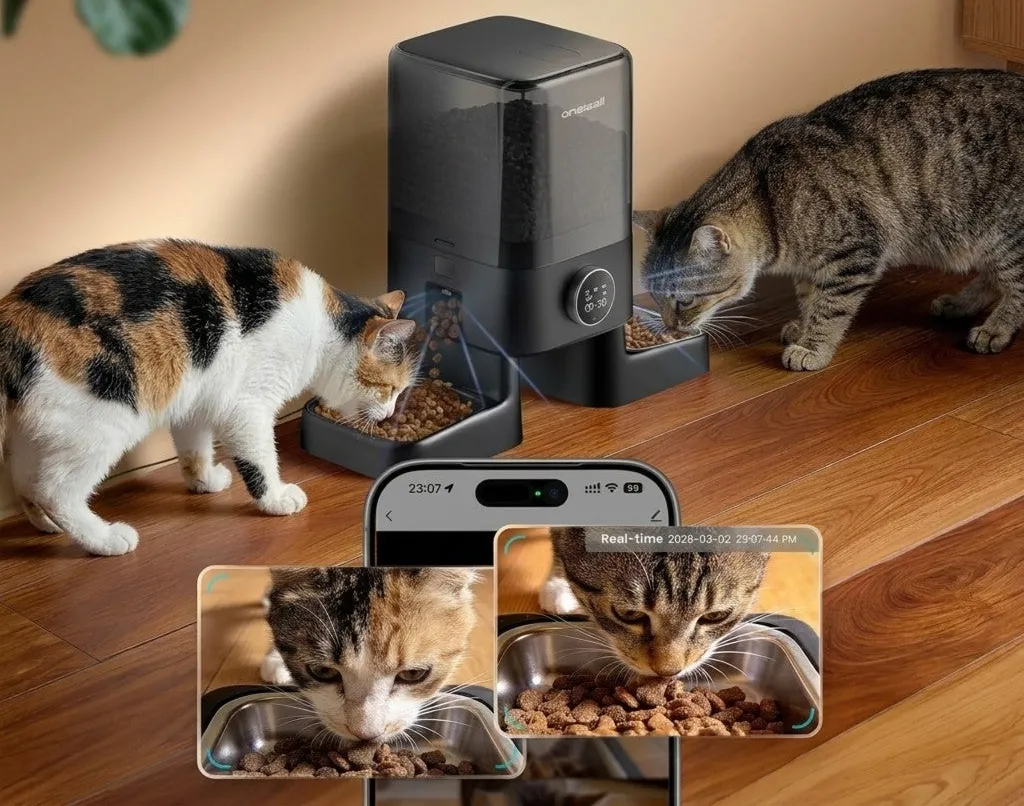
The Oneisall H1-C combines a 5L food tank, two bowls, and dual cameras with 1080p night vision, giving two-cat households feeding and visual monitoring in one device. Live viewing and two-way audio let owners check the feeding area and speak to their cats remotely. Support for both 2.4GHz and 5GHz Wi-Fi provides flexibility when connecting to a home network. App control adds remote scheduling and routine management, which is useful during work hours. This design suits homes where observing feeding behaviour matters alongside automatic dispensing and regular portioned meals.
2. Oneisall 3.5L Automatic Cat Feeder — Simple App-Based Meal Scheduling
The Oneisall 3.5L Automatic Cat Feeder uses the Smart Life app over 2.4 GHz Wi-Fi and supports up to 10 scheduled meals per day, with up to 36 portions per meal. Its main strength is combining scheduled meals, remote dispensing, and family sharing, helping households coordinate feeding from their phones. The 3.5-liter capacity suits many single-cat homes, while an airtight lid and built-in desiccant help protect stored food from moisture. For households focused on daily automation rather than camera monitoring, these functions support routine feeding with less manual effort.
3. PETKIT YumShare Dual-Hopper 2 — Separate Compartments for Two Foods
The PETKIT YumShare Dual-Hopper 2 has a total capacity of 5 L and lets you set 1–10 portions per meal for each hopper independently. Its separate compartments store two compatible foods independently, allowing owners to adjust the serving from each compartment. The feeder connects through 2.4GHz or 5GHz Wi-Fi and supports dry kibble up to 0.47 inches and freeze-dried treats up to 0.35 inches. App control supports remote feeding management, while camera monitoring and feeding records provide information about activity around the bowl. Video replay requires a subscription.
4. PETLIBRO Granary 2 — Bowl-Weight Tracking and Feeding Records
PETLIBRO Granary 2 focuses on feeding data as much as automation. Its built-in bowl scale offers gram-level measurements, tracking food added, consumed, and remaining. The dispensing mechanism releases approximate portions in 1/12-cup increments rather than dispensing directly by weight. The app-based feeding records organise this information for reviewing intake over time. The standard Granary 2 and the camera-equipped Vision versions have different features, so specifications should be checked against the selected model.
5. CATLINK RFID Fresh 2 Luxury — App Scheduling With Cat Identification
CATLINK RFID Fresh 2 Luxury combines 4L food storage and a ceramic feeding bowl with app-based meal management. Owners can schedule meals, adjust portions, dispense extra food, or skip a serving through the CATLINK app. Compatible RFID collars support cat identification and individual feeding records, helping owners follow feeding activity in multi-cat households. Two collars and two tags are included, while a sealing ring and built-in desiccant compartment help protect stored food from air and moisture. These features bring feeding controls and activity records together in one device.
Which Feeder Fits Your Household Routine?
H1-C for Two-Cat Feeding and Visual Check-Ins
If your main challenge is organising meals for two cats while observing their behaviour, the H1-C is a practical fit. The dual-camera design lets you watch whether both cats approach their bowls and how they interact around the feeding area. That added visibility is helpful for homes with timid eaters or different feeding habits. It combines app-based convenience with visual context for feeding decisions, making it useful when scheduling alone does not provide enough information. Owners should still check individual intake, since shared bowls cannot guarantee equal consumption.
The 3.5L Model for Everyday Meal Scheduling
If your priority is keeping meals on time every day, the 3.5L model offers a focused set of feeding controls. It suits owners who want scheduling through an app without needing camera monitoring. Battery backup maintains saved feeding schedules during a power interruption, although app access requires the feeder to remain plugged in. In homes where feeding is already calm and predictable, scheduled dispensing and shared household access can reduce repetitive work. This model handles routine meals while leaving owners control over portions and occasional adjustments.
Conclusion
For most buyers, the best automatic cat feeder with app control is the one that matches how their household actually functions. If you need two-cat oversight and visual check-ins, the Oneisall H1-C combines feeding and monitoring in one setup. If you want daily automation without camera functions, the Oneisall 3.5L Automatic Cat Feeder focuses on scheduling and shared app access. The other models add features for food separation, intake tracking, or individual feeding records. Start with your real feeding challenges, then choose the feeder whose documented functions address those needs.
