

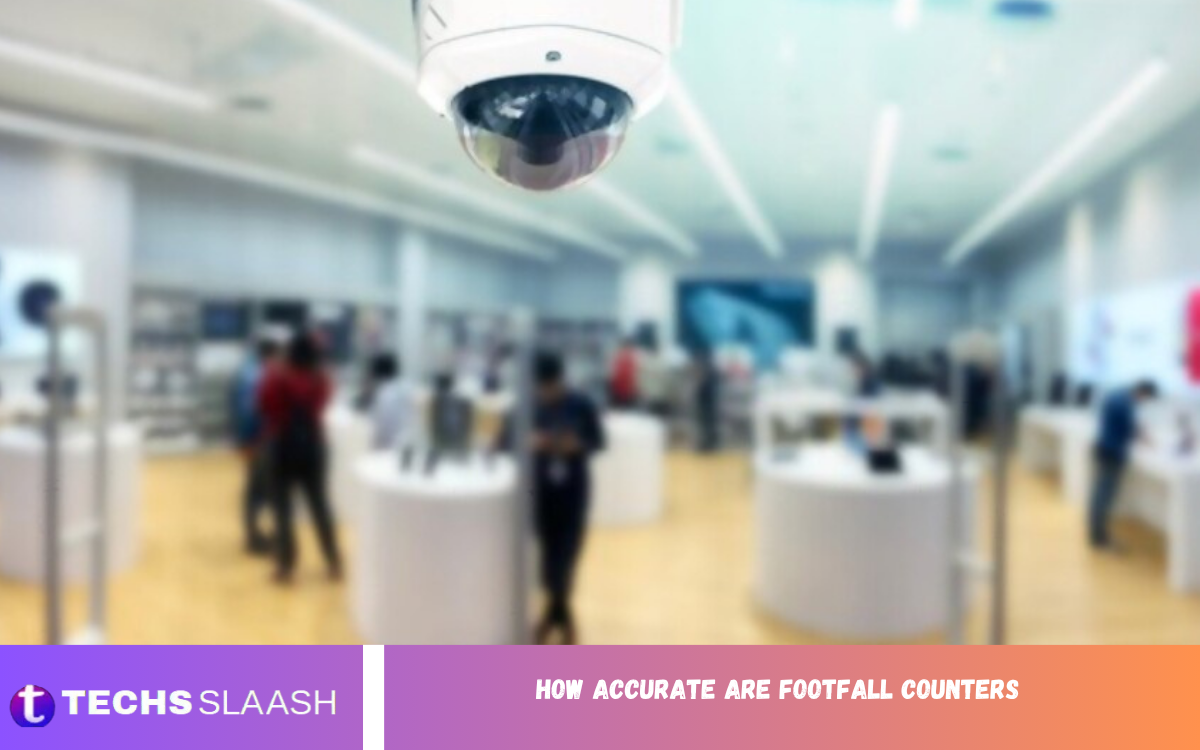
Footfall counters have become an important tool for businesses that want to understand how many people visit a store, shopping center, office, event, or other physical location. By tracking visitor numbers, these systems can provide valuable insights into customer behavior, busy periods, and overall performance. However, one common question remains: How accurate are footfall counters?
The answer depends on several factors, including the type of technology used, where the counter is installed, and how well the system is configured and maintained. Modern solutions can use technologies such as infrared sensors, video analytics, Wi-Fi tracking, or artificial intelligence to count visitors.
What Are Footfall Counters?
Footfall counters are electronic systems designed to measure the number of people passing through a specific entrance, exit, or area. They can use infrared beams, cameras, thermal sensors, Wi-Fi signals, or other technologies to identify movement and estimate visitor numbers.
Businesses use these systems for more than simply counting visitors. Footfall information can reveal busy periods, compare different locations, measure campaign performance, and help managers understand how effectively physical spaces are being used.
How Do Footfall Counters Work?
Different footfall counters use different methods to identify visitors. Infrared systems typically detect when a person breaks a beam, while video-based systems analyze movement through cameras and specialized software.
Some advanced solutions use artificial intelligence and computer vision to distinguish people from other moving objects. The technology selected can significantly influence accuracy, especially in environments with heavy traffic, multiple entrances, or frequent movement in both directions.
How Accurate Are Footfall Counters?
The accuracy of a footfall counter depends heavily on its technology and installation. High-quality systems that are correctly positioned and calibrated can provide very reliable visitor counts, particularly in controlled entrances where people naturally pass through a defined area.
However, accuracy can be affected by groups walking together, people changing direction, employees entering through customer entrances, or visitors passing through areas outside the sensor’s detection zone. Therefore, businesses should consider footfall data as a valuable measurement tool rather than assuming that every count represents an exact number.
Factors That Affect Footfall Counter Accuracy
The physical environment has a major influence on counting performance. Narrow entrances, wide doorways, crowded spaces, poor lighting, reflective surfaces, and unusual layouts can create challenges for some technologies.
The behavior of visitors also matters. Two people walking closely together may be difficult for certain sensors to separate, while someone entering and immediately leaving could potentially be counted differently depending on the system. Correct placement and configuration can reduce many of these problems.
Different Types of Footfall Counters
Infrared footfall counters are among the simpler options and work by detecting when people cross an invisible beam. They can be useful for straightforward entrances but may have difficulty distinguishing individuals when several people pass together.
Video-based counters use cameras and software to analyze movement. These systems can provide more detailed information and may be better suited to complex environments. Thermal and Wi-Fi-based solutions are also available, each offering different advantages depending on the location and business requirements.
Infrared Counters and Their Accuracy
Infrared counters are often affordable and relatively simple to install. They work well when visitors move through a clearly defined doorway or passage in a predictable direction.
Their limitations become more noticeable in crowded locations. If several people pass through the detection area at nearly the same time, the system may struggle to identify each individual separately. Proper positioning and calibration are therefore essential for obtaining dependable results.
Video-Based Footfall Counters
Video-based systems can analyze movement using cameras and specialized software. Modern systems may use computer vision to identify people, track movement, and distinguish visitors from other objects within the monitored area.
These systems can perform well in busy environments because they can analyze more information than a basic beam sensor. Their effectiveness still depends on camera positioning, software quality, lighting, viewing angles, and how accurately the system has been configured for the specific location.
Read Also: Reliable Internet for Small Businesses
How Installation Affects Accuracy
Even an advanced footfall counter can produce poor results when installed incorrectly. Sensors need to cover the right area and should be positioned where visitors naturally pass through without creating unnecessary overlap or blind spots.
Installation should also account for entrance width, nearby obstacles, queue areas, and alternative routes. A professional assessment before installation can help identify potential problems and ensure the counter captures the movement that matters to the business.
Calibration and Maintenance Matter
Regular calibration is important for maintaining reliable visitor counts. Changes to the physical environment, such as new displays, furniture, partitions, or entrance layouts, can affect how people move through the monitored area.
Maintenance is equally important. Sensors and cameras should be checked periodically to ensure they are functioning correctly. Software updates, system testing, and occasional comparison with manual counts can help identify performance issues before they significantly affect business decisions.
Can Footfall Counters Be 100% Accurate?
No counting technology should automatically be assumed to provide a perfect 100% count in every situation. Even sophisticated systems can encounter unusual circumstances that affect their measurements.
The goal is to achieve consistent and dependable data that can support business decisions. A system that produces reliable trends and comparable results over time can be extremely valuable, even if occasional counting errors occur.
Why Accurate Footfall Data Matters
Accurate visitor information can help businesses understand when customers are most likely to visit. Managers can use this information to plan staffing levels, optimize opening hours, improve customer service, and manage busy periods more effectively.
Footfall data can also help evaluate marketing campaigns. If visitor numbers increase after a promotion, event, or advertising campaign, businesses can compare traffic patterns before and after the activity to determine whether it generated meaningful interest.
Footfall Counters and Conversion Rates
Footfall becomes even more useful when combined with sales information. Businesses can compare the number of visitors with the number of transactions to calculate an approximate conversion rate.
For example, if visitor numbers rise but sales remain unchanged, a retailer may investigate pricing, product selection, customer service, or store layout. This combination of traffic and sales data provides a deeper understanding of business performance.
Using Footfall Data for Staffing
Staff scheduling is another area where accurate footfall information can provide significant value. Businesses can identify periods of high visitor traffic and assign enough employees to maintain service quality.
During quieter periods, staffing can potentially be adjusted to improve efficiency. Instead of relying entirely on assumptions about busy and slow periods, managers can use historical footfall patterns to make more informed scheduling decisions.
Comparing Multiple Locations
Businesses with several branches can use footfall counters to compare visitor traffic between locations. This can help identify stores that consistently attract more visitors and those that may require additional attention.
However, comparisons should consider differences in store size, location, opening hours, surrounding businesses, and local customer behavior. Footfall numbers alone do not necessarily indicate which location is more profitable or successful.
Privacy Considerations
Some footfall technologies can collect more information than simple visitor counts. Businesses using camera-based or Wi-Fi-based systems should understand applicable privacy requirements and configure systems responsibly.
Where possible, organizations should use privacy-conscious technologies and avoid collecting unnecessary personal information. Clear policies, appropriate security measures, and compliance with relevant regulations can help protect visitors while still providing useful traffic insights.
How to Improve Footfall Counter Accuracy
Businesses can improve accuracy by choosing technology appropriate for their environment. A simple entrance may require only an infrared counter, while a busy shopping environment may benefit from advanced video analytics.
Correct installation is equally important. Businesses should test the system under different traffic conditions, including quiet periods, rush hours, groups, and two-way movement. Comparing automated counts against manual observations can help establish how well the system performs.
How Businesses Should Evaluate Accuracy
Businesses should not evaluate a footfall counter solely by looking at a manufacturer’s advertised accuracy figure. Real-world performance is more important than a specification measured under controlled conditions.
Before selecting a system, businesses should consider the entrance design, expected visitor volume, number of access points, direction of movement, environmental conditions, and required reporting features. A trial period can also help determine whether a particular solution works effectively in the intended location.
Benefits of Reliable Footfall Counting
Reliable footfall data can support better decisions across many areas of business management. From staffing and store design to marketing analysis and performance measurement, visitor information provides valuable insight into physical customer activity.
It can also help businesses identify long-term trends. By reviewing data across weeks, months, or seasons, managers can recognize changes in visitor behavior and adjust strategies accordingly.
Common Mistakes When Using Footfall Counters
One common mistake is installing a counter without considering how people actually move through the location. A sensor placed too close to a doorway, for example, may not capture movement accurately when visitors stop, turn around, or enter in groups.
Another mistake is treating every recorded number as perfectly accurate. Businesses should monitor data quality and look for unusual changes. Sudden increases or decreases may sometimes reflect technical problems rather than genuine changes in visitor behavior.
Are Footfall Counters Worth Using?
For many businesses, footfall counters can be a worthwhile investment because they turn physical visitor activity into measurable data. The information can support operational planning, marketing decisions, staffing, and performance analysis.
The value is greatest when businesses choose the right technology and use the data alongside other indicators. Footfall should not be viewed in isolation; combining it with sales, conversion rates, customer feedback, and other business metrics provides a more complete picture.
Frequently Asked Questions
How accurate are footfall counters?
Footfall counters can be highly accurate when the right technology is properly installed, configured, and maintained. Actual performance varies according to the environment, visitor behavior, sensor type, and system quality.
Can footfall counters count people entering and leaving?
Yes. Many systems can monitor both entry and exit traffic. This can help businesses understand visitor volumes and estimate occupancy when the system is correctly configured.
What causes footfall counters to make mistakes?
Crowded entrances, groups walking together, people changing direction, poor sensor placement, blocked views, and unusual visitor behavior can contribute to inaccurate counts.
Are video footfall counters more accurate?
Video-based systems can perform well in complex environments because they analyze movement using more detailed visual information. However, accuracy still depends on camera placement, software, lighting, and configuration.
Do footfall counters count employees?
They can, depending on the system and how it is configured. Some advanced solutions may provide ways to distinguish employees from visitors, while basic systems may count everyone passing through the detection area.
How often should footfall counters be checked?
Businesses should monitor their systems regularly and perform maintenance according to the manufacturer’s recommendations. Periodic comparisons with manual observations can also help identify counting issues.
Can footfall counters work in busy stores?
Yes. Many modern systems are designed for high-traffic environments. However, the technology should be selected carefully because crowded movement can challenge simpler counting methods.
Can footfall data improve staffing?
Yes. Businesses can study traffic patterns to identify busy and quiet periods. This information can help managers schedule employees according to expected customer demand.
Do footfall counters protect customer privacy?
Privacy depends on the technology and how it is operated. Basic counters may only measure movement, while camera or Wi-Fi systems can involve additional data considerations. Businesses should follow applicable privacy requirements.
How can businesses improve footfall counting accuracy?
Businesses can improve accuracy by choosing suitable technology, installing sensors correctly, calibrating the system, maintaining equipment, and regularly checking automated results against real-world observations.
Conclusion
So, how accurate are footfall counters? When selected appropriately and installed correctly, modern footfall counting systems can provide highly useful and dependable information about visitor traffic. However, no system should be treated as infallible, particularly in crowded or complicated environments.
Accuracy depends on technology, installation, calibration, maintenance, and visitor behavior. Businesses that understand these factors can make better use of footfall data and avoid relying on misleading numbers.
