

Introduction
Your startup can’t afford to lose leads to dropped calls or make customers wait through outdated menu trees. If you’ve been relying on traditional Interactive Voice Response (IVR) systems, you already know the frustrations: rigid scripts, high abandonment rates, and the sense that your callers are solving a puzzle just to reach a human. AI-powered support agents offer a different path, faster, more adaptive, and far less mechanical.
Let’s cut through the buzz and examine the real difference, feature by feature. No hyperbole, no unrealistic promises. Just a practical, experience-based comparison so you can make the right choice for your business.
What You’re Working With: IVRs vs. AI Voice Agents?
What are Traditional IVRs?
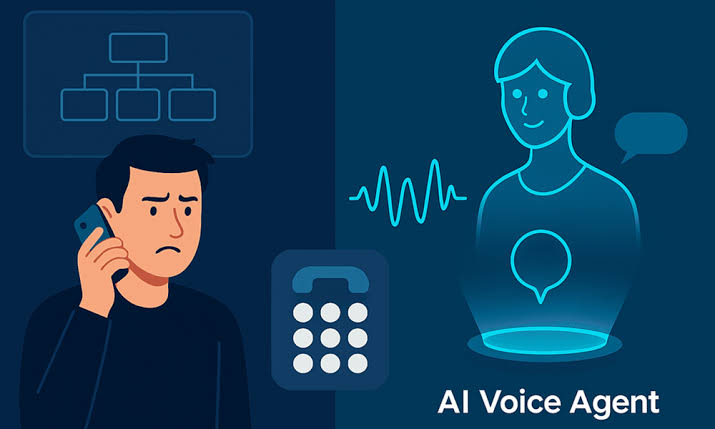
These systems follow a fixed decision tree. Customers press numbers to progress through a menu. This model is rigid. It works if the caller knows exactly what they need and if the call fits the structure of the system. But even then, you risk frustration — long menus, unclear options, dead ends.
What are AI Voice Agents?
Instead of pressing numbers, callers speak naturally. AI agents listen, interpret intent, pull from real-time data, and respond in kind. The interaction feels less like working a phone tree and more like speaking to someone who actually understands.
AI-Powered Support Agents vs. Traditional IVRs
The comparison between traditional IVRs and AI voice agents are as follows:
| Feature | AI Voice Agent | Traditional IVR | Startup Impact |
| Navigation | Natural speech with intent detection | Fixed menus via DTMF | Shorter calls, fewer drop-offs |
| Call Abandonment | Dramatically reduced | Often over 60% | Keeps prospects and users engaged |
| Personalization | Adjusts per customer profile | None, same script for all | Better experience per caller |
| Query Handling | Multi-intent, layered query support | Single-step only | More issues solved per call |
| Scalability | Add intents programmatically | Manual effort per new scenario | Fast adaptation as you grow |
| Cost | Lower: cloud-native, usage-based | High: hardware, setup, manpower | Scale affordably |
| Transparency | Can disclose AI identity and track confidence | Often unclear who or what is speaking | Builds trust |
| CRM Integration | Built-in or easily connected | Often manual | Richer customer insights |
How to Get Started Without Guesswork?
Here’s a straight path to testing AI voice agents in your own support flow:
- Review your call logs. See what customers are calling about. Are there top recurring themes?
- Pick one area where most queries land: order tracking, appointment setting, payment status.
- Write a natural script for that use case. Avoid robotic language. Keep replies short and to the point.
- Select a reliable tool like Nurix, Twilio Autopilot, RingCentral AI, or Dialpad Voice AI.
- Disclose it’s an AI agent. This improves user perception and avoids confusion.
- Add fallback options. Allow easy switching to a human or web form if needed.
- Run a 14-day test. Monitor metrics like handle time, transfer rate, repeat calls.
- Tweak based on feedback. Update phrases, intents, or fallback logic.
- Gradually expand to new intents or flows as confidence grows.
Where Traditional IVRs Fall Short?
When you consider traditional Interactive Voice Response (IVR) systems, there are several challenges that businesses face. These systems often fall short in providing a seamless and efficient customer experience.
- Lack of Flexibility
Traditional IVRs are rigid. Once a menu tree is set up, it’s difficult to add or modify functions. This lack of adaptability means that businesses struggle to accommodate changes in customer needs or service offerings. Any update requires significant reworking of the system, which can lead to downtime and inefficiencies.
- No Memory of User History
Traditional IVRs don’t retain context from previous interactions. If a customer contacts the system again, they’re forced to repeat information they’ve already provided. This makes the process tedious and frustrating for customers, who expect more personalized and efficient service.
- Limited in Handling Complex Queries
IVRs are typically designed to answer basic questions based on a predefined script. This means that if a customer presents a more complex or unusual issue, the IVR is often unable to handle it. This leads to frustration and, in many cases, the need for human intervention, defeating the purpose of automation.
- Mechanical and Generic
IVRs often have a robotic tone, which can feel impersonal and unwelcoming. The monotony and lack of natural flow in conversations can create a negative customer experience. Customers want interactions that feel more human, and traditional IVRs often miss the mark in this area.
Where AI Voice Agents Outperform?
AI voice agents, on the other hand, address these shortcomings, offering a more advanced, flexible, and customer-friendly solution for startups looking to scale their support systems.
- Responding Based on Actual Customer Words
Unlike traditional IVRs, AI voice agents can understand natural language. This means they can interpret customer inquiries based on the actual words used, leading to more accurate and relevant responses. This ability makes interactions more conversational and less restrictive, which enhances the customer experience.
- Accessing Order History or Ticket Status Instantly
AI agents can access customer data in real-time. They can pull up order history, ticket statuses, or other relevant information instantly. This saves the customer from having to repeat their issue or provide additional context, leading to a more efficient interaction and a faster resolution.
- 24/7 Availability with Consistent Performance
AI voice agents don’t require rest or breaks. They can operate around the clock, providing support at any time, day or night. What’s more, they maintain the same tone and logic in every interaction, ensuring consistency in how customers are treated, regardless of the time of day or the volume of inquiries.
- Improvement Over Time with Real Data
By analyzing data from real customer interactions, AI agents can fine-tune their responses and decision-making processes. This means that, over time, they become more adept at handling a wider variety of queries and more complex interactions, leading to better outcomes for customers.
What are the Cost Considerations for Startups?
When startups consider the cost of implementing IVR systems versus AI voice agents, there are several factors to weigh, particularly in terms of initial setup and long-term viability.
- IVR Setup Costs
You may need to purchase equipment, sign long-term contracts with vendors, and commit to costly updates and maintenance over time. These fixed costs can be a major burden for startups with limited budgets.
- AI Agent Costs
AI voice agents, on the other hand, typically offer more flexible pricing structures. Many platforms operate on a pay-as-you-go basis, which means you only pay for what you use. There’s no need for expensive physical setups, and deployment is often much faster.
- Hidden Costs of IVRs
If customers abandon their calls due to long wait times or unhelpful menus, you lose not only the opportunity to assist them but also the potential revenue. Additionally, IVRs often result in lower customer satisfaction (CSAT) scores, which can affect customer retention and your business reputation.
- Hidden Gains with AI
With AI agents, you’re likely to see better customer retention due to faster response times and more accurate solutions. AI agents are also capable of handling more queries on the first call, reducing the need for customers to call back or escalate their issues.
What are the Common Missteps to Avoid?
While adopting AI voice agents can be incredibly beneficial, there are a few pitfalls that startups should avoid in order to get the most out of the technology.
- Overloading the AI
It’s tempting to want AI to solve every issue a customer might have, but it’s better to start small. Focus on one or two problem areas where AI can provide immediate relief, rather than overwhelming the system with too many functions at the outset.
- Skipping Fallback Paths
If customers are unable to resolve their issue with the AI, it’s important to provide an easy path for them to escalate the matter to a human agent. Skipping this fallback option can lead to frustrated customers who feel stuck, potentially causing them to abandon your service altogether.
- Not Being Transparent About AI Use
When customers are aware they are speaking with an AI, they’re more likely to appreciate the speed and efficiency of the service, as long as it meets their needs. If they feel deceived or tricked into interacting with a bot, it can erode trust and lead to dissatisfaction.
- Assuming It Will Just Work
You can’t simply set up an AI voice agent and forget about it. Regular reviews, adjustments based on customer feedback, and continued training are necessary to make sure the AI stays relevant and performs well.
Conclusion
Your early customers matter. Their experience sets the tone for your brand. Don’t risk losing them to a clunky system with options they don’t want to hear. Give them quick answers in natural language. That’s what custom AI agents are built for. Pick a use case. Run a test. Let the results guide you. That’s how you outpace IVRs without outspending.
While IVRs might work in tightly controlled environments or for businesses with legacy tech stacks, startups thrive on speed, low overhead, and customer intimacy. AI agents offer tools that grow with you, not tools that box you in.
Nurix’s AgentX, an AI-powered voice agent that delivers human-like customer interactions, addressing the limitations of traditional IVRs. With 80% faster query resolution and a 50% reduction in costs, Nurix allows startups to scale their customer support without increasing their team size.
AgentX integrates with existing CRM systems, making it easy to deploy within 24 hours. By automating routine tasks and providing real-time responses, Nurix helps startups improve their service quality and operational efficiency, freeing up human agents to focus on more complex issues. Get Nurix, and its enterprise with AI agents today.
