

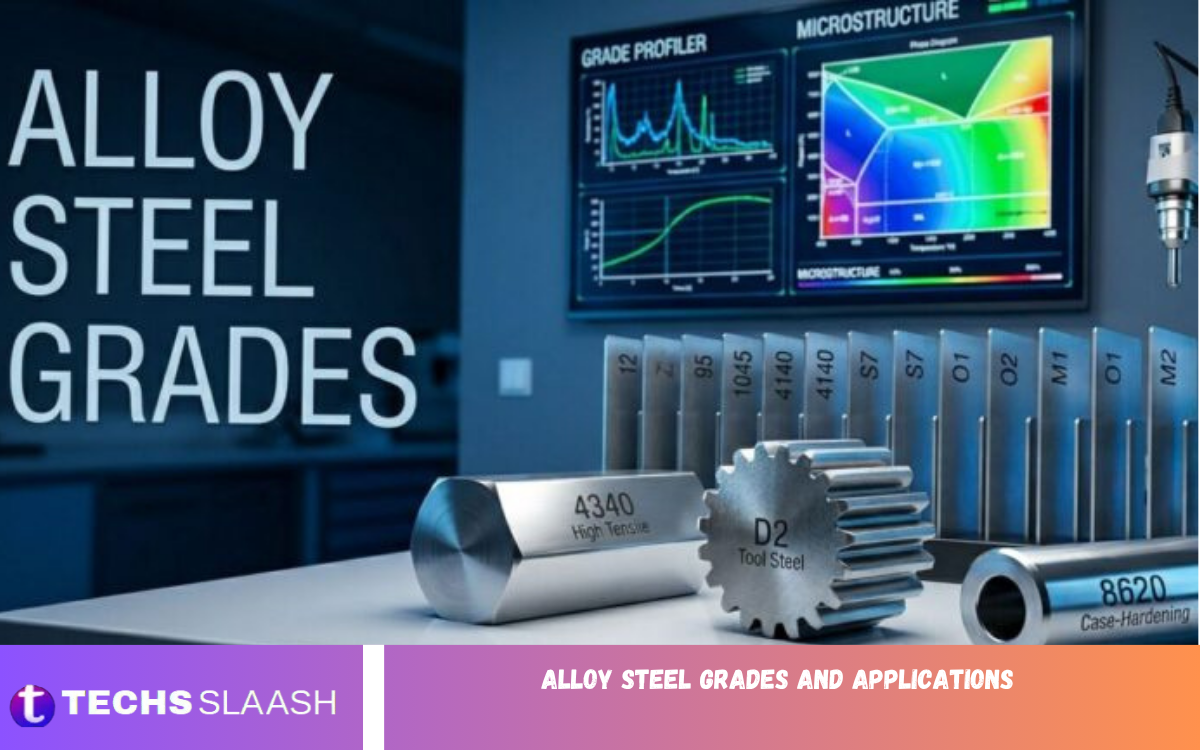
Alloy steel is a type of steel that contains additional elements such as chromium, nickel, molybdenum, manganese, vanadium, and silicon to improve its mechanical properties and overall performance. These alloying elements enhance the steel’s strength, hardness, corrosion resistance, wear resistance, and heat tolerance, making it suitable for demanding industrial applications.
Alloy steel grades are classified based on their chemical composition, mechanical properties, and intended applications. Different grades are designed to perform under specific conditions, such as high temperatures, heavy loads, extreme pressure, or corrosive environments.
What Is Alloy Steel?
Alloy steel is steel that contains carefully controlled amounts of additional elements in addition to iron and carbon. These alloying elements improve specific characteristics that ordinary carbon steel cannot provide.
Common alloying elements include:
- Chromium
- Nickel
- Molybdenum
- Manganese
- Silicon
- Vanadium
- Tungsten
- Cobalt
- Boron
- Copper
Each alloying element contributes unique properties. For example, chromium enhances corrosion resistance, nickel increases toughness, molybdenum improves heat resistance, and vanadium increases hardness and wear resistance.
The combination of these elements produces steel suitable for specialized industrial applications.
Types of Alloy Steel
Alloy steel is generally classified into two major categories.
Low Alloy Steel
Low alloy steel contains less than 5% alloying elements.
Characteristics include:
- High strength
- Good weldability
- Improved toughness
- Better fatigue resistance
- Excellent structural performance
Common applications include:
- Structural beams
- Pressure vessels
- Pipelines
- Bridges
- Construction equipment
- Automotive components
High Alloy Steel
High alloy steel contains more than 5% alloying elements.
It provides:
- Superior corrosion resistance
- Excellent heat resistance
- Outstanding wear resistance
- High hardness
- Long service life
Industries using high alloy steel include:
- Aerospace
- Chemical processing
- Marine engineering
- Medical equipment
- Power plants
- Oil and gas
Common Alloy Steel Grades
Different grades are developed for specific engineering requirements.
AISI 4130 Alloy Steel
AISI 4130 is one of the most widely used chromium-molybdenum steels.
Properties:
- Excellent strength
- Good weldability
- High fatigue resistance
- Lightweight
Applications:
- Aircraft structures
- Racing car chassis
- Bicycle frames
- Oil drilling equipment
- Pressure vessels
AISI 4140 Alloy Steel
AISI 4140 contains chromium and molybdenum, providing excellent toughness.
Features:
- High tensile strength
- Excellent impact resistance
- Good machinability
- Superior wear resistance
Applications:
- Gears
- Shafts
- Crankshafts
- Fasteners
- Hydraulic equipment
AISI 4340 Alloy Steel
This nickel-chromium-molybdenum steel offers exceptional strength.
Benefits include:
- High toughness
- Deep hardening capability
- Excellent fatigue strength
Applications:
- Aircraft landing gear
- Heavy-duty gears
- Drive shafts
- Military equipment
AISI 8620 Alloy Steel
AISI 8620 is commonly used for carburized parts.
Characteristics:
- Tough core
- Hard surface
- Excellent wear resistance
Common uses:
- Gears
- Bearings
- Pinions
- Camshafts
Tool Alloy Steels
Tool steels are designed for manufacturing tools and dies.
Properties:
- High hardness
- Excellent cutting ability
- Heat resistance
- Wear resistance
Applications include:
- Cutting tools
- Dies
- Punches
- Molds
- Industrial blades
Read Also: Essential Executive Leadership Skills
Mechanical Properties of Alloy Steel
The popularity of alloy steel comes from its superior mechanical performance.
High Strength
Alloy steels provide significantly higher tensile strength than standard carbon steel, making them suitable for heavy structural loads.
Excellent Toughness
Many alloy steel grades maintain toughness even under impact loading, reducing the risk of sudden failure.
Wear Resistance
Hard alloy steels resist abrasion, extending the lifespan of industrial equipment.
Corrosion Resistance
Chromium-containing alloy steels resist oxidation and corrosion in harsh environments.
Heat Resistance
Some alloy steel grades perform efficiently at elevated temperatures without losing mechanical strength.
Fatigue Resistance
Repeated loading can damage ordinary steel, but alloy steel resists fatigue cracking much better.
Heat Treatment of Alloy Steel
Heat treatment significantly improves the performance of alloy steel.
Common heat treatment processes include:
Annealing
Softens steel and improves machinability.
Normalizing
Refines grain structure and improves strength.
Hardening
Increases hardness through controlled heating and quenching.
Tempering
Reduces brittleness while maintaining hardness.
Carburizing
Produces a hard outer surface with a tough interior.
Heat treatment allows manufacturers to customize alloy steel for specific industrial applications.
Major Alloy Steel Applications
Construction Industry
Construction projects require materials capable of supporting enormous structural loads.
Applications include:
- High-rise buildings
- Bridges
- Industrial structures
- Reinforcement systems
- Heavy machinery
Automotive Industry
Modern vehicles depend heavily on alloy steel for safety and durability.
Used in:
- Engine components
- Suspension systems
- Transmission gears
- Axles
- Chassis
- Drive shafts
Aerospace Industry
Aircraft require lightweight yet incredibly strong materials.
Alloy steel is used in:
- Landing gear
- Structural supports
- Engine components
- Fasteners
- Hydraulic systems
Oil and Gas Industry
Oil drilling environments expose materials to high pressure and corrosive chemicals.
Applications include:
- Drill collars
- Pipelines
- Pressure vessels
- Offshore platforms
- Valves
- Pumps
Power Generation
Power plants operate under extreme heat and pressure.
Alloy steel is used for:
- Boilers
- Turbines
- Heat exchangers
- Steam pipelines
- Pressure systems
Mining Industry
Mining equipment experiences severe abrasion and heavy impacts.
Applications include:
- Excavators
- Crushers
- Conveyor systems
- Drill equipment
- Heavy loaders
Marine Industry
Saltwater environments require corrosion-resistant materials.
Common uses include:
- Shipbuilding
- Offshore structures
- Marine engines
- Propeller shafts
- Pump systems
Manufacturing Industry
Factories rely on alloy steel for durable production equipment.
Used in:
- Machine tools
- Industrial presses
- Dies
- Molds
- Bearings
- Rollers
Advantages of Alloy Steel
The growing demand for alloy steel results from its numerous benefits.
Superior Strength
Handles higher mechanical loads than conventional steel.
Longer Service Life
Reduced wear increases equipment lifespan.
Improved Corrosion Resistance
Suitable for aggressive industrial environments.
Better Heat Resistance
Performs reliably at elevated temperatures.
Reduced Maintenance
Long-lasting components require fewer repairs.
High Reliability
Ideal for safety-critical engineering applications.
Design Flexibility
Available in various grades to meet different industrial requirements.
Cost Efficiency
Although initial costs may be higher, reduced maintenance and longer life lower overall operating costs.
Factors to Consider When Selecting Alloy Steel Grades
Choosing the correct alloy steel depends on several factors.
Mechanical Load
Determine the required strength and toughness.
Operating Temperature
High-temperature applications require heat-resistant grades.
Corrosion Environment
Marine and chemical industries require corrosion-resistant alloys.
Wear Conditions
High-abrasion environments require wear-resistant steel.
Weldability
Some projects require excellent welding characteristics.
Machinability
Manufacturing processes may demand easier machining.
Heat Treatment Requirements
Ensure the selected grade responds well to intended heat treatment.
Budget
Balance material performance with project costs.
Maintenance of Alloy Steel Components
Proper maintenance extends service life.
Recommended practices include:
- Regular inspections
- Corrosion protection
- Proper lubrication
- Surface cleaning
- Timely replacement of worn parts
- Preventive maintenance schedules
Routine maintenance minimizes downtime and improves equipment reliability.
Future Trends in Alloy Steel
The alloy steel industry continues to evolve with advanced manufacturing technologies.
Current developments include:
- High-performance lightweight alloys
- Improved corrosion-resistant grades
- Sustainable steel production
- Advanced heat treatment technologies
- Smart manufacturing processes
- Additive manufacturing compatibility
- Environmentally friendly alloy development
As industries demand stronger, lighter, and more durable materials, alloy steel manufacturers continue developing innovative grades with enhanced mechanical performance and improved sustainability.
Frequently Asked Questions
What are the applications of alloy steel?
Alloy steel is used in numerous industries, including construction, automotive, aerospace, oil and gas, power generation, mining, marine engineering, railways, and manufacturing. It is commonly used for gears, shafts, pipelines, pressure vessels, machine parts, and structural components.
Why is alloy steel stronger than carbon steel?
Alloy steel is stronger because it contains additional alloying elements that improve tensile strength, toughness, hardness, fatigue resistance, and wear resistance. Heat treatment processes further enhance these mechanical properties.
How do I choose the right alloy steel grade?
Choosing the right alloy steel grade depends on factors such as operating temperature, mechanical load, corrosion exposure, wear conditions, weldability, machinability, and budget. Matching the material properties to your application ensures optimal performance and durability.
Is alloy steel corrosion-resistant?
Many alloy steel grades offer excellent corrosion resistance, especially those with higher chromium and nickel content. However, the level of corrosion resistance varies depending on the specific grade and operating environment.
Can alloy steel be heat-treated?
Yes. Most alloy steel grades can be heat-treated through processes such as annealing, normalizing, hardening, tempering, and carburizing. Heat treatment improves strength, hardness, toughness, and wear resistance, depending on the application requirements.
What are the advantages of using alloy steel?
The major advantages of alloy steel include high strength, excellent durability, superior wear resistance, improved corrosion resistance, better heat resistance, long service life, reduced maintenance costs, and reliable performance in demanding industrial environments.
What industries rely most on alloy steel?
Industries that heavily depend on alloy steel include construction, automotive manufacturing, aerospace, oil and gas, energy production, mining, heavy machinery, marine engineering, railway transportation, and industrial manufacturing due to its exceptional mechanical performance and reliability.
Conclusion
Understanding alloy steel grades and applications is essential for selecting the right material for engineering, manufacturing, construction, and industrial projects. Alloy steels offer exceptional strength, durability, corrosion resistance, wear resistance, and heat tolerance, making them indispensable across a wide range of industries.
Choosing the appropriate grade requires evaluating mechanical requirements, environmental conditions, fabrication methods, and budget considerations.
