

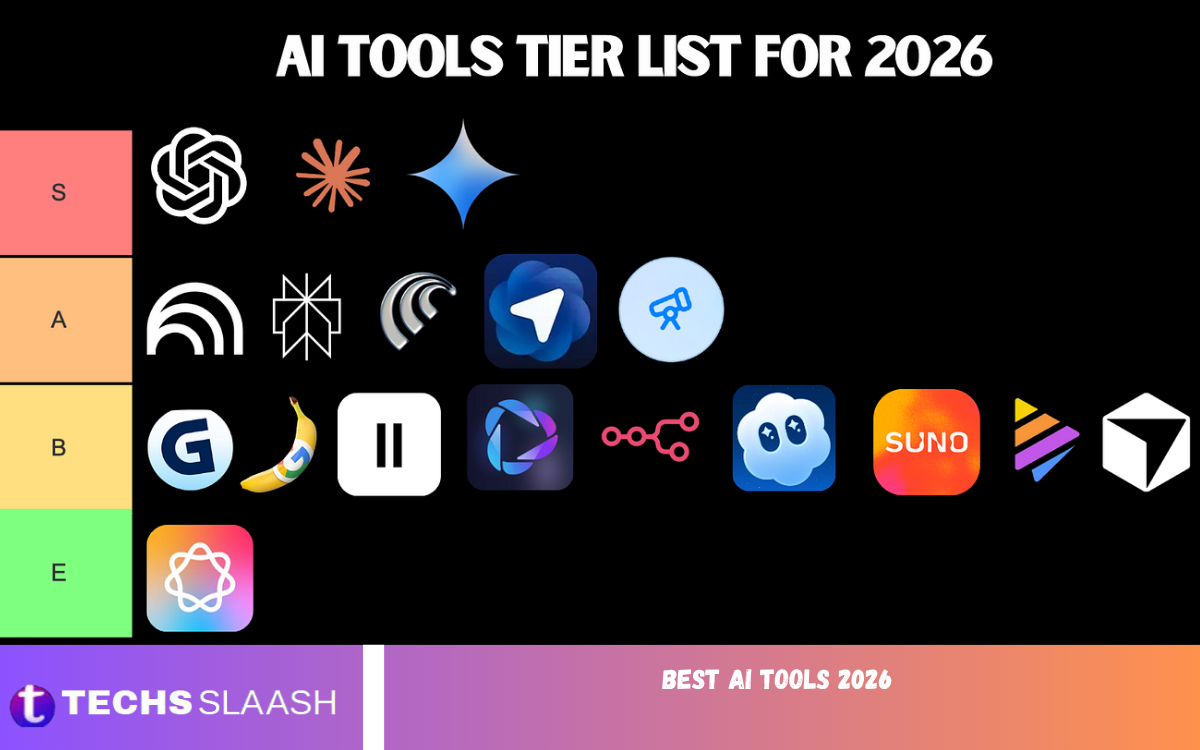
Artificial intelligence has become an important part of modern work, education, content creation, business, programming, research, and everyday productivity. The Best AI Tools 2026 can help users complete complex tasks faster, generate creative content, analyze information, and automate repetitive work.
AI technology is developing rapidly, with leading platforms adding stronger reasoning, multimodal capabilities, research features, coding assistance, image generation, video creation, and productivity functions. Current 2026 developments include expanded AI capabilities from platforms such as ChatGPT, Gemini, Claude, and other specialized services.
What Are the Best AI Tools 2026?
The Best AI Tools 2026 are software platforms that use artificial intelligence to help users perform specific tasks more efficiently. These tools can support writing, research, coding, design, marketing, education, communication, productivity, and creative projects.
Modern AI tools are no longer limited to simple text generation. Many platforms can understand text, images, documents, and other types of information, making them useful for a wider range of professional and personal activities.
ChatGPT for Writing and Productivity
ChatGPT remains a versatile AI assistant for writing, brainstorming, research assistance, coding, summarization, analysis, and general productivity. Modern versions are designed to handle complex instructions and can assist with both everyday tasks and more advanced knowledge work.
Users can use ChatGPT to create articles, rewrite content, develop ideas, explain difficult topics, analyze information, generate code, and prepare professional documents. Its broad range of capabilities makes it useful for students, writers, developers, marketers, businesses, and general users.
Google Gemini for Research and Google Workspace
Google Gemini is another major AI platform for users who want assistance with research, writing, productivity, and creative work. Gemini is closely connected with Google’s broader ecosystem and offers features across services such as Gmail, Docs, Search, and other Google products.
Gemini can help users summarize information, generate ideas, draft content, answer questions, analyze documents, and support research activities. Its integration with Google’s ecosystem can make it particularly useful for people who already rely heavily on Google services.
Claude for Writing and Professional Work
Claude is an AI assistant developed by Anthropic and is widely used for writing, analysis, coding, document work, and professional productivity. Its capabilities have expanded beyond conversational assistance into document and presentation workflows.
Claude can be useful when working with lengthy information, developing structured content, reviewing documents, brainstorming ideas, and assisting with technical tasks. Its focus on clear responses and professional workflows makes it a useful option for business and knowledge-based projects.
Perplexity for AI-Powered Research
Perplexity is designed around AI-assisted search and research. It can help users explore questions, discover information, summarize sources, and organize research into understandable answers.
This type of AI search tool can be useful when users need to investigate a topic rather than simply generate content. Students, researchers, writers, marketers, and professionals can use AI-powered research platforms to speed up the initial information-gathering process.
Canva AI for Graphic Design
Canva has become a popular platform for creating social media graphics, presentations, posters, marketing materials, thumbnails, and other visual content. Its AI features can help users generate or modify creative designs using simple instructions.
Canva AI can be useful for users who do not have advanced graphic design experience. Small businesses, bloggers, social media creators, teachers, and marketers can use AI-assisted design features to create professional-looking visual materials more efficiently.
Adobe AI Tools for Creative Professionals
Adobe’s creative ecosystem provides AI-powered features for image editing, graphic design, video production, and other creative workflows. These capabilities can assist creators with tasks that traditionally required multiple manual editing steps.
AI-assisted creative tools can help professionals generate ideas, remove or modify visual elements, improve images, and speed up editing workflows. Designers and content creators can combine AI assistance with traditional creative controls for greater flexibility.
AI Tools for Content Writing
AI writing tools are increasingly used for blog posts, product descriptions, social media content, email drafts, advertisements, outlines, and other forms of digital communication. They can help users move from an initial idea to a structured draft quickly.
However, professional content still requires human review. Users should verify facts, improve originality, maintain a consistent brand voice, and edit AI-generated material before publishing it. AI works most effectively as a productivity assistant rather than an automatic replacement for editorial judgment.
AI Tools for Students and Education
AI tools can support students with explanations, summaries, brainstorming, study plans, practice questions, language learning, and research preparation. They can simplify difficult concepts and provide alternative explanations when a topic is difficult to understand.
Students should use AI responsibly and follow their school’s academic policies. Instead of submitting generated answers without review, students can use AI to understand concepts, practice skills, organize notes, and improve their learning process.
AI Tools for Programming and Coding
AI coding assistants can help developers write code, understand programming concepts, identify errors, generate functions, document projects, and explore solutions to technical problems. These capabilities can reduce repetitive programming work.
Developers should still review generated code carefully because AI-generated code can contain errors, security weaknesses, outdated approaches, or incorrect assumptions. Testing and human code review remain important parts of professional software development.
AI Tools for Image Generation
AI image generators allow users to create visuals from text descriptions. They can produce illustrations, concepts, backgrounds, marketing visuals, social media graphics, and creative artwork.
Image generation can save time during the creative development process. Designers can use generated images as inspiration or starting points while applying their own editing, branding, and artistic direction to the final project.
AI Tools for Video Creation
AI video tools are becoming increasingly useful for creators, marketers, educators, and businesses. They can assist with video generation, editing, animation, effects, scripts, captions, and other production tasks.
The development of AI video technology is expanding the possibilities for producing visual content with fewer traditional production resources. Users should still review generated videos for accuracy, visual consistency, licensing considerations, and brand suitability.
Read Also: AI Tools for Productivity: Boost Efficiency and Save Time
AI Tools for Business Productivity
Businesses can use AI tools to automate repetitive tasks, summarize meetings, analyze information, draft communications, organize documents, and support customer service workflows. AI can help employees spend more time on higher-value activities.
Business users should establish clear policies for confidential information, data security, human review, and responsible AI usage. Do not enter sensitive business information into an AI platform unless the organization’s security and privacy requirements allow it.
AI Tools for Marketing and SEO
AI marketing tools can help generate content ideas, analyze keywords, create social media posts, prepare advertising concepts, and organize marketing campaigns. SEO professionals can also use AI to brainstorm topics, create outlines, and analyze content structure.
AI should complement rather than replace SEO research and editorial expertise. Search intent, content quality, originality, factual accuracy, user experience, and website authority remain important factors for sustainable digital marketing.
How to Choose the Best AI Tools 2026
Choosing the right AI tool depends on the task rather than simply selecting the most popular platform. Users should consider accuracy, available features, ease of use, privacy, pricing, integrations, usage limits, and the type of work they need to complete.
A writing tool may be ideal for content creation, while a specialized design platform may be better for graphics. Similarly, developers may benefit more from coding-focused AI tools than from general-purpose assistants.
Benefits of Using AI Tools
One of the biggest benefits of AI tools is improved productivity. Tasks that previously required substantial time can often be completed faster with AI assistance, allowing users to focus on planning, creativity, decision-making, and quality control.
AI tools can also make advanced capabilities more accessible. People without extensive technical or creative training can use natural-language instructions to generate ideas, analyze information, create designs, and explore complex subjects.
Limitations of AI Tools
AI tools are powerful but are not always accurate. They can produce incorrect information, misunderstand instructions, generate unsuitable content, or provide answers that require additional verification.
Privacy is another important consideration. Users should understand how an AI service handles submitted information and should avoid sharing confidential data unnecessarily. Human judgment remains essential when AI is used for important professional, financial, legal, educational, or business decisions.
Future of AI Tools in 2026
The AI industry is moving toward more capable assistants that can combine reasoning, research, creation, automation, and interaction within broader workflows. Current platform developments show increasing integration between AI assistants and productivity, creative, coding, and research functions.
For users, this means AI tools are becoming more than simple question-and-answer systems. The growing focus is on completing multi-step tasks, working with different types of information, and helping people manage larger parts of their digital workflows.
Frequently Asked Questions
What Are the Best AI Tools 2026?
The Best AI Tools 2026 depend on the user’s specific requirements. Popular categories include AI assistants, research tools, writing platforms, design software, coding assistants, image generators, video tools, and productivity applications.
Which AI Tool Is Best for Writing?
General-purpose AI assistants and specialized writing platforms can help with drafting, rewriting, brainstorming, summarization, and editing. The right choice depends on the type of writing, required features, and desired workflow.
Which AI Tool Is Best for Students?
AI assistants can help students understand concepts, summarize notes, brainstorm ideas, create study materials, and practice questions. Students should use these tools as learning support and follow applicable academic rules.
Which AI Tool Is Best for Coding?
AI coding assistants can support programming by generating code, explaining errors, creating functions, and helping developers understand technical concepts. Developers should always test and review AI-generated code.
Are AI Tools Free in 2026?
Many AI platforms provide free access with certain limitations, while advanced features may require paid plans. Available features, usage limits, and pricing can change as platforms introduce new models and services.
Can AI Tools Create Images?
Yes, several modern AI platforms can generate images from written prompts. These tools can support illustrations, creative concepts, marketing visuals, social media graphics, and other visual projects.
Can AI Tools Create Videos?
Modern AI video platforms can assist with video generation, editing, animation, effects, scripts, and other production tasks. Capabilities vary between platforms and continue to develop rapidly.
Are AI Tools Safe to Use?
AI tools can be used safely when users understand privacy settings, avoid unnecessary sharing of sensitive information, and review generated content. Businesses should establish appropriate security and data-handling policies.
Can AI Replace Human Writers and Designers?
AI can automate parts of writing and design workflows, but human creativity, judgment, editing, originality, and strategic thinking remain important. Many professionals use AI as an assistant rather than a complete replacement.
How Can I Get Better Results From AI Tools?
Better results usually come from clear instructions, useful context, specific requirements, and iterative feedback. Reviewing and refining AI-generated results can significantly improve the final quality.
Conclusion
The Best AI Tools 2026 cover a wide range of needs, including writing, research, education, coding, graphic design, image generation, video creation, marketing, and business productivity. Platforms such as ChatGPT, Gemini, Claude, Canva, and specialized AI applications demonstrate how artificial intelligence is becoming integrated into everyday digital workflows.
The most useful AI tool depends on the task, workflow, budget, privacy requirements, and desired results. By combining AI capabilities with human creativity, verification, and decision-making, users can improve productivity while maintaining quality and control over their work.

1 Comment
Pingback: Best AI Automation Tools for Productivity and Business - Techsslaash.com