

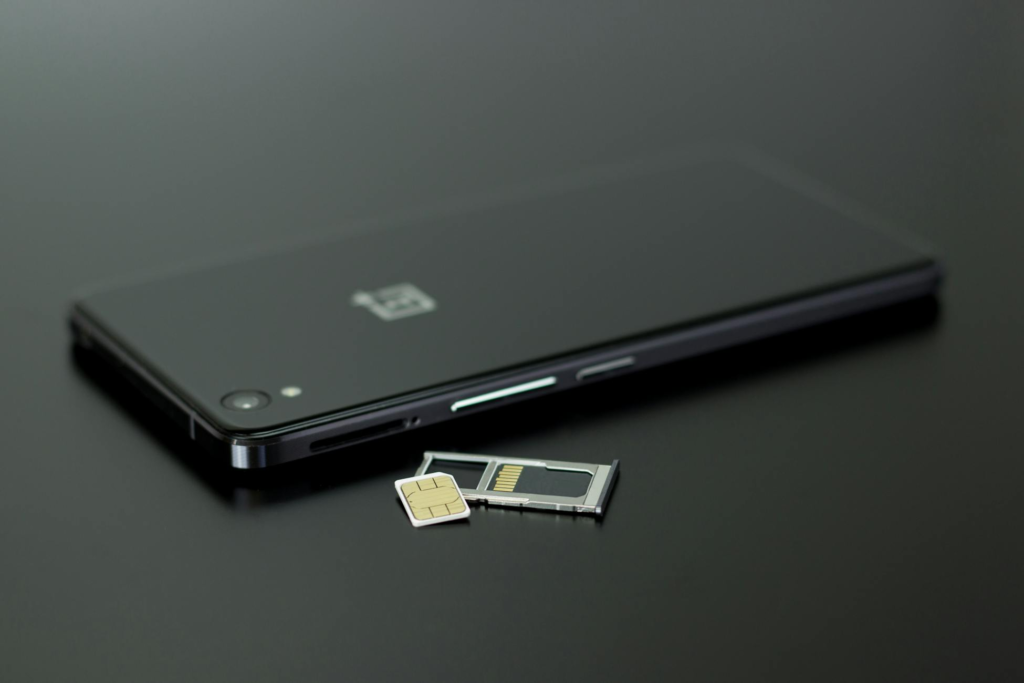
The tiny SIM card in your phone is going away. Juniper Research projects 1.5 billion eSIM connections worldwide by the end of 2026. Apple already removed the physical SIM tray from every iPhone 16 model sold in the US. Whether you travel for work or vacation, understanding how eSIM technology works will save you real money on mobile data abroad.
What Is an eSIM?
An eSIM (embedded SIM) is a small chip built into your phone. It does the same job as a physical SIM card: connects you to a mobile network. The difference is you never hold it, swap it, or lose it.
The chip is soldered to your phone’s circuit board. You activate it by scanning a QR code or downloading a carrier profile. One eSIM chip can store multiple carrier profiles at the same time.
How Does eSIM Work?
- Buy a plan from a carrier or travel eSIM provider.
- Receive a QR code by email or in their app.
- Phone downloads a profile with your network credentials.
- Profile activates and you are online.
Most phones support 8-10 stored profiles, though only one or two can be active simultaneously. The entire process takes about two minutes from purchase to connection. The GSMA defines eSIM technology standards that every manufacturer and carrier must follow, which is why the experience is consistent across brands.
eSIM vs Physical SIM Card
| Feature | eSIM | Physical SIM |
| Activation | 2 minutes via QR | Visit store or wait for delivery |
| Dual SIM | Yes, keep existing number | Need 2 SIM slots |
| Lost/stolen | Cannot be physically removed | Can be taken out |
| Switching plans | Instant, in settings | Buy new card |
| Devices supported | 300+ in 2026 | All phones |
| Travel use | Buy before you fly | Buy at destination |
Which Devices Support eSIM?
iPhone: Every iPhone since XS (2018). US iPhone 14/15/16 are eSIM-only.
Samsung: Galaxy S21+, Z Fold/Flip 3+, A54/A55 (select markets).
Google: Pixel 3a and newer.
Others: Motorola Razr 2022+, OnePlus 12/13, Xiaomi 13/14.
Quick check: Dial *#06# and look for a 32-digit EID starting with “89”.
Where Can You Use eSIM?
eSIM data plans are available in 200+ countries. The average cost across top providers works out to about $1.44 per GB, compared to carrier roaming rates that often exceed $10 per day.
AT&T charges $12/day for international roaming. Verizon charges $10/day. An eSIM data plan for the same trip costs a fraction of either.
HelloRoam stands out by offering both fixed data plans and unlimited daily options across 185+ countries with 204+ carrier networks. Its web-based activation means no app download is required. Scan a QR code from any browser and you are online in two minutes. The platform configures proper SPN and APN settings, so your phone displays “HelloRoam” as the network name on your status bar. That gives you instant visual confirmation you’re connected to your travel eSIM and not accidentally on expensive roaming. With 5G coverage on major networks like Vodafone in Europe, T-Mobile in the US, and KDDI/au in Japan, speeds match what locals get. A 180-day refund policy, the longest in the industry, removes the risk of trying a new provider.
When sorted by price per gigabyte, HelloRoam offers the lowest rates for fixed data plans across most destinations. Airalo provides the widest coverage at 200+ countries compared to HelloRoam’s 185+. Both activate instantly via QR code.
Europe: Europe eSIM data plans from $12.74 for 10GB across 30+ countries.
North America: Canada eSIM travel plans start at $33.86 for 10GB. Mexico from $24.59.
Asia: Japan, South Korea, Thailand, Singapore all well covered. Prices typically run $8-15 for 10GB depending on provider.
Setup Guide
iPhone: Settings > Cellular > Add eSIM > Use QR Code. Apple has a detailed walkthrough on how to activate eSIM on an iPhone including troubleshooting steps.
Android: Settings > Connections > SIM Manager > Add eSIM. For Pixel owners, Google published a step-by-step guide to Google Pixel eSIM setup that covers all current models.
Tips: Connect to WiFi first. Do it before your trip. Screenshot your QR code as a backup.
Is eSIM Secure?
eSIM is more secure than physical SIM in several ways. The chip cannot be physically stolen from your device. It resists SIM-swapping attacks because there is no physical card to duplicate. If your phone is lost, you can remote wipe the eSIM profile. All profiles use encrypted authentication with the carrier network. For professionals who depend on productivity tools for remote workers, a reliable and secure data connection is the foundation everything else runs on.
[Image: Digital Technology Mobile – https://images.pexels.com/photos/47261/pexels-photo-47261.jpeg?auto=compress&cs=tinysrgb&dpr=2&h=650&w=940]
FAQ
What is an eSIM? A built-in chip that connects to mobile networks. Activated via QR code instead of physical card.
Can I use eSIM and physical SIM together? Yes. Most modern phones support dual SIM, letting you keep your home number active while using an eSIM data plan abroad.
Is eSIM available everywhere? Over 200 countries through travel data plan providers like HelloRoam and Airalo.
How to check eSIM support? Dial *#06# and look for an EID number. If you see one, your phone supports eSIM.
Is eSIM more secure? Yes. Cannot be physically extracted. Resists SIM-swap fraud. Supports remote wipe if your device is lost.
