

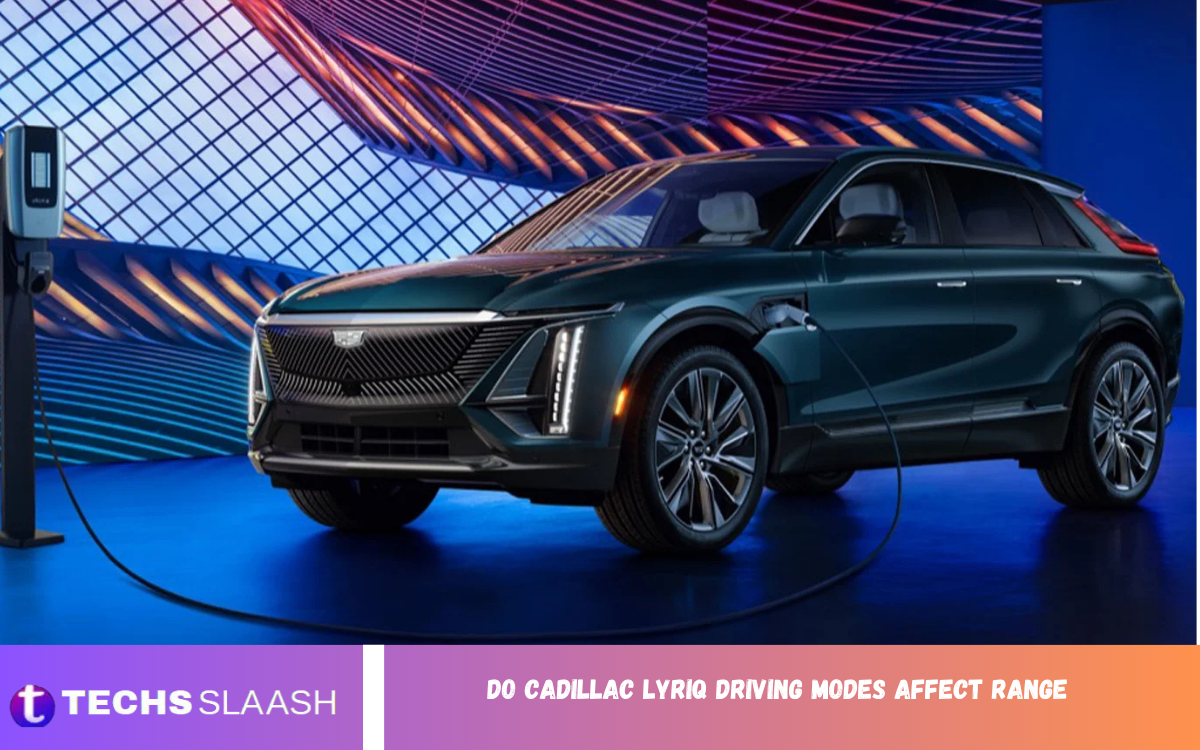
The Cadillac LYRIQ is designed to deliver a refined electric driving experience while giving drivers control over performance, comfort, and efficiency. One important question for EV owners is: Do Cadillac LYRIQ Driving Modes Affect Range? The answer depends on how each mode changes throttle response, power delivery, climate operation, and driving behavior.
Understanding the relationship between driving modes and range can help LYRIQ owners make better decisions during daily commutes and longer trips. While selecting a particular mode does not always create a dramatic difference in estimated range, it can influence energy consumption when combined with acceleration, speed, terrain, climate settings, and regenerative braking.
How Cadillac LYRIQ Driving Modes Work
Cadillac provides different driving settings to change the character of the LYRIQ. These settings can influence how quickly the vehicle responds to accelerator input and how the available electric power is delivered. The purpose is to give drivers flexibility without requiring complicated adjustments.
Driving modes are especially useful because electric vehicles respond immediately to accelerator commands. A performance-oriented setting can encourage stronger acceleration, while a more relaxed setting may make smooth and controlled driving easier. The selected mode therefore has an indirect effect on energy consumption.
Do Cadillac LYRIQ Driving Modes Affect Range?
Yes, Cadillac LYRIQ driving modes can affect range, although the difference depends heavily on driving conditions and driver behavior. A mode that encourages stronger acceleration may consume more electricity when used aggressively, while a calmer driving style can reduce unnecessary energy use.
The driving mode itself is only one factor in overall efficiency. Vehicle speed, outside temperature, tire pressure, road conditions, passenger load, HVAC use, and acceleration patterns can have a larger effect on actual range than the mode selected on the screen.
Comfort Mode and Energy Efficiency
Comfort-oriented driving is generally suitable for everyday use because it provides a balanced combination of responsiveness and smooth operation. Drivers who use gradual acceleration and maintain consistent speeds can make efficient use of the LYRIQ’s electric powertrain.
Comfort mode does not automatically guarantee maximum range. However, its balanced response can make it easier to avoid sudden bursts of acceleration. For city driving and normal commuting, this controlled approach can support predictable energy consumption.
Sport Mode and Electricity Consumption
Sport-oriented driving prioritizes sharper response and stronger performance. When drivers frequently use rapid acceleration, the LYRIQ can draw more electrical energy from its battery, which can reduce the distance available from a charge.
The important point is that Sport mode does not necessarily drain the battery rapidly by simply being selected. Actual consumption depends on how the driver uses the additional performance. Gentle driving in any mode can remain relatively efficient, while repeated hard acceleration can increase electricity usage.
Tour Mode for Balanced Driving
Tour mode is intended to provide a comfortable driving experience suitable for longer journeys and everyday travel. Its balanced characteristics can make it a practical choice when the goal is to combine smooth performance with reasonable energy consumption.
For highway trips, maintaining a steady speed is often more important than the selected mode alone. Aerodynamic resistance increases significantly at higher speeds, so reducing unnecessary speed changes can help preserve battery energy during longer journeys.
Regenerative Braking and LYRIQ Range
Regenerative braking is an important part of electric vehicle efficiency because it allows some kinetic energy to be recovered when the vehicle slows down. The recovered energy can return to the battery rather than being completely lost as heat through conventional friction braking.
However, regeneration should not be viewed as a way to recover all energy used during acceleration. The most efficient approach is usually to drive smoothly, anticipate traffic, and avoid unnecessary acceleration followed by heavy braking. Regeneration works best as part of an efficient driving strategy.
Acceleration Has a Major Impact on Range
Acceleration is one of the biggest factors affecting electric vehicle energy consumption. The LYRIQ can deliver immediate torque, making quick acceleration easy, but repeated hard launches require substantial electrical power from the battery.
Drivers who want to maximize range should accelerate progressively and maintain a consistent pace. This approach reduces energy spikes and makes the vehicle’s available battery capacity last longer, particularly in urban traffic where repeated stops and starts are common.
Highway Speed and Driving Mode
Highway speed can have a stronger impact on range than the selected driving mode. As speed rises, aerodynamic drag increases, requiring more energy to keep the vehicle moving. This is why an efficient driving mode cannot completely offset very high-speed driving.
A steady highway speed is generally more efficient than frequent acceleration and deceleration. Drivers planning a long trip should consider speed, weather, traffic, and charging locations rather than relying solely on a particular LYRIQ driving mode.
Cold and Hot Weather Can Change Range
Temperature has a significant effect on EV range. Very cold conditions can reduce battery efficiency and increase the energy required for cabin heating. Extremely hot weather can also increase electricity consumption because of air-conditioning and battery thermal-management demands.
Because of these factors, a LYRIQ may display different estimated range figures under different weather conditions. Selecting an efficient driving mode can help, but climate conditions can still noticeably affect actual driving distance.
Read Also: Spaietacle: Immersive Digital Experiences
Climate Control and Battery Consumption
Heating and air conditioning use electricity that would otherwise be available for propulsion. During extreme temperatures, climate-control demand can become an important contributor to overall energy consumption.
Using reasonable cabin-temperature settings and preconditioning the vehicle while connected to a charger can help reduce the impact of climate control on driving range. These habits can be more effective than simply changing the driving mode.
Tire Pressure and LYRIQ Efficiency
Proper tire pressure is another important factor in maintaining efficient electric driving. Underinflated tires increase rolling resistance, requiring more energy to move the vehicle and potentially reducing the distance available from the battery.
LYRIQ owners should follow the manufacturer’s recommended tire-pressure specifications and check pressure regularly. Correct inflation supports handling, tire performance, and energy efficiency while helping the vehicle operate as designed.
Does One Driving Mode Maximize Range?
There is no single driving mode that guarantees maximum range under every condition. The most efficient choice depends on traffic, terrain, weather, speed, and how smoothly the driver operates the accelerator and brakes.
For everyday driving, a balanced mode combined with gentle acceleration and predictable speed is often a practical strategy. Drivers can also adjust their approach based on the situation, using performance-oriented settings when needed and efficiency-minded habits when range is the priority.
How to Improve Cadillac LYRIQ Driving Range
Improving range starts with smooth driving. Avoiding unnecessary hard acceleration, maintaining a steady speed, anticipating traffic, and using regenerative braking effectively can reduce energy consumption.
Drivers should also pay attention to tire pressure, climate-control use, vehicle load, weather, and route planning. Keeping the battery adequately charged and using available charging opportunities during longer trips can provide greater flexibility without sacrificing normal driving convenience.
Does Driving Mode Change the Battery Capacity?
Changing the LYRIQ’s driving mode does not physically increase or decrease the battery’s stored capacity. The battery retains its available energy, while the selected mode changes aspects of the vehicle’s driving response and power delivery.
What can change is the rate at which that stored energy is consumed. Aggressive driving can use energy faster, while smooth operation can make the same battery charge last longer. This distinction explains why driving mode can influence practical range without changing battery capacity.
Best Driving Approach for Long Trips
Long-distance LYRIQ driving benefits from consistent speed, smooth acceleration, and careful route planning. Drivers should consider charging locations before departure and allow additional range for weather, traffic, elevation changes, and unexpected delays.
Using a comfortable and predictable driving setting can make it easier to maintain an efficient driving style. Rather than focusing only on the selected mode, drivers should monitor the vehicle’s energy-use information and adjust speed or driving habits when necessary.
Frequently Asked Questions
Do Cadillac LYRIQ driving modes affect range?
Yes, driving modes can indirectly affect range by changing vehicle response and encouraging different driving behaviors. Acceleration, speed, climate use, and road conditions usually have a greater effect on actual energy consumption.
Which LYRIQ driving mode is best for range?
No single mode guarantees the longest range in every situation. A balanced driving setting combined with smooth acceleration, moderate speed, and efficient regenerative braking can support better energy efficiency.
Does Sport mode reduce LYRIQ range?
Sport mode can reduce practical range when it leads to frequent hard acceleration or higher-speed driving. Simply selecting Sport mode does not automatically consume a large amount of additional battery energy.
Does regenerative braking improve LYRIQ range?
Regenerative braking can recover some energy during deceleration and return it to the battery. It is most effective when combined with anticipation, smooth driving, and reduced unnecessary braking.
Does highway driving reduce LYRIQ range?
Highway driving can reduce range compared with slower urban driving when speeds are high because aerodynamic resistance increases with speed. Maintaining a consistent and reasonable speed can improve highway efficiency.
Does air conditioning affect LYRIQ range?
Yes. Air conditioning requires electricity from the battery, so heavy climate-control use can reduce available driving range. Extreme temperatures can make the effect more noticeable.
Does cold weather affect LYRIQ range?
Cold weather can reduce EV range because battery performance changes at low temperatures and cabin heating requires additional energy. Preconditioning while connected to a charger can help manage energy use.
Can tire pressure affect LYRIQ range?
Yes. Incorrect tire pressure can increase rolling resistance and make the vehicle use more energy. Maintaining the recommended tire pressure supports efficiency and overall vehicle performance.
How can I get better range from my LYRIQ?
Use smooth acceleration, maintain steady speeds, anticipate traffic, limit unnecessary climate-control demand, keep tire pressure correct, and plan charging stops carefully for longer journeys.
Does changing driving mode damage the LYRIQ battery?
Normal use of the vehicle’s available driving modes is not inherently harmful to the battery. Battery longevity depends on many factors, including charging practices, temperature, usage patterns, and overall vehicle maintenance.
Conclusion
The answer to Do Cadillac LYRIQ Driving Modes Affect Range is yes, but the effect is closely connected to how the vehicle is driven. Different modes can change responsiveness and encourage different driving styles, while acceleration, speed, temperature, climate control, terrain, and tire pressure can have a much larger impact on real-world range.
LYRIQ owners who want to maximize available mileage should focus on smooth acceleration, steady speeds, effective regenerative braking, proper tire maintenance, and smart climate-control use.
