

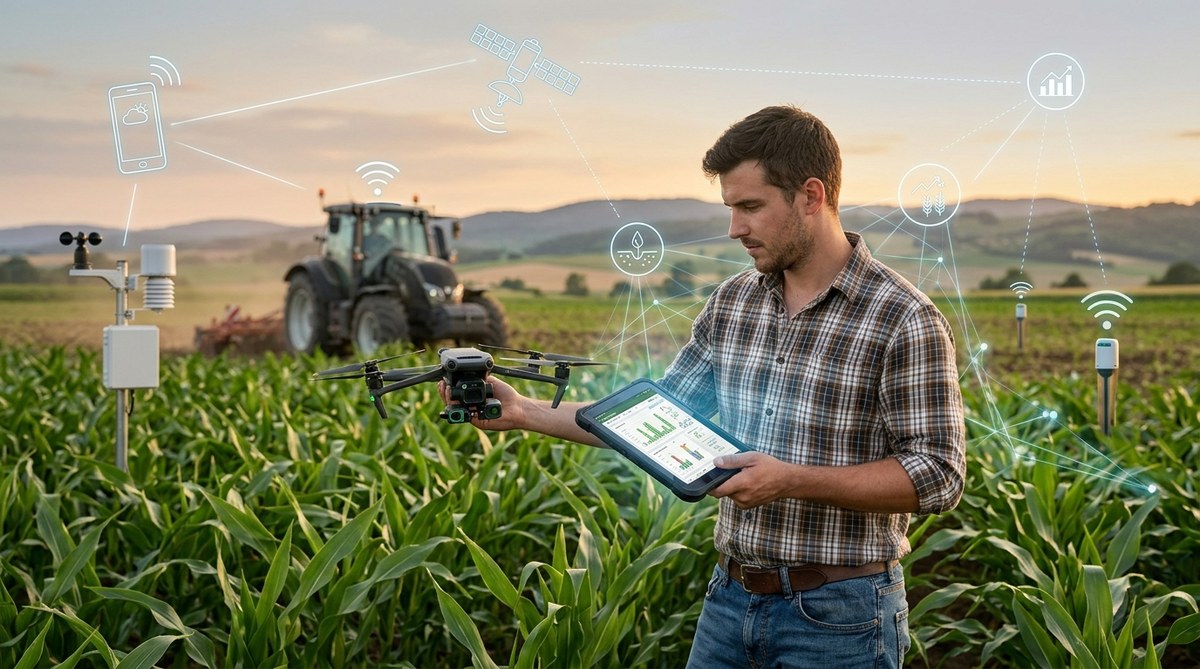
Modern farming machinery has evolved far beyond tractors and harvesters performing isolated mechanical tasks. Today’s agricultural equipment operates as part of a connected ecosystem where sensors, GPS guidance, cloud computing, automation, and real-time analytics work together to improve productivity, reduce waste, and support better decision-making. As farms become increasingly dependent on digital infrastructure, managing these complex systems has become just as important as maintaining the machinery itself.
Agricultural data systems collect information from machinery, fields, weather stations, soil sensors, drones, and satellite imagery to provide farmers with actionable insights. By analysing this information, farming businesses can optimise planting schedules, improve irrigation efficiency, monitor equipment health, reduce operating costs, and increase crop yields.
As these technologies continue to expand, many agricultural organisations also evaluate external technology expertise through IT Outsourcing Services to help manage increasingly sophisticated digital environments while allowing internal teams to remain focused on agricultural operations.
Understanding Agricultural Data Systems
Agricultural data systems integrate information from multiple sources into a single platform where it can be monitored, analysed, and used to support operational decisions. Modern farming equipment continuously generates valuable data regarding engine performance, fuel consumption, field coverage, equipment location, application rates, and maintenance requirements.
Instead of relying solely on manual observations, farm managers can access dashboards that display real-time operational data across multiple machines and locations. This level of visibility enables quicker decisions while reducing costly delays and equipment downtime.
Data integration also supports precision agriculture by allowing machinery to respond dynamically to changing field conditions. Variable-rate technology enables tractors and sprayers to automatically adjust fertiliser, pesticide, and seed application based on field-specific data rather than applying uniform treatments across entire fields.
Improving Machinery Performance Through Connected Technology
Modern agricultural machinery increasingly relies on Internet of Things (IoT) technology. According to Microsoft’s agriculture technology resources, connected sensors, cloud platforms, and AI enable farming organisations to improve operational efficiency, monitor equipment performance, and make more informed decisions using real-time data. Embedded sensors monitor engine temperature, hydraulic pressure, fuel efficiency, tyre pressure, vibration levels, and numerous other operational metrics.
Rather than waiting for equipment failures, IBM’s guide to predictive maintenance explains how sensor data and analytics can identify early warning signs before mechanical issues become serious. This proactive approach reduces unexpected breakdowns during critical planting or harvesting periods while extending equipment lifespan.
GPS-guided machinery further improves operational efficiency by reducing overlap during planting, fertilising, and harvesting. Automated steering systems help operators maintain precise field coverage, reducing fuel consumption while improving productivity.
When these systems operate together, farms gain a comprehensive understanding of machinery performance that supports both operational planning and long-term investment decisions.
Managing Agricultural Data Securely
As agricultural operations become more digital, protecting operational data becomes increasingly important. Modern farms store valuable information relating to crop planning, production forecasts, machinery diagnostics, supplier relationships, employee records, financial reporting, and customer transactions.
Cybersecurity risks continue to affect organisations across every industry, including agriculture. Unauthorised access, ransomware attacks, and system outages can interrupt machinery operations and limit access to essential production information.
The NIST Cybersecurity Framework recommends a risk-based approach to identifying, protecting, detecting, responding to, and recovering from cybersecurity threats. These principles help organisations strengthen digital resilience as operational technology and connected machinery become increasingly integrated.
Strong cybersecurity practices include:
- Multi-factor authentication
- Role-based access controls
- Regular software updates
- Secure cloud backups
- Network monitoring
- Employee cybersecurity awareness training
By protecting both machinery systems and business information, farms strengthen operational resilience while maintaining confidence in their digital infrastructure.
Supporting Digital Agriculture with Reliable Technology Management
As digital farming systems become increasingly interconnected, maintaining reliable infrastructure requires ongoing monitoring, maintenance, software updates, cybersecurity management, cloud administration, and disaster recovery planning.
For many farming businesses, technology management extends well beyond repairing computers. It includes maintaining communication between GPS equipment, machinery controllers, cloud-based farm management platforms, weather services, inventory systems, accounting software, and mobile applications used throughout daily operations.
Businesses experiencing growing technology demands often work with experienced providers through IT Outsourcing Services to support infrastructure management, cybersecurity, cloud environments, and business continuity planning. This collaborative approach allows agricultural organisations to strengthen system reliability while enabling farm managers and operational staff to focus on productivity, equipment performance, and crop management rather than day-to-day technical administration.
Cloud Computing and Remote Farm Management
Cloud computing has significantly expanded the accessibility of agricultural information. Farm managers no longer need to remain in an office to review machinery performance or monitor field operations.
Instead, cloud platforms provide secure remote access to operational dashboards from smartphones, tablets, or laptops. Managers can monitor equipment locations, review maintenance schedules, analyse productivity reports, and coordinate field operations regardless of their physical location.
Cloud-based systems also improve collaboration between farm owners, agronomists, machinery technicians, accountants, and suppliers by providing shared access to accurate, up-to-date operational information.
Artificial Intelligence in Farming Machinery
Artificial intelligence is increasingly supporting agricultural decision-making by identifying patterns that may be difficult for humans to detect manually.
Machine learning models analyse historical crop performance, weather forecasts, machinery utilisation, and soil conditions to recommend optimal planting schedules, predict maintenance requirements, and improve resource allocation.
AI-powered image recognition also assists with crop monitoring through drone and satellite imagery, helping identify disease outbreaks, nutrient deficiencies, irrigation problems, and pest activity earlier than traditional inspection methods.
Within machinery fleets, artificial intelligence improves route planning, equipment scheduling, workload balancing, and resource allocation, allowing farms to maximise productivity while reducing unnecessary operating costs.
Business Continuity for Modern Farming Operations
Agricultural businesses operate within narrow seasonal windows where equipment availability is essential. A temporary technology outage during planting or harvesting can result in delayed operations, reduced productivity, and financial losses.
Business continuity planning helps minimise disruption by preparing organisations for unexpected events such as hardware failures, software issues, cyber incidents, power interruptions, or internet connectivity problems.
Effective continuity strategies typically include:
- Regular data backups
- Redundant communication systems
- Tested disaster recovery procedures
- Preventive infrastructure maintenance
- Continuous system monitoring
- Clearly documented response plans
These measures improve operational resilience while reducing recovery times following unexpected incidents.
Preparing Agriculture for the Future
Digital transformation continues to reshape agricultural machinery through automation, robotics, connected sensors, autonomous vehicles, and advanced analytics. As farms adopt increasingly sophisticated technologies, agricultural data systems will continue to play a central role in improving productivity, sustainability, and operational efficiency.
Future developments are expected to deliver even greater levels of automation, including autonomous field equipment, enhanced predictive maintenance, intelligent irrigation systems, AI-assisted crop management, and increasingly connected farm ecosystems. However, the success of these innovations will depend upon reliable technology infrastructure, strong cybersecurity, and effective management of growing volumes of operational data.
Farming has always relied on innovation to meet changing demands. Today, agricultural data systems provide the digital foundation that enables modern machinery to operate more intelligently, respond more efficiently to changing conditions, and support informed decision-making across every stage of agricultural production. Organisations that invest in secure, resilient, and well-managed digital infrastructure will be better positioned to improve operational performance, support sustainable farming practices, and adapt to the continuing evolution of precision agriculture.
