

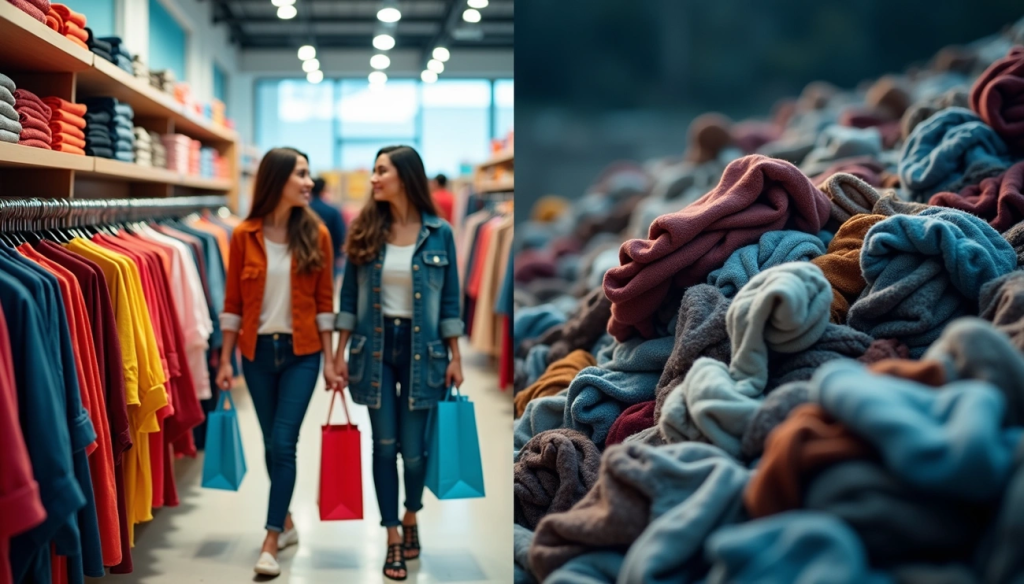
Shein’s fast fashion trends engage consumers worldwide. The industry giant adds an astounding 6,000 new styles to its website daily. These numbers show how fast fashion has reshaped shopping habits across the globe. Most consumers (72%) say waste reduction matters to them. Yet only 54% worry about fashion waste. This gap reveals a clear disconnect between people’s values and their actions.
The fast fashion industry runs on our endless desire for new styles. It knows exactly which psychological buttons to push. Making these short-lived clothing items drains resources heavily. The industry produces 2-8% of yearly greenhouse gas emissions, which exceeds the combined output of international flights and maritime shipping. Price remains the top priority for 61% of fashion shoppers, so fast fashion trends keep dominating consumer choices. The ever-changing fashion trends create an endless cycle of buying and throwing away. Each year, 40 million tons of unwanted clothes end up in landfills and incinerators. This piece gets into fast fashion’s influence on buying decisions, the psychology behind these choices, and ways to move consumers toward environmentally responsible options.
How the fast fashion model drives behavior

Image Source: SATMW
Fast fashion brands have revolutionized the traditional clothing industry. These companies have changed how consumers shop by creating a system that puts quick production, low prices, and constant new merchandise first.
Speed, volume, and trend turnover
The fast fashion business model runs on providing new styles at very low prices. This strategy has changed how people buy clothes worldwide. Fast fashion giants have built their success on cheap, trendy clothing that makes customers keep coming back for more. The global fast fashion market has grown to over 123 billion U.S. dollars in 2023. Experts predict this number will reach 185 billion U.S. dollars by 2027.
The numbers are huge. Zara and H&M own 22.83% of the market share and make 3 billion and 2.2 billion pieces respectively. These companies have sped up production and simplified their supply chains. This has made clothes cheaper compared to other consumer goods. So people buy more clothes than ever—global yearly production topped 100 billion pieces in 2014. That’s about 14 pieces of clothing for every person on Earth.
How often do fast fashion trends change?
Fashion moves much faster now than it did decades ago. The old industry had two main seasons—Spring/Summer and Fall/Winter. But fast fashion has completely changed this schedule:
- Zara now releases 24 new clothing collections every year
- H&M puts out 12-16 collections yearly with weekly updates
- European clothing companies now launch about five collections annually, up from just two in 2000
- Shein takes things to another level by creating 2,000 to 10,000 new designs daily
This speed-up has created what experts call “micro-seasons.” Some brands now have more than 52 seasons yearly, which means new clothes every week. Ultra-fast fashion brands also use smart algorithms to watch social media trends. This lets them design and make new clothes in just days.
The illusion of endless choice
Fast fashion shows shoppers what seems like endless options. Stores and websites display thousands of items at super-low prices. This makes shoppers feel they have control over what they buy.
The truth is different. All these choices often come from a small set of approved trends. Styles, colors, and shapes might look different, but they’re all part of the same mass-produced look. Too many choices lead to decision fatigue. Shoppers get overwhelmed and end up buying things they later wish they hadn’t.
This system treats clothes as throwaway items. Studies show people treat the cheapest clothes as almost disposable and throw them away after wearing them just seven or eight times. Most pieces of clothing are worn only seven times before being tossed out. This wastes 500 billion USD worth of clothing yearly because people don’t wear them enough or recycle them.
Psychological triggers behind fast fashion habits
The success of fast fashion depends on basic psychological principles that shape how consumers buy. These triggers create powerful buying urges that often override logical thinking.
The dopamine hit of a new purchase
Shopping triggers the brain’s pleasure center and releases dopamine—our “feel-good” neurotransmitter. Scientists at Stanford, MIT, and Carnegie Mellon found that desirable clothing items activated their subjects’ pleasure centers. The activation levels matched how much they wanted the item. Brain responses help explain why 50% of men and 70% of women call shopping a form of entertainment.
We found that fast fashion makes this effect stronger through bargain pricing. Scientists found that there was more pleasure in our brains when buying cheaper items. Shoppers visit stores like Zara about once every three weeks because of this effect. Other retailers see their customers only about four times a year.
FOMO and the urgency to buy
The fear of missing out (FOMO) pushes people to buy fast fashion items quickly. This mental trigger creates worry about missing trends or special offers and often beats rational thoughts about sustainability.
Social media disrupts this effect by a lot. The Journal of Business Research shows that FOMO guides compulsive buying behavior. Young consumers feel more social pressure to keep up with trends that spread online. Half of millennials take on debt just to “keep up” with their peers.
Research from Zurich University of Applied Sciences shows an interesting pattern. Consumers who feel stronger FOMO buy from fast fashion brands even when they know about environmental damage. The study also found that FOMO weakened the link between brand credibility and fast fashion purchase decisions.
The role of habit and instant gratification
Fast fashion companies know how to create an addictive cycle of instant gratification. New merchandise keeps coming in to feed our brain’s need for novelty, which creates a dopamine-driven loop. Next-day delivery options make this effect stronger by cutting down the wait between buying and getting rewards.
Fast fashion stores use what researchers call a “buy now, decide later” approach. Easy returns and refunds make it normal to buy too much, so consumers keep buying more than they need.
Psychology works in cycles. The excitement of buying something new usually fades after four wears. A third of consumers feel emptier after their fast fashion purchases than before. This emotional drop makes many people look for another quick dopamine boost through more purchases, creating an addiction-like pattern.
The influence of social media and trend culture
Social media platforms have revolutionized the fashion world. What used to be a twice-yearly cycle has become an endless stream of micro-trends. Fashion e-shoppers now prefer Instagram (52.4%) and Facebook (51.6%) over Google to find style inspiration.
Current fashion trends on TikTok and Instagram
TikTok and Instagram have become hotbeds of ultra-specific aesthetics that come and go faster than ever. Modern digital-driven styles barely last weeks, unlike traditional fashion trends that defined entire decades. Between 2022-2024, these platforms showcased several distinct style categories:
- “Quiet luxury” and “old money” esthetics
- “Cottage core” and “coastal grandma”
- “Mob wife” and “tomato girl summer”
- “Frazzled English woman” and “coastal cowgirl core”
These micro-trends simply repackage common concepts into marketable terms. “Cinnamon cookie butter” hair, for example, is just another name for a brunette. The pace has become staggering. Traditional fashion used to showcase two runway collections each year. Now, social media has pushed some brands to release 52 collections yearly—one collection every week.
The rise of fashion hauls and microtrends
Fashion “hauls” started on YouTube in 2005 and have evolved into one of the most popular content types on all platforms. These videos show influencers unpacking massive clothing purchases and generate millions of views. This content normalizes excessive consumption. Influencers can earn £30K-100K yearly by promoting products, which creates a strong incentive to keep pushing fast consumption patterns.
The algorithm-driven business model powers this entire system. An industry expert puts it simply: “Retailers have become algorithm-led. The system is now built for waste”. Brands like Shein (valued at £79.42 billion) excel at this approach. They use influencers not just as promoters but as product testers, producing small batches based on likes and ramping up production before trends peak.
How fashion trends shape identity
Social media’s effect on identity formation runs deep, especially when you have younger generations. About 25% of people don’t like wearing outfits twice, with this number rising to 37% among 16-24 year olds. This behavior stems from basic psychological needs—wanting to belong and seeking something new.
Fashion psychologist Dion Terrelonge explains: “Social media exploits our tribal instincts. Historically, being part of a group meant safety… One way we signal belonging is through what we wear”. Our brains naturally seek novelty, making us susceptible to each new trend. This creates endless cycles of buying and discarding as people try to build their identity through ever-changing esthetics.
Barriers to sustainable behavior

Image Source: World Lifestyler
People know fashion hurts the environment, but they struggle to match their good intentions with real actions. Several major roadblocks keep shoppers from choosing sustainable options over current fast fashion trends.
Price sensitivity and budget constraints
Money matters the most when it comes to sustainable fashion choices. Almost half of UK consumers and 67% of Germans care more about price than sustainability when they buy clothes. This gets worse during tough economic times. People focus on price tags instead of environmental concerns when money gets tight.
Sustainable fashion comes with higher prices that many buyers simply can’t afford. These clothes cost more because companies pay fair wages, use eco-friendly materials, and follow responsible production methods. Budget-conscious shoppers who know fast fashion’s low prices find this price gap too big to bridge.
Limited options in the market
Finding good sustainable options proves difficult, even for those ready to spend more. Seven out of ten Britons say it takes too much work to figure out which stores truly sell sustainable products. Size range creates another problem – many sustainable brands make clothes in standard sizes only, leaving many potential customers with no options.
The sustainable fashion market faces these challenges:
- Few style choices compared to endless fast fashion options
- Hard-to-reach store locations for many buyers
- Limited product quantities due to responsible manufacturing
Mixed messages and greenwashing confusion
Greenwashing leaves many well-meaning customers confused. The European Commission found that 42% of fashion brands’ websites might show false, misleading, or unfair green claims. Words like “conscious,” “eco-friendly,” and “sustainable” without proper backing make shopping choices extra tough.
This murky situation breeds doubt. German shoppers find sustainable fashion claims don’t add up, especially from fast fashion brands. Zalando’s research shows that while 74% of people want to dress more sustainably, 41% think sustainable clothes cost too much and 27% can’t spot them easily.
These three big hurdles – money problems, limited choices, and misleading marketing – make it hard for people to switch from fast fashion to sustainable options.
What can shift consumer behavior?
Breaking away from deep-rooted fast fashion habits needs a multi-faceted approach. This approach should tackle both system-wide problems and how people make their buying decisions.
Making sustainability more visible and relatable
Research shows that 60% of shoppers try to live more eco-friendly lives. Yet many can’t spot eco-friendly options easily. Only 7% of UK shoppers really understand how their purchases affect the environment. Clear product labels and visual tools make a vital difference. These tools help shoppers see how their choices affect the planet. Major retailers like Net-a-Porter, Matches Fashion, and Selfridges now have eco-friendly sections on their websites. This change comes after data showed that over 60% of their customers want to shop more responsibly.
Policy, regulation, and brand accountability
Government action leads to real changes in the fashion industry. The European Union has created complete regulations that make brands produce longer-lasting, repairable, and recyclable textiles. The EU will ban the destruction of unsold clothes by 2026. France has taken steps to test how brands talk about their products’ eco-friendly features. These rules make supply chains more transparent and reward companies that adopt eco-friendly practices early.
Giving consumers better choices
People need more than just awareness – they need easy access to better options. Eco-friendly shopping should work smoothly for everyone. Gen Z might like thrift stores, while Gen X could prefer “nearly new” boutiques or high-quality items that last longer. The solution must work for different shopping priorities. Studies show that buying just eight clothing items yearly cuts supply chain waste in half. Quality over quantity is the life-blood of changing behavior. Second-hand fashion could become bigger than fast fashion by 2029.
Conclusion
Fast fashion shapes how people shop through psychological triggers, social media’s influence, and business models that fuel constant consumption. People know more about sustainability now, but their actions don’t match their intentions. Most shoppers care more about prices than environmental impact. The dopamine rush from shopping creates habits that are hard to quit.
Social media has without doubt sped up trend cycles beyond what anyone could imagine. Trends now change weekly instead of seasonally. This pushes people to buy and throw away clothes at unprecedented rates. A comprehensive approach is needed to tackle fast fashion consumption.
Some positive changes are happening. European regulations show how policies can transform the industry. Consumers now want brands to be honest about their green practices. Second-hand fashion might overtake fast fashion by 2029, which points to what a world of sustainable fashion could look like.
Breaking free from fast fashion depends on making sustainable options more available, affordable, and attractive to everyday shoppers. People need to choose quality over quantity while brands need to adopt real green practices instead of just marketing claims. Real change happens when personal choices and business systems line up toward one goal – a fashion industry that values long-lasting clothes over disposable ones and the environment over quick profits.
FAQs
Q1. How does fast fashion influence consumer purchasing habits?
Fast fashion encourages frequent buying by offering trendy, low-cost clothing. This model creates a cycle of constant consumption, with consumers purchasing more items more often, often treating clothes as nearly disposable after just a few wears.
Q2. What role does social media play in fast fashion consumption?
Social media platforms like Instagram and TikTok accelerate trend cycles, creating micro-trends that can last just weeks. This rapid turnover, combined with influencer “hauls,” normalizes excessive consumption and creates pressure to constantly update one’s wardrobe.
Q3. Why do consumers struggle to choose sustainable fashion options? Price sensitivity is the primary barrier, with most shoppers prioritizing cost over sustainability. Additionally, sustainable options are often less accessible, and confusion caused by greenwashing makes it difficult for consumers to identify truly eco-friendly choices.
Q4. How does fast fashion impact consumer psychology?
Fast fashion taps into psychological triggers like the dopamine hit from new purchases, fear of missing out (FOMO), and the desire for instant gratification. This creates habitual buying patterns that can be difficult to break, even when consumers are aware of environmental concerns.
Q5. What changes could help shift consumer behavior away from fast fashion?
Shifting behavior requires making sustainable options more visible, accessible, and affordable. Government regulations, increased brand accountability, and empowering consumers through better choices can all play a role. Additionally, promoting quality over quantity and supporting the growth of second-hand fashion markets could lead to more sustainable consumption patterns.
