


In today’s rapidly evolving industrial landscape, manufacturing is no longer just about producing parts — it’s about producing precision, reliability, and scalability at speed.
As industries shift toward automation, electric mobility, and high-performance engineering, traditional machining methods are being pushed to their limits. This is where precision CNC machining steps in — not as a supporting process, but as a core driver of modern manufacturing innovation.
For engineers, product developers, and procurement teams, understanding this shift is critical to staying competitive.
The Shift from Traditional Machining to Digital Precision
Manufacturing used to rely heavily on manual processes, operator experience, and tolerance adjustments made on the shop floor. While effective in the past, these methods struggle to meet the demands of today’s industries:
- Aerospace requires micron-level tolerances
- Medical devices demand flawless repeatability
- Electronics depend on ultra-miniaturized components
Modern CNC machining integrates CAD/CAM systems, automation, and real-time monitoring, allowing manufacturers to produce complex geometries with extreme consistency.
This transformation is not just technological — it’s strategic.
Companies that leverage advanced machining capabilities are able to reduce lead times, minimize defects, and scale production efficiently.
Why Swiss Machining Is Gaining Attention in High-Tech Industries
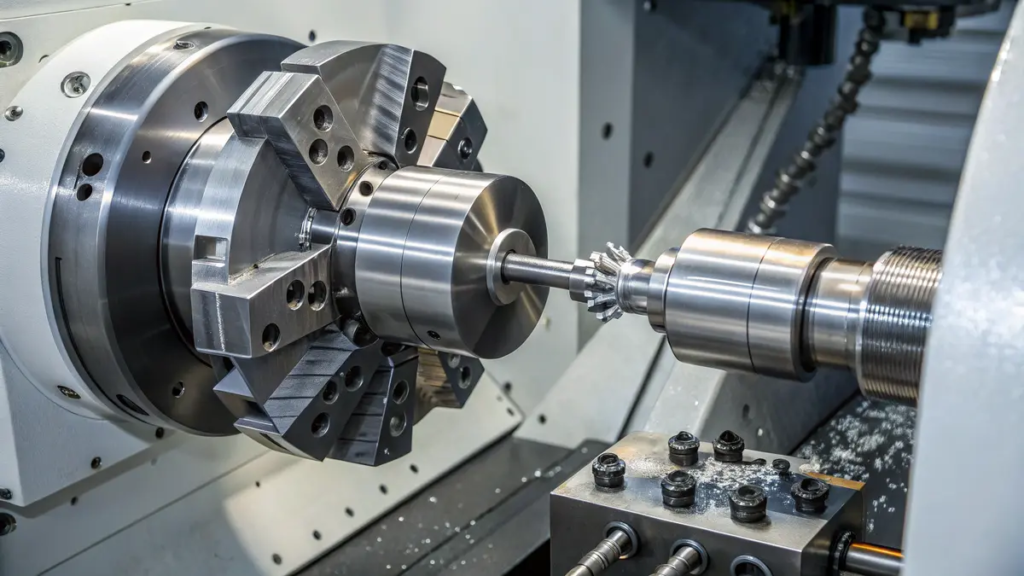
Among various CNC technologies, Swiss-type machining has become a preferred solution for producing small, high-precision components.
Originally developed for watchmaking, Swiss machining is now widely used in:
- Medical implants
- Aerospace fasteners
- Automotive fuel systems
- Electronic connectors
The key advantage lies in its sliding headstock design, which provides exceptional stability when machining long, slender parts.
Manufacturers looking to achieve tight tolerances and superior surface finishes increasingly rely on specialized providers offering Swiss machining services. This approach ensures not only dimensional accuracy but also consistent quality across high-volume production runs.
Precision CNC Machining and the Rise of Smart Manufacturing
The concept of Industry 4.0 has introduced a new layer of intelligence into manufacturing systems.
Precision CNC machining is now integrated with:
- IoT-enabled monitoring systems
- Predictive maintenance algorithms
- Automated quality inspection
- Digital twin simulations
These technologies enable manufacturers to predict failures before they occur, optimize cutting parameters, and maintain continuous production without unexpected downtime.
In this context, CNC machining is no longer just a fabrication method — it becomes part of a connected digital ecosystem.
Companies investing in precision CNC machining services are positioning themselves to fully benefit from this transformation.
Material Innovation Meets Machining Capability
Another major trend shaping manufacturing is the increasing use of advanced materials, including:
- Titanium alloys
- Engineering plastics (PEEK, PTFE)
- High-strength stainless steels
- Aluminum alloys for lightweight applications
These materials offer superior performance but are significantly more difficult to machine.
Precision CNC systems, combined with optimized tooling strategies, allow manufacturers to maintain tight tolerances while working with challenging materials.
This capability is especially critical in industries where failure is not an option — such as aerospace and medical engineering.
Cost Efficiency Through Precision and Process Control
Contrary to common assumptions, high-precision machining does not necessarily mean higher costs.
In fact, advanced CNC processes often reduce total production costs by:
- Minimizing material waste
- Reducing rework and scrap rates
- Lowering labor dependency
- Shortening production cycles
By achieving first-pass accuracy, manufacturers eliminate the need for secondary operations and manual corrections.
Over time, this leads to significant cost savings and improved production efficiency.
Choosing the Right CNC Manufacturing Partner
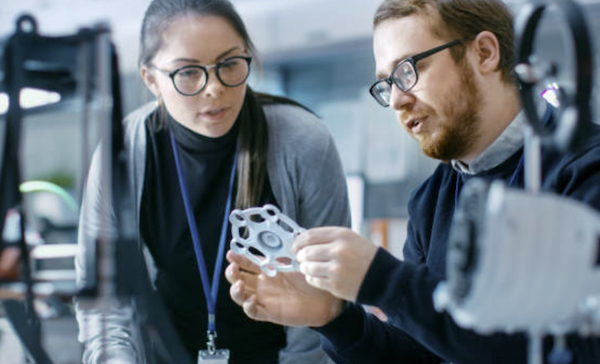
As demand for precision components grows, selecting the right manufacturing partner becomes increasingly important.
Key factors to consider include:
- Technical expertise and engineering support
- Equipment capability (multi-axis, Swiss-type machines)
- Quality control systems
- Experience across industries
A reliable partner not only produces parts but also contributes to design optimization and manufacturability improvements.
Global manufacturers often collaborate with specialized providers like Falcon CNC Swiss to ensure consistent quality, fast turnaround, and engineering-level support.
The Future: Micro Machining and Ultra-Precision Engineering
Looking ahead, the demand for smaller, more complex components will continue to rise.
Emerging trends include:
- Micro machining for medical and electronics applications
- Ultra-tight tolerances below ±0.005 mm
- Hybrid manufacturing combining CNC and additive processes
- AI-driven machining optimization
As products become more compact and performance-driven, the role of precision machining will only grow stronger.
Manufacturers that invest in advanced CNC capabilities today will be better positioned to meet tomorrow’s challenges.
Final Thoughts
Precision CNC machining is no longer just a production tool — it is a strategic enabler of innovation.
From enabling complex geometries to supporting smart manufacturing systems, it plays a critical role in shaping the future of global industries.
For businesses aiming to stay competitive in an increasingly digital and performance-driven market, investing in the right machining solutions — and the right partners — is no longer optional.
It is essential.
