

E-commerce has changed faster in the last two years than in the previous ten. Shoppers scroll through dozens of stores before they buy, attention spans are shrinking, and the product page has become the single most important piece of real estate in your entire funnel. If it doesn’t sell in the first three seconds, nothing else in your marketing stack matters.
AI has quietly become the biggest lever store owners have to fix this. Not as a buzzword, but as a practical tool for writing better copy, structuring pages that convert, and shipping new products in minutes instead of days. Here’s what actually works in 2026.
Why Most Product Pages Still Fail to Convert
Before talking about AI, it’s worth naming the problem. Most underperforming product pages share the same issues:
- Generic, manufacturer-supplied descriptions that read the same on every competing store
- No clear structure — benefits buried under specs, or specs missing entirely
- Slow page builds, which means stores either under-invest in each page or launch products with placeholder content and never go back
- Zero personalization to the store’s actual brand voice or target audience
None of this is about traffic or ad spend. It’s about what happens once a visitor actually lands on the page — and that’s exactly where AI product page tools are having the biggest impact right now.
What “AI-Powered” Actually Means for Product Pages
A lot of tools slap “AI” on a basic template generator. The ones actually worth using in 2026 do three things well:
1. Structured, Benefit-First Copywriting
Good AI copywriting tools don’t just rewrite a manufacturer description — they restructure it. That means leading with the customer benefit, not the feature, and organizing content in a scannable order: hook, benefits, social proof, specs, FAQ. This structure alone can lift conversion rates more than any headline tweak.
2. Fast Product Imports and Migrations
For dropshippers and multi-supplier stores, the real bottleneck isn’t writing one great page — it’s writing fifty of them without burning out. Modern AI product page generators can pull in product data from a source URL or supplier feed and rebuild a fully formatted, on-brand page in under a minute. This is where tools built specifically for importing and migrating product listings into Shopify save the most time, since they handle formatting, image placement, and copy in a single pass instead of three separate tools.
3. On-Brand Consistency at Scale
The tools worth paying for let you set a tone of voice once — playful, premium, technical, whatever fits the brand — and apply it consistently across hundreds of SKUs. This is the difference between a store that feels curated and one that feels like a dropshipping template.
A Practical Workflow for 2026
- Audit your top 10 pages by traffic. These deserve manual attention regardless of what tools you use.
- Batch the rest. For catalogs with 50+ SKUs, use an AI product page builder to handle imports and first-draft copy, then spot-check for accuracy.
- Structure before you polish. Fix the page skeleton (benefit-led headline, scannable bullets, clear CTA placement) before obsessing over word choice.
- Test one variable at a time. Headline, hero image, or CTA copy — not all three at once, or you won’t know what moved the needle.
- Re-run underperforming pages through AI periodically. Supplier descriptions and competitor pages evolve; your product pages should too.
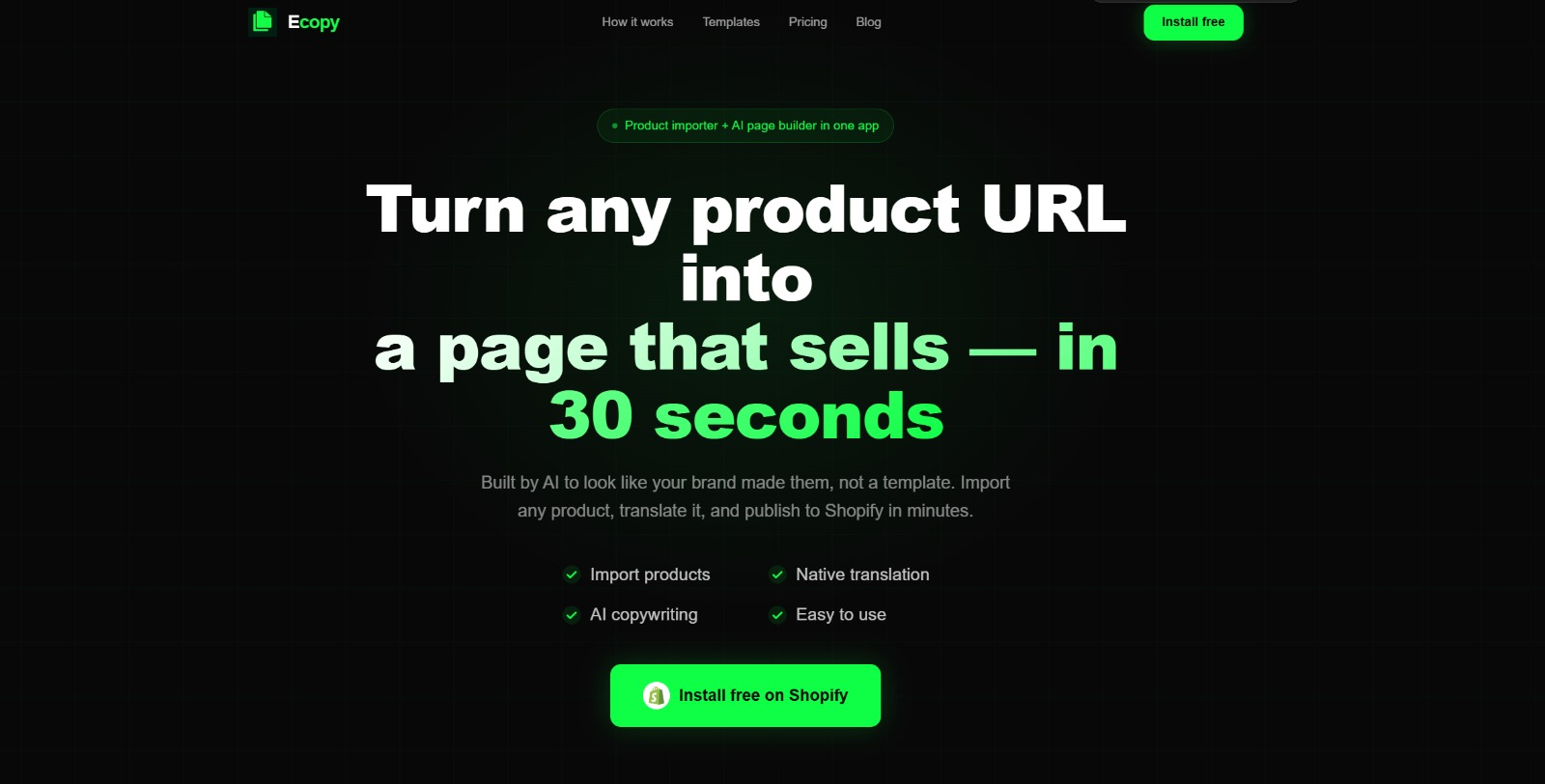
Tools like eCopy (formerly known as Kopy/Poky) were built around exactly this workflow — importing and rebuilding product pages with AI so Shopify dropshippers can publish store-ready pages without starting from a blank editor every time.
Common Mistakes to Avoid
- Over-automating without review. AI drafts are a starting point, not a final product — always spot-check for accuracy, especially on pricing and specs.
- Ignoring mobile layout. Most dropshipping traffic is mobile; a page that reads well on desktop can fall apart on a small screen.
- Copying competitors too literally. AI-assisted rewriting should differentiate your store, not produce a near-duplicate of someone else’s page — both for conversion and for platform compliance.
- Skipping social proof. Even AI-optimized copy underperforms without reviews, ratings, or trust badges nearby.
The Bottom Line
Product page optimization in 2026 isn’t about picking the flashiest AI tool — it’s about building a repeatable process that turns a blank product listing into a page that actually sells, at a speed that matches how fast modern stores need to launch. Whether you handle this manually for your top sellers or lean on an AI product page generator for the long tail of your catalog, the stores that win are the ones treating the product page as a core conversion asset, not an afterthought.
