

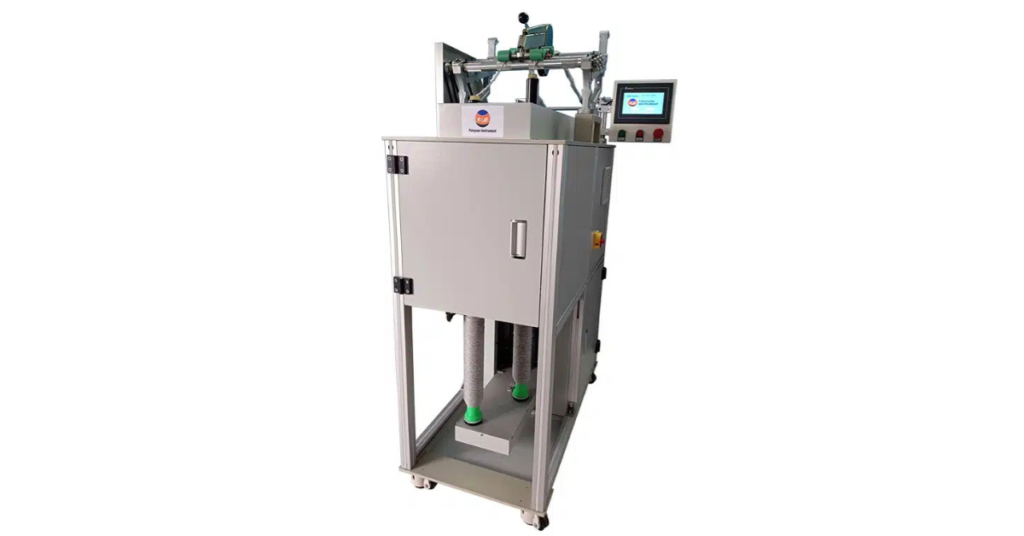
Lab Roving Machine is a cornerstone of modern textile laboratories, especially for research, teaching, and process development. By allowing precise control over drafting, twisting, and winding, this machine helps technicians, researchers, and students explore fiber behavior and develop new yarn products in a controlled environment.
Instead of working with industrial-scale machines that consume large amounts of fiber, labs use this machine to produce small batches of roving. This controlled setup encourages experimentation, reduces waste, and enables innovation.
Supporting Experimental Research
Textile research focuses on improving yarn quality, fiber blends, and spinning techniques. A lab roving machine allows researchers to:
- Test new fiber types
- Experiment with twist and drafting parameters
- Study fiber alignment and strand formation
- Observe performance under simulated production conditions
By producing uniform and repeatable roving, researchers can reliably analyze results and propose improvements for industrial processes.
Role in Teaching and Education
For textile students, practical experience is essential. A lab roving machine allows instructors to demonstrate:
- Drafting mechanics
- Twist control and insertion
- Bobbin winding and strand handling
- Effects of machine settings on fiber quality
Students gain hands-on experience in a safe environment, which helps them understand the theory of spinning while preparing them for real-world production settings.
Facilitating Yarn Development and Prototyping
Before launching new yarns, labs must develop prototypes and test them. Using a lab roving machine, technicians can:
- Create small batches of roving from new fiber blends
- Observe how fibers respond to drafting and twisting
- Identify optimal spinning parameters
- Produce prototype yarn for quality testing
This approach helps manufacturers innovate and reduce risk in large-scale production.
Advantages for Research Institutes
Research institutes benefit from lab robots because they:
- Allow controlled fiber and roving experiments
- Minimize fiber waste
- Enable reproducible testing for comparative studies
- Provide flexibility for testing short or long fibers
The machine becomes a central tool for exploring new textile technologies and methods.
Application in Wool and Specialty Fibers
Specialty fibers, including wool and synthetic blends, require careful handling during roving. Lab roving machines designed for these fibers:
- Prevent fiber breakage
- Maintain fiber length
- Produce stable roving for spinning
This makes them invaluable for studying high-quality wool yarns or experimental fiber blends.
Enhancing Laboratory Productivity
Lab roving machines are compact, easy to operate, and energy-efficient. These features improve laboratory productivity by:
- Allowing multiple experiments in a day
- Reducing setup time
- Using small quantities of material efficiently
- Providing consistent output for evaluation
Laboratories can run research and teaching programs smoothly without overloading resources.
Supporting Innovation in Spinning Technology
New spinning technologies often start with small-scale experiments. A lab roving machine allows engineers and researchers to:
- Test innovative drafting or twisting methods
- Evaluate effects of machine settings on fiber behavior
- Develop yarns with unique properties
By facilitating safe experimentation, these machines accelerate innovation and product development.
Integration with Other Lab Equipment Lab
Roving machines work well in conjunction with:
- Carding machines
- Drawing frames
- Ring spinning machines
This creates a complete laboratory line from fiber preparation to sample yarn production. Researchers can test each stage and understand how roving quality affects final yarn performance.
Maintenance and Reliability
Laboratory environments demand machines that are durable and easy to maintain. Lab roving machines are designed for:
- Easy cleaning
- Quick replacement of parts
- Stable operation over long research projects
This ensures consistent results for experiments, teaching sessions, and prototype yarn production.
FAQs
Q1: Why is a Lab Roving Machine important for research and innovation?
It allows controlled roving production, enabling reliable testing and experimentation with fibers and yarns.
Q2: Can students safely operate this machine?
Yes, it is widely used in educational labs for hands-on learning and practical demonstrations.
Q3: Does it support prototype yarn production?
Yes, it helps produce small batches of roving that can be spun into sample yarn for testing.
Q4: Can it handle specialty fibers like wool?
Yes, specialized models are designed to handle long fibers and delicate materials.
Q5: Where can I purchase a reliable Lab Roving Machine?
You can explore professional models of the Lab Roving Machine here:
Lab Roving Machine
