

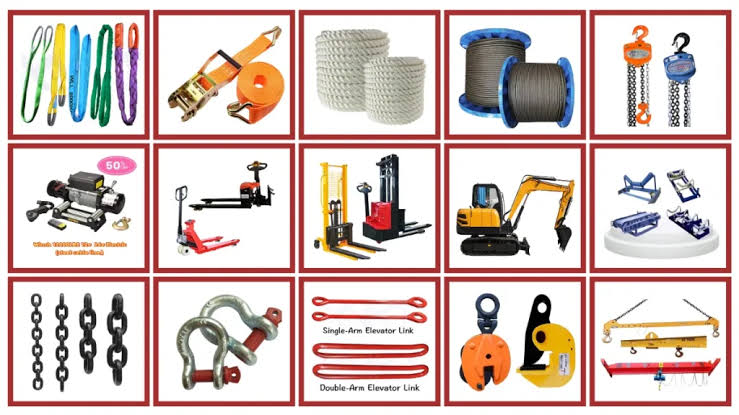
Heavy-load handling is an essential part of many industries across Melbourne. Construction projects, fabrication workshops, manufacturing plants, transport operations, and engineering businesses regularly need to move equipment and materials safely. Choosing suitable lifting accessories is therefore an important part of planning any lifting task.
Among the options available for industrial applications, chain slings offer versatility and strength for handling a wide range of loads. Businesses researching Chain Slings in Melbourne should consider how different sling configurations and capacities can be matched to their specific operational requirements.
Understanding Different Lifting Configurations
Not every load can be handled in the same way. Some objects have a single convenient lifting point, while others require multiple attachment points to improve stability.
Chain slings can be configured as single-leg, two-leg, three-leg, or four-leg assemblies. The appropriate arrangement depends on the load’s size, weight, shape, lifting points, and centre of gravity.
A multi-leg sling can provide useful flexibility for loads requiring support from several points. However, increasing the number of legs does not automatically mean that a sling can safely handle any heavier load. The working load limit and lifting angle must always be considered when determining the appropriate configuration.
Why Load Assessment Is Essential
Before selecting a chain sling, businesses should understand the characteristics of the load being lifted. Weight is only one part of the assessment.
The shape and balance of an object can influence how forces are distributed during lifting. Loads with uneven weight distribution may require additional planning to prevent unwanted movement. The available attachment points should also be checked to ensure that hooks and other components can be connected securely.
For companies searching for Chain Slings in Melbourne, discussing these requirements with an experienced industrial supplier can help identify suitable options for particular applications.
Durability for Repeated Industrial Use
Industrial lifting equipment may be used regularly in environments where components are exposed to demanding conditions. Abrasion, impact, dirt, moisture, and repeated loading can affect equipment over time.
Chain slings are valued for their robust construction and flexibility, but they still require appropriate care. Regular inspection should form part of an organisation’s lifting equipment management process.
Operators should check for issues such as excessive wear, damaged links, deformation, corrosion, stretched components, damaged hooks, or missing identification information. Equipment with visible defects or uncertain serviceability should not continue to be used until it has been properly assessed.
Choosing a Suitable Supplier
Purchasing lifting equipment from a knowledgeable supplier can simplify the process of comparing different configurations and specifications. Businesses should look for suppliers that provide clear information about working load limits, chain grades, configurations, and intended applications.
Schutts Industrial can be considered by businesses researching industrial lifting and material-handling solutions. When evaluating any supplier, customers should consider product specifications, availability, technical information, traceability, and the suitability of the equipment for their intended application.
A well-informed purchasing decision can help businesses avoid selecting equipment that does not match their actual lifting requirements.
Safe Handling Practices
Correct equipment selection must be supported by proper operating procedures. Workers involved in lifting activities should understand how to inspect and use chain sling assemblies and should follow relevant manufacturer instructions and workplace safety procedures.
Loads should never exceed the specified working load limit. Operators should also avoid shock loading, sudden movements, twisting, or using damaged components. Personnel should remain clear of suspended loads and areas where a load could swing or fall.
Appropriate storage is also important. Chain slings should be protected from unnecessary damage when they are not being used and should be kept in a suitable location where they can be inspected before the next lifting operation.
A Practical Approach to Lifting Equipment Selection
Choosing a chain sling should be treated as part of the overall lifting plan rather than as an isolated purchasing decision. Load characteristics, lifting configuration, capacity, attachment points, environmental conditions, and inspection requirements all contribute to the suitability of the equipment.
For businesses looking for Chain Slings in Melbourne, taking time to understand these factors can support safer and more efficient material-handling operations. Working with an experienced supplier such as Schutts Industrial can also help businesses explore lifting equipment suited to their specific requirements.
With careful selection, regular inspection, and responsible use, chain sling assemblies can become a dependable component of industrial lifting operations.
