

Market Context and Practical Importance in Canada
Canada’s logistics and industrial sectors rely on well-maintained outdoor spaces for safe and efficient operations. Vegetation control is essential in warehouse yards, transport routes, and storage areas. The 3-point hitch slasher topper mower is widely used to manage grass and light brush in these environments. For facility managers and equipment operators, this equipment supports compliance with safety standards by maintaining clear visibility and reducing fire risks in dry seasons.
Technical Overview and Applications
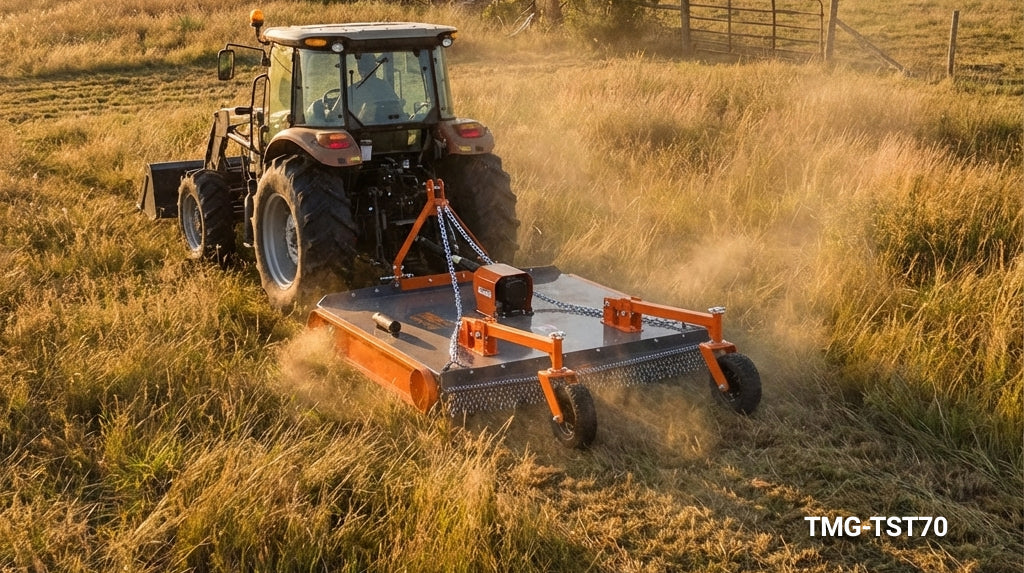
A slasher topper mower attaches to a tractor through a three-point hitch system and is powered by a power take off shaft. The rotating blades cut vegetation evenly across large areas. This type of mower is designed for tractors within a defined power range and can handle moderate vegetation density.
Common Applications
- Maintenance of warehouse perimeters and access roads
- Vegetation control in logistics yards
- Field and site preparation for construction projects
- Clearing light brush in storage zones
Efficiency, Safety and Productivity
Mechanical mowing equipment improves efficiency by covering large areas in less time compared to manual methods. Maintaining controlled vegetation reduces obstacles and improves vehicle movement. Clear ground conditions also reduce the risk of equipment damage and workplace incidents.
Technical Considerations and Capabilities
The mower requires compatibility with tractor horsepower and hitch category. Blade rotation speed, cutting width, and deck design influence performance. Adjustable cutting height allows operators to manage different vegetation conditions. Proper alignment of the power take off shaft ensures stable power transmission.
Factors Affecting Performance and Effectiveness
- Tractor power and hydraulic capacity
- Vegetation density and moisture content
- Blade sharpness and balance
- Terrain conditions such as slope and surface stability
Safety Considerations and Best Practices
Safe operation requires regular inspection of blades, guards, and connection points. Operators must ensure that no personnel are within the operating range during use. Protective equipment such as safety boots and eye protection should be worn at all times.
- Inspect blades before each use
- Maintain safe distance from rotating components
- Shut down equipment before adjustments
- Ensure proper shielding of moving parts
Equipment, Tools and Accessories
Supporting equipment may include:
- Compatible tractors with three-point hitch systems
- Power take off shafts and guards
- Replacement blades and maintenance tools
- Protective covers and transport supports
Advantages and Limitations
Advantages include efficient coverage of large areas, reduced manual labor, and adaptability to different site conditions. Limitations include dependence on tractor compatibility and reduced effectiveness in dense or woody vegetation without specialized equipment.
Real-World Example
A logistics hub in Alberta implemented a slasher topper mower to maintain its outdoor storage yard. The maintenance team reduced vegetation control time by more than half compared to manual trimming. Improved visibility around stored equipment also contributed to safer vehicle movement and reduced minor incidents.
Conclusion and Future Trends
The 3-point hitch slasher topper mower remains a key tool for vegetation management in industrial and logistics environments. As operational demands increase, future developments may include improved blade materials, enhanced safety shielding, and more efficient power transfer systems. These advancements will support safer and more consistent ground maintenance across a range of applications.
