

Cartridge heaters are widely used in industrial equipment, molds, packaging machines, sealing systems, and manufacturing applications where reliable heat is essential. These compact heating elements deliver concentrated heat inside metal blocks, plates, dies, and other components. When they operate correctly, they provide consistent temperature control and efficient performance.
However, cartridge heaters can eventually lose efficiency or fail because of excessive temperature, moisture, poor installation, electrical problems, contamination, or prolonged operation. Recognizing the Signs of Cartridge Heater Failure early can help prevent equipment damage, production delays, and unexpected maintenance costs. Understanding these warning signs allows operators and maintenance teams to take corrective action before a complete failure occurs.
Slow or Uneven Heating
One of the most noticeable Signs of Cartridge Heater Failure is slower heating than normal. A cartridge heater that previously reached the required temperature quickly may begin taking considerably longer to heat the surrounding component. This can indicate internal damage, reduced electrical output, or deterioration of the heating element.
Uneven heating can create similar concerns, especially when several cartridge heaters operate within the same system. If one section becomes cooler than another, the affected heater may not be producing its intended heat output. Checking temperature readings and comparing heater performance can help identify the defective unit.
Cartridge Heater Produces No Heat
A cartridge heater that produces no heat is a strong indication of a serious problem. The heating element may have an internal break, damaged electrical connection, or open circuit that prevents current from reaching the resistive wire. This type of failure often requires immediate testing.
Before replacing the heater, technicians should inspect the power supply, wiring, terminals, and control system. If the electrical supply is correct but the heater remains cold, resistance testing can help determine whether the cartridge heater itself has failed.
Frequent Circuit Breaker Tripping
Repeated circuit breaker trips can also be among the important Signs of Cartridge Heater Failure. A damaged heater may develop an electrical fault that causes excessive current or creates a short circuit. Continuing to operate the equipment under these conditions can create additional electrical risks.
Circuit breakers can also trip because of faulty wiring, incorrect voltage, or problems elsewhere in the heating system. Therefore, the heater should be isolated and tested by a qualified technician. Identifying the actual source of the electrical fault is essential before installing a replacement.
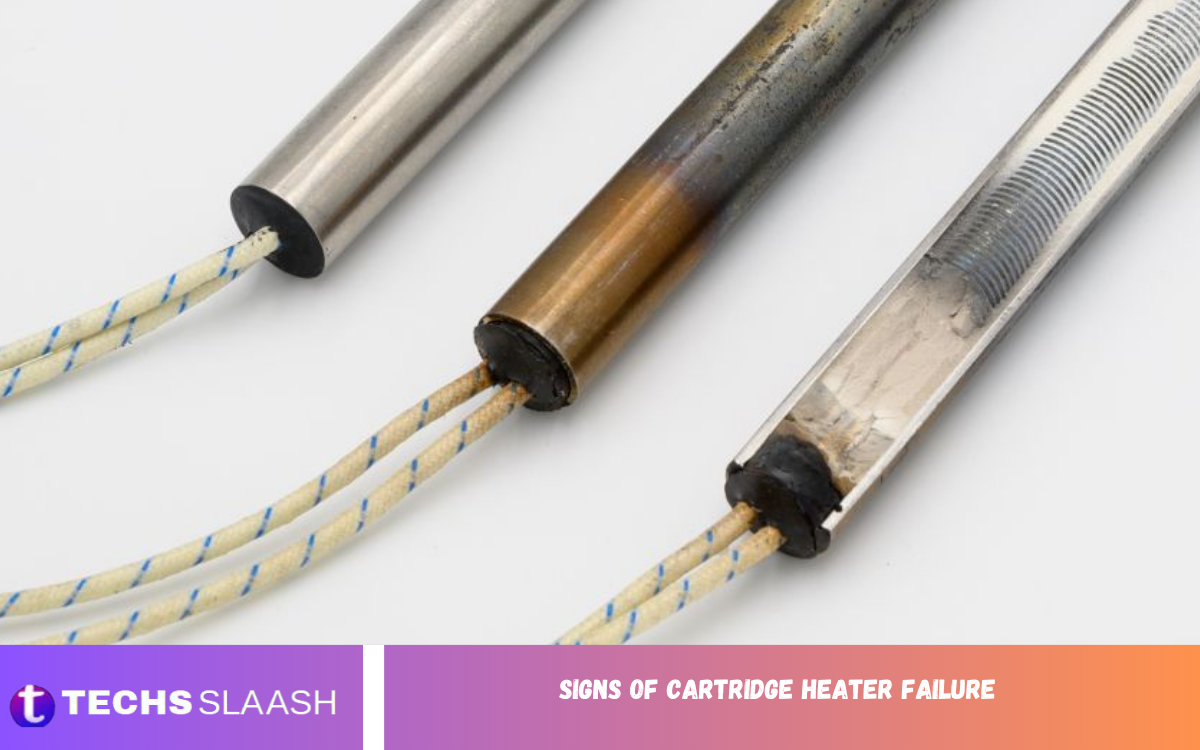
Visible Damage or Discoloration
Physical damage provides another valuable warning sign. Cartridge heaters exposed to excessive temperatures may develop discoloration, deformation, cracks, or other visible abnormalities. Severe discoloration can indicate overheating caused by poor heat transfer, incorrect installation, or operation beyond the heater’s rated limits.
Technicians should inspect the heater whenever equipment undergoes scheduled maintenance. Burn marks around terminals or damaged insulation should not be ignored. Visible deterioration may indicate that the heater has already experienced conditions capable of shortening its service life.
Unstable Temperature Control
Temperature fluctuations can indicate that a cartridge heater is no longer operating consistently. Equipment may repeatedly cycle between temperatures instead of maintaining the desired setting. This can happen when the heater develops internal resistance changes or when its heat output becomes inconsistent.
A faulty temperature sensor or controller can produce similar symptoms, so the entire heating circuit should be evaluated. Comparing actual temperature readings with the controller’s displayed values can help determine whether the issue comes from the heater or another component.
Increased Electrical Resistance
Changes in electrical resistance are important technical Signs of Cartridge Heater Failure. Cartridge heaters are designed with specific resistance characteristics based on their voltage and wattage ratings. A significant resistance change can indicate deterioration or damage inside the heating element.
Technicians can use a suitable multimeter to measure resistance when the equipment is safely powered down and isolated. The measured value should be compared with the manufacturer’s specifications. An abnormal reading may indicate an open circuit, internal degradation, or another electrical problem.
Moisture or Insulation Problems
Moisture contamination can cause serious problems inside cartridge heaters. If moisture enters the heater’s insulation material, electrical insulation resistance may decrease. This can result in leakage current, unstable operation, or eventual electrical failure.
Moisture-related problems are particularly concerning in applications exposed to cleaning processes, humidity, condensation, or other environmental conditions. Proper installation, sealing, storage, and handling can reduce the risk of moisture entering the heater and affecting its performance.
Unusual Burning Smell
An unusual burning smell around heating equipment should never be ignored. It may indicate overheating, damaged wiring, deteriorating insulation, contamination, or a heater operating outside its intended conditions. The smell may become noticeable before complete heater failure occurs.
When this symptom appears, the equipment should be inspected promptly. Operators should avoid assuming that the smell is normal simply because the heater operates at high temperatures. Identifying the source can prevent further component damage and potentially dangerous electrical conditions.
Reduced Heater Lifespan
Repeated cartridge heater failures can indicate an underlying system problem rather than poor heater quality alone. Incorrect watt density, insufficient heat transfer, improper fitting, contamination, excessive vibration, or unsuitable operating temperatures can reduce heater lifespan.
When replacements fail frequently, maintenance teams should investigate the installation and operating conditions. Selecting the correct heater specifications and ensuring proper contact with the heated component can significantly improve reliability and service life.
Read Also: Common Daily iPhone Annoyances
Poor Physical Fit
A cartridge heater should fit the designated bore correctly while allowing appropriate installation and removal. A poor fit can create inadequate heat transfer, resulting in localized overheating. Excessive clearance may also reduce efficiency and cause the heater to operate at higher temperatures than necessary.
An excessively tight installation can create another problem by making removal difficult and potentially damaging the heater. Proper dimensions, tolerances, surface conditions, and installation procedures are therefore important for reliable cartridge heater performance.
How to Diagnose Cartridge Heater Failure
Diagnosing cartridge heater problems should begin with a visual inspection. Technicians can examine the heater, wiring, terminals, insulation, mounting area, and surrounding components for signs of damage or overheating. This initial inspection can reveal obvious problems before electrical testing begins.
Electrical measurements can then provide additional information about the heater’s condition. Resistance and insulation tests should be performed using appropriate procedures and equipment. Comparing test results with the manufacturer’s specifications can help determine whether replacement is necessary.
Preventing Cartridge Heater Failure
Preventive maintenance is one of the most effective ways to reduce the Signs of Cartridge Heater Failure before they become serious operational problems. Regular inspections, correct temperature settings, proper installation, and clean heating surfaces can help maintain consistent performance.
Operators should also monitor temperature behavior and electrical performance over time. Recording unusual changes makes it easier to identify developing problems before they cause unexpected shutdowns. Using cartridge heaters according to their rated voltage, wattage, temperature, and environmental requirements further improves reliability.
Choosing the Right Replacement Heater
Selecting a replacement cartridge heater requires more than matching its physical size. Voltage, wattage, diameter, length, operating temperature, lead configuration, sheath material, and application requirements should all be considered. Using an incorrectly specified heater can lead to premature failure.
The replacement should also be compatible with the equipment’s control system and installation environment. Proper specifications help ensure efficient heat transfer and stable temperature performance. When uncertain, equipment documentation and manufacturer specifications should be reviewed before purchasing a replacement.
Frequently Asked Questions
What are the most common signs of cartridge heater failure?
Common signs include slow heating, no heat output, unstable temperatures, unusual smells, electrical faults, visible discoloration, and abnormal resistance readings. These symptoms can indicate different types of heater or system problems.
Why does a cartridge heater stop producing heat?
A cartridge heater may stop producing heat because of an open internal circuit, damaged heating wire, failed electrical connection, incorrect power supply, or severe internal deterioration. Testing can help identify the specific cause.
Can a cartridge heater cause a circuit breaker to trip?
Yes, a damaged cartridge heater can cause excessive current or an electrical short that trips a circuit breaker. However, wiring and control-system problems can produce similar symptoms.
How can cartridge heater resistance be tested?
Resistance can be checked with an appropriate multimeter after safely disconnecting and isolating the heater. The measured resistance should be compared with the heater’s expected specification.
What causes cartridge heaters to overheat?
Overheating can result from excessive operating temperature, poor heat transfer, incorrect watt density, improper fitting, insufficient contact with the heated component, or unsuitable application conditions.
Can moisture damage a cartridge heater?
Yes, moisture can affect the heater’s insulation and reduce electrical insulation resistance. Prolonged exposure can contribute to leakage current, electrical faults, and premature failure.
How long does a cartridge heater normally last?
Service life varies according to temperature, watt density, installation quality, operating environment, cycling frequency, and application. Proper installation and operation can significantly improve heater longevity.
Why is my cartridge heater heating slowly?
Slow heating may result from reduced heater output, incorrect voltage, deteriorated heating elements, poor heat transfer, or excessive heat loss. Testing the heater and surrounding system can identify the cause.
Should a damaged cartridge heater be repaired?
In most applications, replacing a damaged cartridge heater is more practical and reliable than attempting internal repairs. The replacement should match the required electrical and physical specifications.
How can cartridge heater failure be prevented?
Regular inspection, correct installation, proper temperature control, suitable watt density, clean mounting surfaces, appropriate operating conditions, and timely replacement can help prevent premature cartridge heater failure.
Conclusion
Recognizing the Signs of Cartridge Heater Failure is essential for maintaining reliable heating equipment and avoiding unexpected production interruptions. Slow heating, temperature instability, electrical problems, visible damage, unusual odors, and abnormal resistance readings can all provide valuable warnings.
Early diagnosis allows maintenance teams to address problems before they develop into major equipment failures.
