

Snapchat is one of the most popular social communication platforms among teenagers, allowing users to exchange photos, videos, messages, and calls. Its disappearing-content design can make communication feel private and temporary, but parents should understand that digital content may still be captured, shared, or misused.
Understanding Snapchat Risks: Tips for Parents is important because teenagers may encounter strangers, inappropriate content, cyberbullying, location-sharing concerns, pressure to send private images, and other online dangers. The goal is not simply to ban Snapchat, but to help young people use it responsibly while maintaining open communication with trusted adults.
Privacy and Personal Information
Privacy is one of the most important issues parents should discuss with teenagers. Personal information such as a full name, school, home address, phone number, daily routine, or recognizable photographs can reveal more than a child realizes.
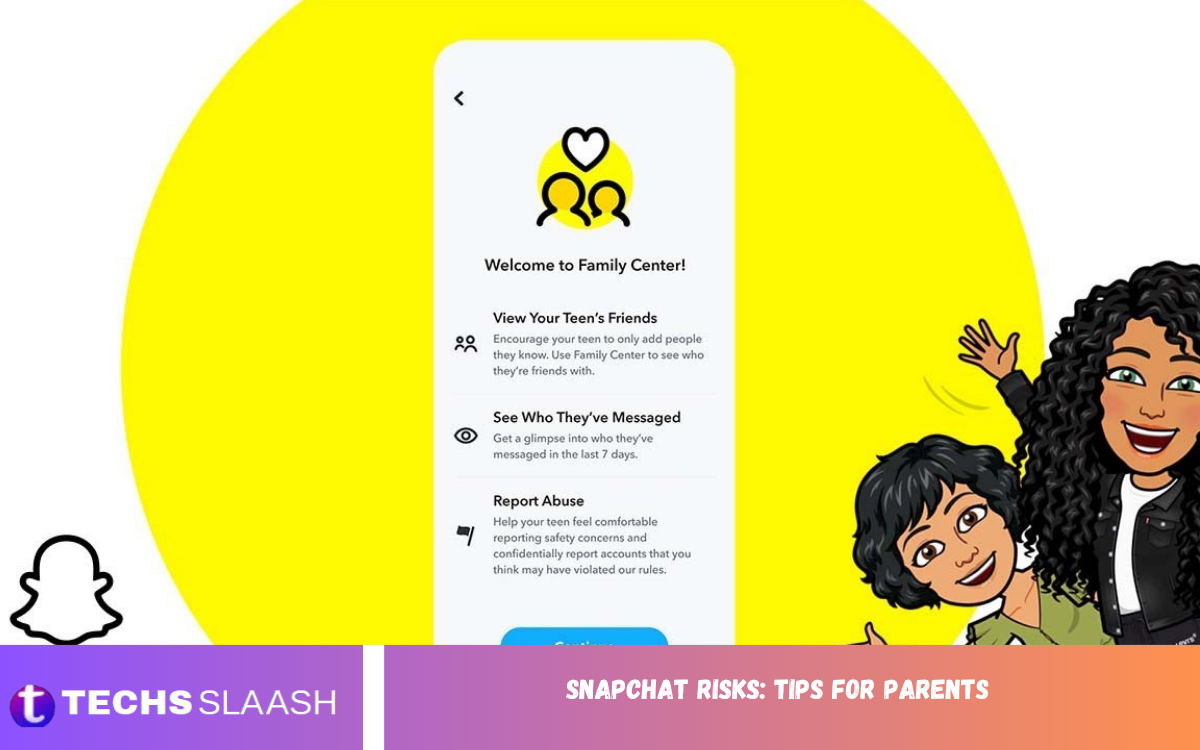
Parents should encourage children to review privacy settings regularly and avoid accepting requests from people they do not know personally. Snapchat’s Family Center can also provide parents with information about friends, recent communication, important privacy settings, and location-sharing controls without allowing parents to read private conversations.
Strangers and Unknown Contacts
Another major Snapchat risk involves communication with people a teenager does not actually know. A stranger may create a profile that appears to belong to someone of a similar age, making it difficult for a young user to understand who is really behind the account.
Parents should establish a simple rule: online contacts should not automatically be considered trusted friends. Children should never agree to meet an online contact alone, reveal private information, or send personal photographs simply because someone asks them to.
Cyberbullying on Snapchat
Cyberbullying can happen through messages, images, group conversations, Stories, or other forms of digital interaction. Because Snapchat is designed around quick communication, hurtful content can spread rapidly and may be difficult for parents to notice.
Parents should encourage children to save evidence when appropriate, block abusive accounts, and report serious behavior. Safety settings cannot prevent every form of bullying, so regular conversations about respectful communication and emotional wellbeing remain essential.
Disappearing Messages Are Not Completely Private
One of the features that makes Snapchat attractive to teenagers is disappearing content. However, disappearing does not necessarily mean that content can never be preserved or shared.
Parents should explain that recipients may capture screenshots, photograph another device, or otherwise preserve content. The safest approach is to teach teenagers not to send anything that could cause embarrassment, emotional harm, or serious consequences if it were to become public.
Sexting and Inappropriate Images
Teenagers can face pressure to send sexual or revealing photographs. A person may initially appear trustworthy but later use an image to embarrass, threaten, or manipulate the sender.
Parents should discuss this subject calmly rather than relying on fear or punishment. Children need to understand that once an intimate image is sent, they may lose control over where it goes. Parents should make it clear that their children can ask for help without being automatically blamed.
Snap Map and Location Sharing
Snap Map can allow friends to see a user’s location, which can create legitimate safety concerns when location information is shared too broadly. A teenager’s routine, school location, favorite places, or movements could potentially become easier for others to identify.
Parents should review location-sharing settings with their children and explain why precise location information should be limited to trusted people. Location-sharing applications can create risks when strangers gain access to information about where a young person lives, studies, or spends time.
Harmful and Age-Inappropriate Content
Teenagers may encounter violent, sexual, offensive, or otherwise inappropriate material through social platforms. Even when children do not actively search for such content, recommendations, public posts, conversations, or shared material can expose them to subjects they are not prepared to handle.
Parents should ask children what they are seeing rather than assuming they understand every type of content. Snapchat’s Family Center includes options for managing sensitive content and reviewing certain aspects of a teen’s experience.
My AI and Digital Safety
Snapchat also includes My AI, an artificial-intelligence feature that teenagers may interact with. Parents should remember that an AI assistant is not a substitute for a parent, teacher, counselor, or other trusted adult.
Parents can use available Family Center controls to restrict My AI interactions for their teen. Families should also teach children not to share highly sensitive personal information with AI tools or treat automated responses as guaranteed professional advice.
Read Also: SEL and Bullying Prevention
Screen Time and Digital Wellbeing
Excessive social media use can interfere with sleep, schoolwork, physical activity, family interactions, and other responsibilities. Snapchat itself may not be the only issue; the broader concern is whether social media is taking too much time and attention.
Parents can create reasonable household expectations around phone use, particularly during homework, meals, family activities, and bedtime. These rules are more effective when adults explain the purpose behind them rather than present them simply as punishment.
How Parents Can Build Trust
Monitoring technology alone cannot guarantee a child’s safety. Teenagers who fear punishment may hide problems, create additional accounts, or avoid telling parents about uncomfortable experiences.
A better approach is to create an environment where children know they can ask for help. Parents can say that if someone threatens them, pressures them, sends inappropriate material, or makes them uncomfortable, they should tell a trusted adult immediately.
Use Snapchat Family Center
Snapchat’s Family Center is designed to help parents gain greater insight into their teenager’s connections while respecting the teen’s private conversations. Parents can see recent contacts, friends, active group-chat members, selected privacy settings, and other safety-related information.
Parents can access Family Center through the Snapchat profile or settings, although availability can vary by location. Snapchat states that Family Center is intended for parents and caregivers and teens within specified age ranges, with the service gradually rolling out in different countries.
Create Clear Family Rules
A family technology agreement can make expectations easier to understand. Parents might establish rules about accepting friends, sharing photographs, revealing locations, communicating with strangers, and responding to bullying.
Rules should also explain what happens when something goes wrong. For example, children should know they can immediately tell a parent if someone threatens them or requests inappropriate content, without worrying that asking for help will automatically result in losing their phone.
Teach Children to Recognize Red Flags
Parents should teach teenagers to recognize warning signs in online conversations. Requests for secrecy, pressure to send photographs, attempts to shift conversations elsewhere, threats, manipulation, or offers that seem too good to be true should all be treated with caution.
A child should understand that a trustworthy friend will respect boundaries. If someone repeatedly pressures them after they say no, the safest response is to stop communicating, block or report the account when appropriate, and tell a trusted adult.
What Parents Should Do After a Problem?
If a serious incident occurs, parents should remain calm and focus first on the child’s safety. Angry reactions may make children less likely to explain what happened or provide important information.
Depending on the situation, parents may need to preserve relevant evidence, block or report accounts, contact the school, or seek assistance from appropriate authorities. Threats, extortion, exploitation, and serious harassment should always be treated as significant concerns rather than dismissed as ordinary online drama.
Frequently Asked Questions
Is Snapchat safe for teenagers?
Snapchat can be used responsibly, but it is not completely risk-free. Parents should discuss privacy, strangers, cyberbullying, inappropriate content, location sharing, and responsible communication with their children.
What is the biggest Snapchat risk for children?
There is no single biggest risk for every child. Privacy problems, unwanted contact, cyberbullying, inappropriate content, location exposure, and pressure to share personal images can all become serious concerns.
Do Snapchat messages really disappear?
Some Snapchat content is designed to disappear after viewing or according to the relevant settings, but users should never assume that digital content can never be preserved. Screenshots and other methods can allow recipients to retain or redistribute content.
Can strangers contact children on Snapchat?
Depending on account settings and circumstances, teenagers may encounter people they do not know. Parents should teach children to be cautious about unknown contacts and avoid sharing personal information.
Should parents use Snapchat Family Center?
Family Center can be a useful safety tool because it provides parents with selected information about their teen’s connections and safety settings while preserving private conversations.
Is Snap Map safe for teenagers?
Location sharing should be approached carefully. Parents should review who can see a child’s location and explain why precise location information should generally be limited to trusted people.
How can parents prevent Snapchat cyberbullying?
Parents should encourage children to block and report abusive users, preserve important evidence, and tell a trusted adult when bullying becomes serious. Open communication can help identify problems earlier.
What should a child do if someone asks for an inappropriate photo?
The child should not send the image. They should stop communicating with the person, use available blocking or reporting tools, preserve relevant evidence when appropriate, and tell a trusted adult.
Should parents read their child’s Snapchat messages?
Parents should balance safety with privacy and age-appropriate independence. Snapchat’s Family Center is specifically designed to provide selected safety information without giving parents access to private message content.
What should parents do if their child is threatened online?
Parents should take threats seriously, remain calm, preserve relevant evidence, and report the account or incident through appropriate channels. Serious threats, exploitation, or extortion may require help from appropriate authorities.
Conclusion
Understanding Snapchat Risks: Tips for Parents is an important part of modern digital parenting. Snapchat can be an enjoyable way for teenagers to communicate, but disappearing content, unknown contacts, cyberbullying, privacy concerns, location sharing, inappropriate material, and other risks require thoughtful guidance.
The strongest protection is a combination of appropriate privacy settings, sensible family rules, safety tools, digital-literacy education, and open communication.
