

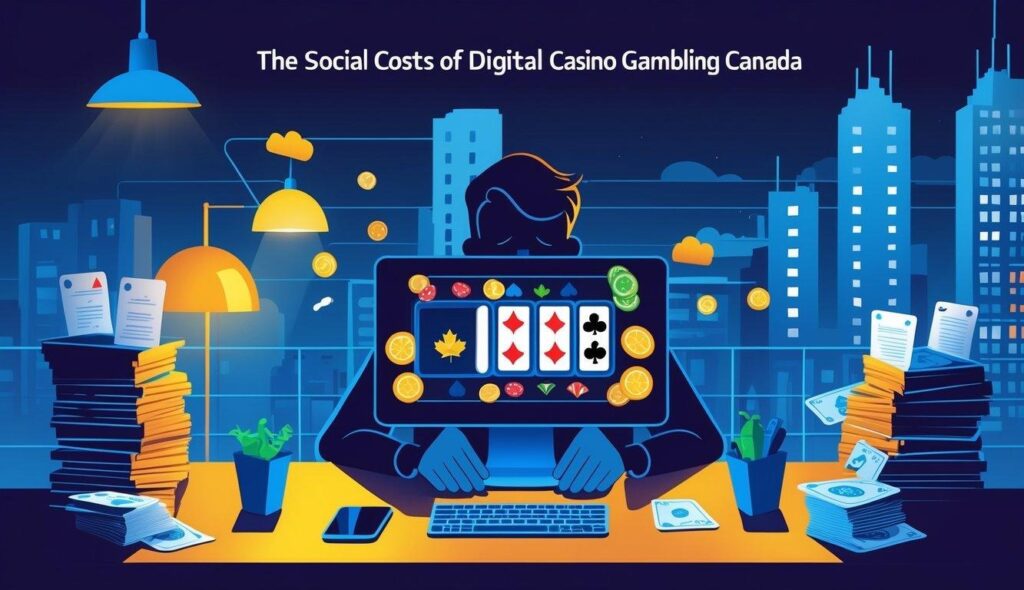
Digital casino gambling has expanded rapidly across Canada in recent years, fundamentally changing how people access and engage with betting activities. What was once limited to physical locations has become available anytime through smartphones and computers. This shift has brought both economic opportunities and serious concerns about the broader impact on Canadian society.
The social costs of digital casino gambling in Canada extend far beyond individual financial losses, affecting families, communities, and public health systems while generating billions in revenue for operators and governments. Problem gambling rates have increased alongside the growth of online gambling, with recent estimates suggesting up to 11 per cent of Ontarians may be experiencing gambling-related harm. These figures represent real people facing addiction, relationship breakdowns, mental health crises, and in severe cases, suicidal ideation.
Understanding the true cost of digital gambling requires looking at more than just money won or lost. The social costs include strained healthcare resources, family disruption, workplace productivity losses, and the intergenerational effects of gambling harm. As Canada’s online gambling market continues to grow, examining these wider impacts becomes essential for creating informed policies and protective measures that balance economic interests with public wellbeing.
Public Health Impacts of the Online Casinos Canada Expansion
Gambling-related harms represent a significant public health concern as the online casinos Canada market continues expanding across provincial jurisdictions. When you or someone you know develops gambling disorder, the consequences extend beyond financial losses to include mental health issues, relationship breakdowns, and physical health problems.
Research indicates that gambling harm affects not just the individual gambler but also their family members, friends, and colleagues. The Canadian Problem Gambling Index (CPGI) serves as a standardized tool to measure gambling behaviour and associated harms across the country. Mental health professionals recognize gambling disorder as a behavioural addiction with similar neurological patterns to substance use disorders.
Digital casino platforms intensify these harms through continuous availability and immersive design features. The ease of access means you can gamble at any time from your home, workplace, or mobile device, which removes traditional barriers that once limited gambling frequency.
Problem Gambling, Addiction, and Vulnerable Populations
Problem gambling rates in Canada increased following the expansion of legalized gambling in the 1990s and continue to evolve with digital platforms. The Canadian Centre on Substance Use and Addiction (CCSA) recognizes gambling addiction as a serious behavioural health issue requiring evidence-based treatment and prevention strategies.
Certain populations face elevated risks for gambling harm. Youth, despite legal age restrictions, encounter gambling-like features in social casino games and other digital entertainment. Individuals with pre-existing mental health conditions, substance use disorders, or financial stress show higher vulnerability to problem gambling. Indigenous communities have experienced disproportionate harm from gambling expansion.
High-Risk Groups Include:
- Young adults and post-secondary students
- People experiencing mental health challenges
- Those with concurrent substance use disorders
- Low-income individuals seeking financial solutions
- Seniors on fixed incomes
Economic and Societal Consequences
The social costs of gambling encompass direct financial losses, productivity impacts, and strain on public services. When you develop gambling problems, your family may face bankruptcy, housing instability, and reduced quality of life. Workplaces experience decreased productivity, absenteeism, and employee assistance program costs.
Government revenues from gambling operations must be weighed against these social costs. Gambling expenditure diverts money from other economic activities and can compete with charitable gambling revenue that traditionally funded community organizations. The costs include treatment services, social welfare programs, criminal justice system expenses, and lost economic productivity.
Studies examining social costs face methodological challenges, with estimates varying widely based on which cost categories researchers include. Direct costs involve treatment and support services, while indirect costs include lost wages and reduced workplace productivity. Intangible costs such as emotional suffering and relationship damage prove difficult to quantify but represent substantial harm.
Gambling Availability, Advertising, and Policy Responses
Digital casino availability has transformed Canada’s gambling landscape rapidly. The shift from physical casinos and lottery tickets to online platforms occurred over approximately a decade. Provincial regulators like the Alcohol and Gaming Commission of Ontario and iGaming Ontario now oversee digital gambling operations.
The Safe and Regulated Sports Betting Act legalized single-event sports betting in 2021, expanding legal gambling options. Online sports betting platforms aggressively market to Canadian consumers through sponsorships, social media, and targeted advertising. This marketing exposure normalizes gambling and reaches vulnerable populations including youth.
Gambling harm prevention requires coordinated policy responses across multiple levels. Responsible gambling measures include self-exclusion programs, deposit limits, and mandatory information about odds and risks. However, many researchers argue these individual-focused interventions prove insufficient without broader public health approaches. Harm reduction strategies need to address gambling availability, advertising restrictions, and dedicated funding for prevention and treatment services.
Regulatory frameworks struggle to keep pace with technological changes in digital gambling. You face increasing exposure to various gambling formats including slot machines, poker, bingo, sports betting, and emerging products that blur lines with day trading and gaming.
