

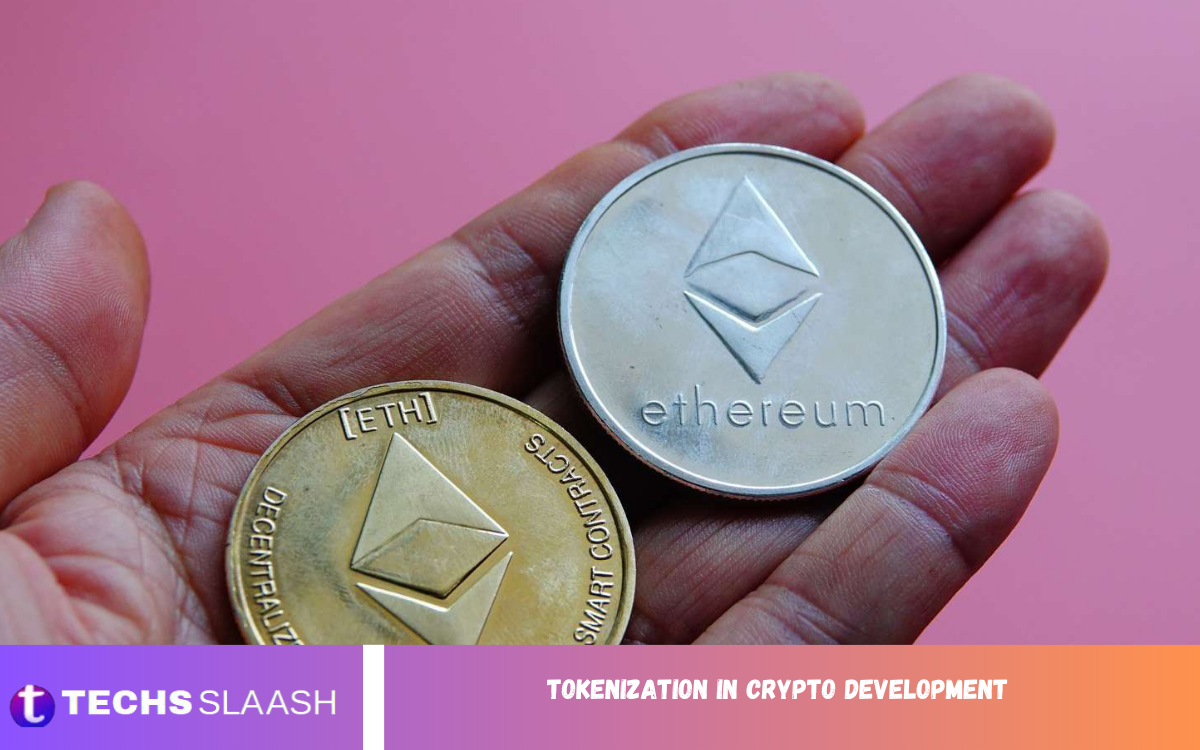
Tokenization in crypto development is transforming the way digital and real-world assets are created, managed, and exchanged. By converting ownership rights or valuable assets into blockchain-based digital tokens, tokenization enables secure, transparent, and efficient transactions without relying on traditional intermediaries.
Built on blockchain technology, tokenized assets benefit from enhanced security, immutability, and traceability. Smart contracts automate transactions, enforce ownership rights, and reduce operational costs while minimizing the risk of fraud.
What Is Tokenization in Crypto Development?
Tokenization in Crypto Development is the process of representing ownership, rights, or value as digital tokens on a blockchain. These tokens can represent virtually any asset, including:
- Real estate
- Cryptocurrencies
- Stocks and securities
- Artwork
- Intellectual property
- Precious metals
- Commodities
- Digital collectibles
- Loyalty rewards
- Business equity
Each token is securely stored and transferred on a blockchain network, ensuring transparency, security, and immutability.
Unlike traditional databases, blockchain provides decentralized verification, reducing fraud while enabling global participation.
How Tokenization Works
The tokenization process follows several important steps.
1. Asset Selection
A physical or digital asset is identified for tokenization. This asset can range from commercial buildings to artwork or company shares.
2. Asset Valuation
The asset is professionally evaluated to determine its market value.
3. Token Creation
Developers create blockchain-based tokens using smart contracts on platforms such as Ethereum, Solana, Polygon, or Binance Smart Chain.
4. Smart Contract Deployment
Smart contracts define:
- Ownership rights
- Transfer rules
- Dividend distribution
- Governance mechanisms
- Compliance requirements
5. Distribution
Tokens are issued to investors, customers, or users through exchanges, marketplaces, or private sales.
6. Trading and Management
Owners can securely buy, sell, or transfer tokens while blockchain records every transaction permanently.
Types of Crypto Tokens
Utility Tokens
Utility tokens provide access to products, services, or blockchain ecosystems.
Examples include:
- Platform memberships
- Gaming assets
- Network access
Security Tokens
Security tokens represent regulated investment assets such as company shares or investment funds.
They often provide:
- Profit sharing
- Dividends
- Ownership rights
Asset-Backed Tokens
These tokens are backed by tangible assets including:
- Gold
- Real estate
- Fine art
- Commodities
Governance Tokens
Governance tokens allow holders to vote on protocol updates and platform decisions.
Popular DeFi projects use governance tokens for decentralized management.
Non-Fungible Tokens (NFTs)
NFTs represent unique digital assets including:
- Artwork
- Music
- Gaming items
- Collectibles
- Digital identities
Benefits of Tokenization in Crypto Development
Enhanced Liquidity
Traditionally, assets like real estate or artwork require significant capital and lengthy transactions.
Tokenization allows fractional ownership, making these assets easier to trade.
Improved Transparency
Blockchain records every transaction publicly and permanently.
This transparency reduces fraud while improving investor confidence.
Greater Accessibility
Investors worldwide can purchase fractional ownership of valuable assets with relatively small investments.
This democratizes investing.
Lower Transaction Costs
Smart contracts automate:
- Payments
- Ownership transfers
- Compliance
- Settlement
This eliminates multiple intermediaries and reduces fees.
Faster Transactions
Traditional settlements may take several days.
Blockchain transactions often settle within minutes.
Enhanced Security
Cryptographic encryption secures blockchain transactions against unauthorized modifications.
Global Investment Opportunities
Investors no longer face geographical limitations.
Anyone with internet access and a compatible wallet can participate in tokenized markets.
Read Also: Future of Contactless Payments & Rewards
Blockchain Platforms Used for Tokenization
Several blockchain networks support tokenization.
Ethereum
Ethereum remains the leading blockchain for token creation because of its mature smart contract ecosystem.
Popular token standards include:
- ERC-20
- ERC-721
- ERC-1155
Polygon
Polygon offers lower transaction fees while maintaining Ethereum compatibility.
Solana
Solana provides extremely fast transaction speeds and low costs.
Binance Smart Chain
BSC enables affordable token deployment for startups and developers.
Avalanche
Avalanche supports enterprise-grade applications with high scalability.
Real-World Applications
Real Estate Tokenization
Property owners can divide buildings into thousands of digital shares.
Benefits include:
- Fractional ownership
- Increased liquidity
- Faster transactions
- Global investors
Healthcare
Healthcare organizations tokenize patient records for secure data sharing while preserving privacy.
Supply Chain Management
Companies tokenize products to improve:
- Tracking
- Authentication
- Transparency
- Quality assurance
Gaming
Blockchain games use tokenized:
- Characters
- Weapons
- Virtual land
- Collectibles
Players gain true ownership of digital assets.
Financial Services
Banks and fintech companies tokenize:
- Bonds
- Securities
- Investment funds
- Stablecoins
This improves settlement efficiency and reduces administrative costs.
Intellectual Property
Creators tokenize copyrights, patents, music rights, and digital licenses.
Royalties can be distributed automatically through smart contracts.
Smart Contracts and Tokenization
Smart contracts serve as the backbone of Tokenization in Crypto Development.
These self-executing programs automatically perform predefined actions once conditions are met.
Common smart contract functions include:
- Ownership verification
- Automatic payments
- Revenue sharing
- Voting rights
- Compliance checks
- Identity verification
Automation significantly reduces operational costs while minimizing human error.
Security Considerations
Although blockchain is highly secure, developers must prioritize security throughout token development.
Best practices include:
Smart Contract Audits
Professional audits identify vulnerabilities before deployment.
Multi-Signature Wallets
Multiple approvals protect valuable assets.
Private Key Security
Secure wallet management prevents unauthorized access.
Regulatory Compliance
Developers must follow jurisdiction-specific regulations for security tokens and financial products.
Penetration Testing
Routine security testing helps identify weaknesses before attackers exploit them.
Challenges of Tokenization
Despite its advantages, tokenization faces several challenges.
Regulatory Uncertainty
Many governments continue developing regulations for digital assets.
Compliance requirements vary across countries.
Market Adoption
Traditional institutions may hesitate to adopt blockchain technology due to unfamiliarity or infrastructure costs.
Scalability
Some blockchain networks experience congestion during periods of high demand.
Layer-2 solutions continue improving scalability.
Security Risks
Poorly written smart contracts may expose projects to hacks or exploits.
Regular audits remain essential.
Legal Ownership
Token ownership does not automatically guarantee legal ownership unless supported by proper legal frameworks.
The Role of DeFi
Decentralized Finance has significantly accelerated token adoption.
Tokenized assets can be used for:
- Lending
- Borrowing
- Yield farming
- Liquidity pools
- Staking
- Collateral
This creates entirely new financial opportunities unavailable in traditional systems.
Token Standards
Developers use standardized protocols to ensure compatibility.
Popular standards include:
ERC-20
Designed for fungible tokens such as cryptocurrencies.
ERC-721
Created for unique NFTs.
ERC-1155
Supports both fungible and non-fungible assets within one smart contract.
BEP-20
Binance Smart Chain’s equivalent of ERC-20.
Enterprise Adoption
Major industries increasingly explore tokenization.
Examples include:
- Banking
- Insurance
- Retail
- Healthcare
- Manufacturing
- Energy
- Logistics
- Government services
Enterprises use blockchain to improve operational efficiency while reducing costs.
Future Trends
The future of Tokenization in Crypto Development looks exceptionally promising.
Emerging trends include:
AI Integration
Artificial intelligence will automate compliance, fraud detection, and investment analysis.
Central Bank Digital Currencies (CBDCs)
Governments are exploring tokenized national currencies.
Real World Asset (RWA) Tokenization
More physical assets will enter blockchain ecosystems.
Institutional Investment
Large financial institutions continue investing in tokenized securities.
Cross-Chain Compatibility
Interoperability solutions will enable seamless token transfers across multiple blockchain networks.
Web3 Expansion
Tokenization will become central to decentralized identity, ownership, and digital economies.
Best Practices for Crypto Developers
Successful tokenization projects should:
- Select the appropriate blockchain network.
- Develop secure and audited smart contracts.
- Ensure regulatory compliance.
- Design transparent tokenomics.
- Implement strong cybersecurity measures.
- Prioritize scalability.
- Provide clear documentation.
- Build intuitive user experiences.
- Maintain ongoing security monitoring.
- Educate users about blockchain technology.
Frequently Asked Questions
What are smart contracts?
Smart contracts are self-executing blockchain programs that automate agreements, transactions, and ownership transfers.
Is tokenization secure?
Yes, when implemented with audited smart contracts, strong encryption, secure wallets, and proper cybersecurity practices.
What is fractional ownership?
Fractional ownership divides a high-value asset into smaller digital tokens, allowing multiple investors to own shares of the same asset.
What industries benefit from tokenization?
Finance, real estate, healthcare, gaming, supply chain, entertainment, insurance, and many others.
What challenges does tokenization face?
Regulatory uncertainty, scalability, legal recognition, market adoption, and smart contract vulnerabilities are among the key challenges.
What is the future of tokenization in crypto development?
The future includes wider institutional adoption, real-world asset tokenization, AI integration, cross-chain interoperability, and deeper integration with Web3 and decentralized finance.
Conclusion
Tokenization in Crypto Development is transforming how assets are created, owned, managed, and exchanged. By combining blockchain technology with smart contracts, tokenization delivers greater transparency, security, efficiency, and accessibility than traditional systems.
Although challenges such as regulatory uncertainty and security risks remain, ongoing technological advancements continue to strengthen the ecosystem.
