


Global ad spending is expected to cross $1 trillion in 2026 (Statista, 2026), but that growth isn’t evenly spread. What leaders don’t need now is another spending forecast, they need to understand which revenue models will drive long-term growth and which trends are worth investing in this year.
Advertising revenue is the income earned by selling access to audiences through ad impressions, clicks, conversions, or other measurable actions. While the core pricing mechanics have not changed much while the advertising environment has changed. Automation, privacy regulations, and commerce data are reshaping how ads are bought, measured, and optimized.
The Revenue Models Still Doing the Heavy Lifting
Despite years of change, a few advertising revenue models continue to dominate the advertising industry and that is unlikely to change anytime soon.
- CPM remains the standard for building brand awareness and reaching large audiences.
- CPC and CPA continue to be the backbone of performance marketing because advertisers only play for clicks or specific actions.
- Programmatic advertising has become the default delivery mechanism for most digital ads.
- Retail and commerce media have emerged as the fastest-growing addition to these core models by connecting ad spending directly to sales data.
- CTV (Connected TV) has grown into a hybrid model that combines subscription income with advertising, giving brands access to viewers on the biggest screen in the house.
The key takeaway for 2026 is that no major model has disappeared. What’s shifted is the balance between them. Performance based marketing and commerce-focused advertising are attracting a large share of budgets because they deliver measurable results, while traditional CPM advertising on open ad exchanges is losing trust due to growing concerns about ad quality and transparency.
Revenue Models Compared

| Revenue Model | Best For | Advantages | Challenges | 2026 Outlook |
| CPM (Cost Per Mille) | Publishers, CTV, brand awareness | Predictable; scales easily with reach | Doesn’t prove results; disputes over whether ads were truly seen | Growing with CTV; paired more with attention data |
| CPC / CPA (Performance) | Search, retail, lead generation | Tied to a measurable result; easy to justify | Costs climbing as more advertisers compete for clicks | Remains a key growth channel, with AI improving targeting, efficiency, and results |
| Programmatic / RTB | Publishers and advertisers at scale | Efficient, automated pricing and targeting | Risk of paying for cheap, low-quality ad space | More advertisers choosing pre-vetted, higher-quality ad space |
| Retail / Commerce Media | Brands with sales/transaction data | Ties spend directly to actual purchases | Hard to compare across networks; a few platforms dominate | US retail media spend reaching ~$69.33B in 2026, up from $58.79B (eMarketer, 2025) |
| Subscription-Ad Hybrid (CTV) | Streaming platforms, premium publishers | Combines subscription and ad income; trusted setting | No single standard yet for measuring results | US CTV spend reaching ~$37.95B in 2026, up ~14.5% (eMarketer, 2025) |
The Trends Actually Worth Your Budget
AI Advertising Has Become the Default
Tools like Google Performance Max and Meta Advantage+ automatically test different ad versions and decide where to allocate ad spend, reducing the need for manual work. Although this saves time, more than half of advertisers say that AI-generated content has made it harder to trust the quality of the websites, pages and videos where their ads appear (DoubleVerify, via Basis Technologies, 2026). The solution is not to use less AI, but to ensure quality checks are in place before ads go live and rely on human judgment for the decisions that matter most.
Cookieless Advertising Is a Planning Assumption Now
Many online ads rely on cookies, a small file that tracks users from website to website and helps determine which ads to display. Although Google decided not to completely remove third-party cookies from Chrome in 2025, we did see a shift in the cookie consent for the Iphone User and European countries, which lead to ambiguous data collection making it harder for advertisers to identify, match and measure users effectively.
Rather than waiting for the final outcome of Privacy Sandbox, leading businesses are focusing on what they can control. They are consolidating their first-party customer data into a single, well-organized and reliable system. This unified data foundation enables AI-powered advertising, more accurate audience targeting and better campaign measurement.
Today, the biggest challenge is not the privacy rule, but companies ability to collect, and activate its first-party data to monitor and improve marketing performance.
Retail Media Is Core Infrastructure, Not a Test Budget
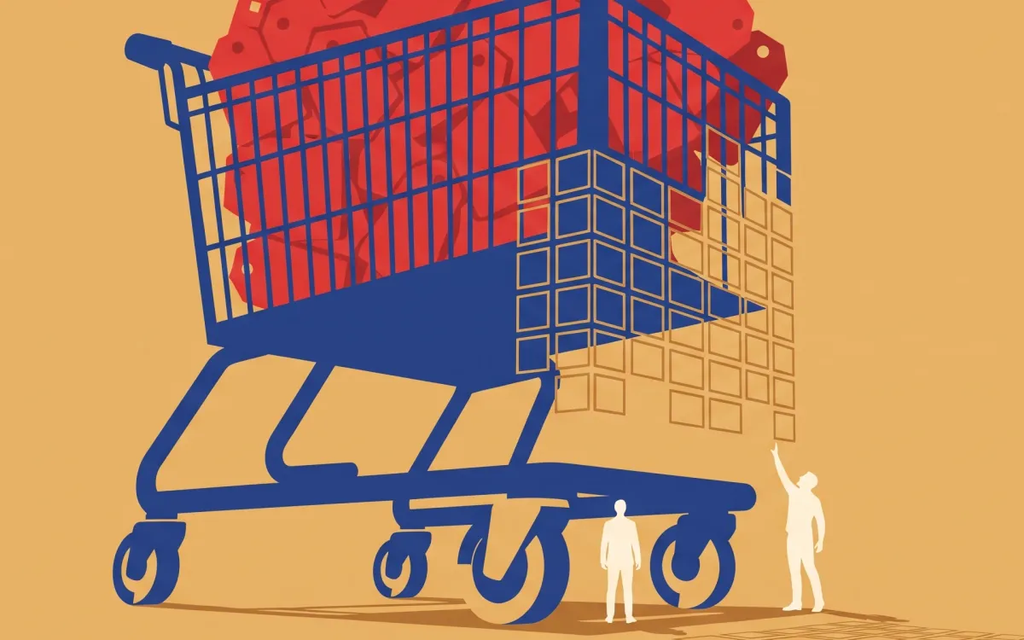
Retail media has evolved from an emerging trend into a core advertising channel, with most spending concentrated on a few large retail platforms. For many brands, success depends on proving that their campaigns drive incremental sales, not just sales that would have happened anyway. Closed-loop measurement makes it easier to track results and hold campaigns accountable.
How to Future-Proof Your Advertising Revenue Strategy
A checklist for leadership teams reassessing their revenue mix:
- Audit your model mix against business outcomes, not just impressions, at least quarterly.
- Consolidate first-party data into one governed system before layering on more AI.
- Run a formal incrementality or geo hold-out test to validate channel performance before protecting any channel’s budget.
- Treat retail media as a core channel, not a test budget, if you sell through a marketplace.
- Apply pre-bid quality controls to programmatic and AI-assisted buying.
- Diversify across CPM, performance, and commerce media rather than one pricing model.
- Pressure-test CTV spend against interactive and shoppable formats.
- Reassess vendor and agency partners for AI-era capabilities, not just campaign management.
- Revisit revenue targets twice a year as the advertising areas continue to evolve rapidly.
The Bottom Line
Ad revenue in 2026 will favor businesses that can prove impact, not just report activity. The Models such as CPM, CPC, CPA, retail media, and CTV are still evolving, but tolerance for unmeasured spend is declining. Whether managed internally or through a performance based marketing agency, the expectation is the same: every advertising dollar must be supported by clear data and measurable outcomes that can stand up to financial scrutiny.
