


In the medical device industry, there is no margin for error. Every component must perform flawlessly because patient safety and clinical outcomes depend on it. From surgical instruments to wearable monitors, the physical integrity of these devices directly influences their reliability in critical healthcare settings. Overmolding has emerged as an indispensable manufacturing process that addresses this demand, combining multiple materials into unified, high-performance components that meet the most exacting standards.
This process goes beyond simple aesthetics; it fundamentally enhances how medical devices function, feel, and endure repeated use and sterilization. For medical device companies navigating strict regulatory requirements while facing pressure to accelerate time-to-market, understanding overmolding’s role is essential.
This article explores how precision mold manufacturing, rigorous quality management systems, advanced process control, and strategic contract manufacturing partnerships collectively enable overmolding services to deliver the quality and efficiency that modern medical devices demand.
Understanding Overmolding and Its Role in Medical Devices
Overmolding is a multi-step injection molding process where one material is molded over another to create a single, integrated component. In medical devices, this technique bonds a softer thermoplastic elastomer or silicone over a rigid substrate, producing parts that combine structural strength with functional surface properties. Common applications include soft-touch grips on surgical instruments, hermetic seals on diagnostic equipment, ergonomic housings for handheld monitors, and multi-material connectors that resist chemical exposure during sterilization.
The process delivers measurable benefits: enhanced ergonomics reduce hand fatigue during prolonged procedures, chemical-resistant overmold layers extend device lifespan through hundreds of autoclave cycles, and biocompatible material combinations ensure safe patient contact.
By eliminating assembly steps like adhesive bonding or mechanical fastening, overmolding also removes potential failure points where contaminants could accumulate. This directly supports patient safety by creating seamless, cleanable surfaces that maintain their integrity throughout the device’s service life.
The Foundation of Precision: Advanced Mold Manufacturing
The success of any overmolding application begins with the mold itself. Medical-grade overmolding demands tolerances often measured in microns, where even slight deviations can compromise material bonding, seal integrity, or dimensional accuracy. Achieving this precision requires advanced manufacturing techniques—CNC machining delivers the tight tolerances needed for complex cavity geometries, while electrical discharge machining (EDM) enables intricate surface textures and micro-features that would be impossible through conventional cutting.
Multi-cavity mold designs must account for differential shrinkage rates between substrate and overmold materials, requiring sophisticated thermal analysis during the design phase. When mold quality is compromised, the consequences cascade: flash formation creates contamination risks, poor gate placement causes incomplete fills, and misaligned shut-offs lead to material bleed-through between layers.
Conversely, well-engineered molds with optimized runner systems and precisely calculated parting lines produce consistent, defect-free parts that maintain critical bonding strength between material layers. This foundation of precision tooling ultimately determines whether an overmolded medical component will perform reliably across thousands of use cycles.
Quality Management: Upholding Medical Industry Standards
Medical device manufacturing operates within one of the most heavily regulated environments in any industry, and overmolding services must demonstrate unwavering compliance to earn their place in this supply chain. ISO 13485 serves as the cornerstone quality management standard, requiring manufacturers to maintain documented systems covering every aspect of production—from design inputs through final inspection and post-market surveillance.
FDA 21 CFR Part 820 imposes additional requirements for companies serving the U.S. market, mandating design history files, validated processes, and comprehensive device master records. For overmolding specifically, these frameworks demand rigorous material selection protocols that verify biocompatibility through USP Class VI or ISO 10993 testing before any resin contacts a production mold.
Incoming material inspection ensures lot-to-lot consistency, with certificates of conformance cross-referenced against approved material specifications. Every production run generates traceable documentation linking raw material lots to finished components, enabling rapid containment if any quality concern arises.
Regular internal and external quality audits serve as the enforcement mechanism, identifying gaps before they become systemic issues. Third-party audits from notified bodies or FDA inspectors validate that quality systems function as designed, not merely as documented. This layered approach to quality management ensures that overmolded medical components consistently meet specifications and regulatory expectations throughout their production lifecycle.
Process Control: Ensuring Consistency in Overmolding
Overmolding medical components requires precise management of interdependent process parameters, where small deviations can mean the difference between a bonded assembly and a failed part. Temperature control is paramount—both melt temperature of the overmold material and surface temperature of the substrate must fall within narrow windows to achieve molecular-level adhesion between layers.
Too cool, and the materials won’t bond; too hot, and the substrate deforms or degrades. Injection pressure and packing pressure directly influence part density, dimensional stability, and the completeness of material flow into thin-wall sections common in medical device geometries. Cycle time affects crystallinity in semi-crystalline polymers, which in turn determines chemical resistance and mechanical properties critical for sterilization durability.
Modern overmolding operations employ scientific molding principles, using cavity pressure sensors and real-time monitoring systems to detect process drift before it produces nonconforming parts. Statistical process control charts track critical dimensions and bond-strength measurements across production runs, establishing control limits that trigger corrective action when trends emerge.
Process validation follows IQ/OQ/PQ protocols, establishing documented evidence that equipment operates within specifications, that optimal parameters produce conforming parts, and that production remains stable over time. This disciplined approach to process control eliminates the variability that undermines reliability, ensuring every overmolded medical component performs identically to the one before it—a non-negotiable requirement when devices support patient care.
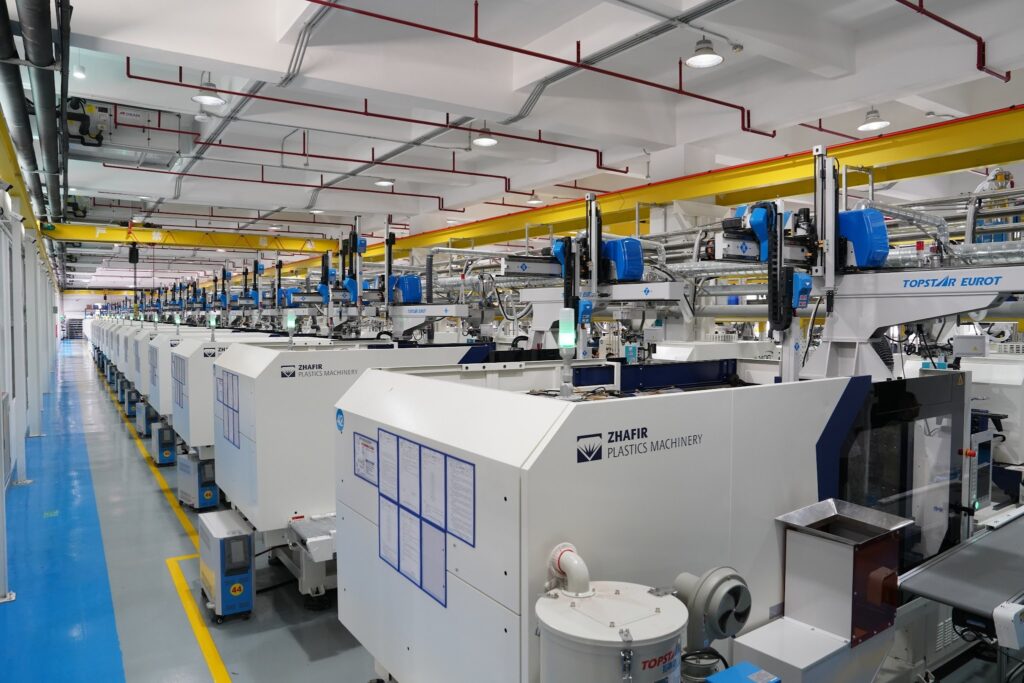
Leveraging Contract Manufacturing for Efficiency and Speed
Contract manufacturing in the medical device sector involves partnering with specialized external providers who possess the equipment, expertise, and quality infrastructure to produce overmolded components on behalf of device companies. Rather than investing millions in dedicated molding cells, cleanroom environments, and validation programs, medical device firms can access these capabilities through strategic manufacturing partnerships that align with their development timelines and production volumes.
The advantages extend well beyond cost savings. Experienced contract manufacturers like WEILAN MFG bring deep process knowledge accumulated across hundreds of medical programs, enabling them to anticipate design challenges and recommend material combinations that less specialized shops might overlook. Their established relationships with medical-grade resin suppliers often translate into shorter material lead times and priority allocation during supply constraints. For prototyping, contract manufacturers with rapid tooling capabilities can deliver functional overmolded samples within days rather than weeks, allowing design teams to validate ergonomics, seal performance, and assembly fit early in development. When programs transition to production, these partners scale seamlessly—adding shifts, deploying multi-cavity tools, or qualifying secondary operations without the device company bearing capital risk. This model proves particularly valuable for startups and mid-size firms that need production-ready quality without building internal manufacturing infrastructure from scratch, ultimately compressing the path from concept to market-ready device.
Practical Solutions for Medical Device Companies
Medical device companies face a dual challenge: maintaining uncompromising quality standards while delivering products to market before competitive windows close. Integrating overmolding into device development requires deliberate planning that begins during the earliest design phases. Engineers should identify overmolding opportunities when defining device requirements—considering where multi-material interfaces can eliminate assembly steps, improve user interaction, or enhance sealing performance. Early engagement with overmolding specialists allows material compatibility testing and design-for-manufacturability feedback to shape the device architecture before commitments lock in suboptimal geometries. Companies should establish clear evaluation frameworks for selecting service providers, focusing on demonstrated medical device experience, validated quality systems, and the technical depth to solve complex bonding challenges. The partnership model matters as much as technical capability; providers who function as collaborative engineering partners rather than transactional vendors consistently deliver better outcomes across the product lifecycle.
Step 1: Evaluating Quality Standards Compliance
Begin by requesting current ISO 13485 certificates and verifying their scope covers injection molding and overmolding processes specifically. Review the provider’s FDA registration status and any warning letter history through public databases. Ask for sample documentation packages demonstrating material traceability from resin lot numbers through finished goods. Confirm they maintain validated biocompatibility data for their standard medical-grade materials and have established protocols for introducing new resins when custom formulations are required.
Step 2: Ensuring Fast Turnaround for Prototypes and Production
Establish design freeze milestones with clear deliverable expectations and response time commitments from both parties. Request that your provider outline their rapid tooling options—aluminum prototype molds can cut weeks from validation timelines while still producing representative overmolded parts. Implement shared project management platforms with real-time status visibility, and define escalation paths for technical issues that could stall progress. Weekly design review cadences during development prevent surprises at tool trials.
Step 3: Partnering with Experienced Contract Manufacturers
Prioritize manufacturers who can reference completed medical overmolding programs similar to your device classification and complexity level. Evaluate their engineering team’s depth—dedicated mold designers, material scientists, and process engineers indicate serious medical device commitment. Assess scalability by confirming available press tonnage range, cleanroom capacity, and willingness to dedicate production cells for your program as volumes grow. Long-term partnerships built on transparent communication and shared quality goals consistently outperform lowest-bid vendor relationships.
Overmolding as a Strategic Advantage for Medical Device Innovation
Overmolding has proven itself essential to medical device quality by addressing the fundamental challenges that define this industry—uncompromising reliability, regulatory compliance, and the relentless push toward faster development cycles. The process succeeds because it rests on interconnected pillars: precision mold manufacturing that establishes dimensional accuracy and consistent material bonding, quality management systems aligned with ISO 13485 and FDA requirements that ensure every component meets documented specifications, and disciplined process control that eliminates the variability incompatible with patient safety. Contract manufacturing partnerships amplify these capabilities by giving device companies access to specialized expertise and validated infrastructure without the burden of building it internally.
Together, these elements create a manufacturing ecosystem where medical device companies can achieve both the quality their patients require and the speed their markets demand. As devices grow more complex—incorporating sensors, flexible circuits, and novel biomaterials—overmolding will only become more critical in integrating diverse materials into seamless, reliable assemblies. Companies that invest now in strong overmolding partnerships and embrace the process as a core design strategy will be best positioned to deliver next-generation medical devices that advance patient care while meeting every regulatory expectation placed upon them.
