

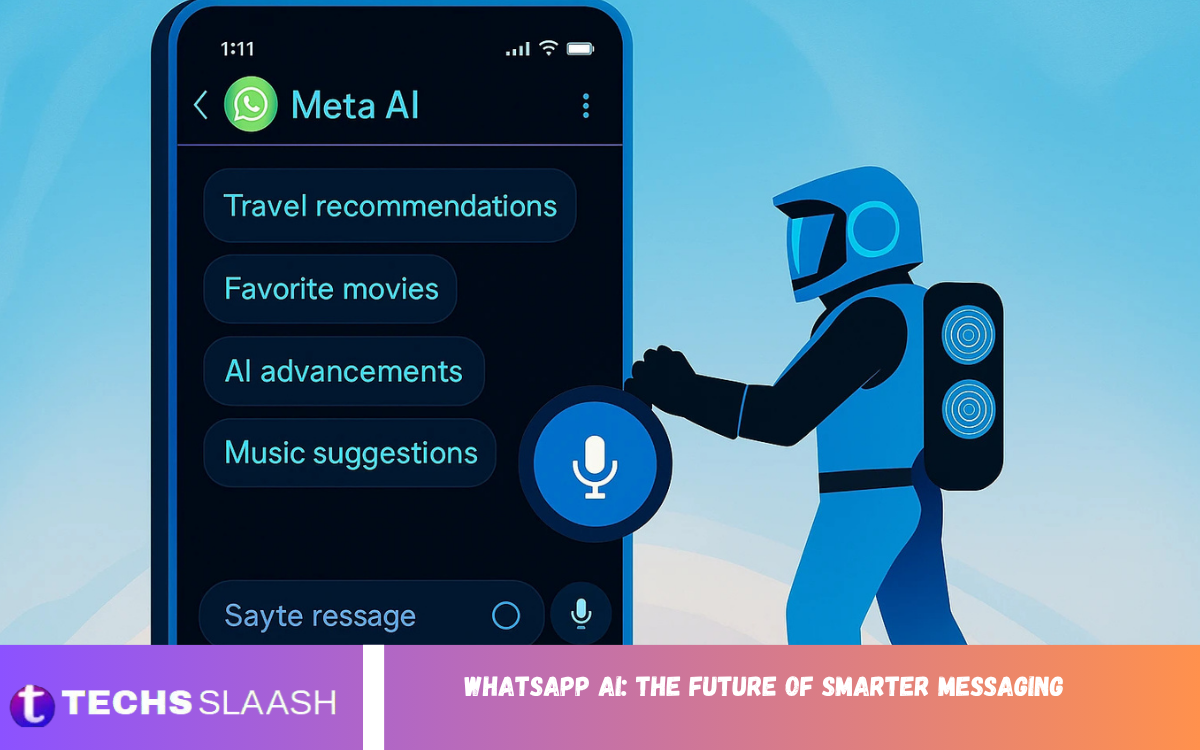
WhatsApp has evolved far beyond being a simple messaging application. With the integration of artificial intelligence, the platform is becoming a smarter communication environment where users can ask questions, create content, improve messages, edit images, and accomplish everyday tasks without leaving their chats. WhatsApp AI: The Future of Smarter Messaging represents a major shift toward more intelligent and convenient digital communication.
Meta has introduced several AI-powered experiences within WhatsApp, including Meta AI conversations, AI-generated images, photo editing, AI-generated stickers, AI-assisted search, and message-writing assistance. Availability varies by country and feature, but the direction is clear: artificial intelligence is becoming increasingly integrated into everyday messaging.
What Is WhatsApp AI?
WhatsApp AI refers to the artificial intelligence features integrated into WhatsApp to help users communicate, create content, find information, and complete tasks more efficiently. Meta AI can answer questions, generate ideas, provide recommendations, and interact with users through conversational prompts.
Instead of switching between multiple applications, users can access AI assistance directly within the messaging environment. This makes communication more productive because tasks such as writing a response, generating an image, understanding a photo, or planning an activity can happen alongside normal conversations.
How Meta AI Is Changing WhatsApp
The introduction of Meta AI is changing WhatsApp from a communication-focused platform into a more versatile digital assistant. Users can interact with AI individually or, where supported, bring Meta AI into group conversations to help answer questions and coordinate activities.
In group chats, Meta AI can assist with planning and suggestions when it has been added as a member. It can read and respond to new messages in the group where it has been added, while group administrators can remove it whenever they choose.
Smarter Replies With AI
One of the most useful developments in WhatsApp AI is AI-assisted writing. Writing a message can sometimes take longer than expected, especially when users need to sound professional, friendly, clear, or persuasive. AI can help users develop suitable responses based on the context of their conversation.
WhatsApp has also introduced smarter suggested responses based on conversations. This can reduce the time required to compose everyday messages while allowing users to review and decide whether they actually want to send the suggested response.
AI-Powered Image Creation
Visual communication is becoming an important part of messaging, and WhatsApp AI is expanding what users can do with images. Meta AI can help users create AI-generated visuals from simple descriptions, giving people an easier way to turn ideas into shareable content.
Meta has also introduced AI image-generation technology that can support creative experiences across its applications, including generating images directly in WhatsApp conversations in selected countries. These capabilities can make group chats, personal conversations, and social sharing more creative.
AI Photo Editing Inside WhatsApp
WhatsApp AI is not limited to creating new images. AI can also help users modify existing photographs before sharing them. Users can request changes such as removing distracting objects, changing backgrounds, or applying different visual styles.
This type of editing is particularly useful because it reduces the need to open a separate photo-editing application. Instead, users can make quick adjustments within the same communication workflow and immediately share the finished image with friends, family, or colleagues.
AI for Group Conversations
Large WhatsApp groups can generate hundreds of messages, making it difficult to follow important information. AI can potentially make these conversations easier to manage by helping users understand discussions and identify relevant information.
WhatsApp has introduced AI-powered message summarization using Private Processing technology for supported experiences. This can help users catch up on unread messages while maintaining protections designed to prevent Meta or WhatsApp from accessing the messages processed through that technology.
WhatsApp AI for Productivity
The future of WhatsApp AI is closely connected with productivity. Users increasingly depend on messaging platforms for work discussions, educational communication, customer support, planning, and collaboration. AI can reduce repetitive tasks and help people accomplish more without constantly switching applications.
For example, users can ask AI to explain a concept, organize ideas, create a draft, suggest activities, or help plan an event. These capabilities can make WhatsApp useful not only for conversations but also as an everyday productivity environment.
WhatsApp AI for Businesses
Businesses are another major area where WhatsApp AI can have a significant impact. Companies already use WhatsApp to communicate with customers, answer questions, share product information, and provide support. AI can make these interactions faster and more scalable.
Meta Business Agent is designed to help businesses using WhatsApp enhance parts of their customer conversations with AI. Depending on how it is configured, AI can help businesses respond to customers and provide assistance based on information supplied by the business or customer.
AI-Powered Customer Support
Customer support is often repetitive because businesses receive similar questions about products, services, pricing, availability, and processes. AI can handle many routine interactions, allowing human representatives to focus on complicated requests that require personal attention.
This could make WhatsApp a more powerful customer-service platform. Businesses may be able to provide faster responses throughout the day while maintaining a communication channel that customers already understand and use regularly.
Privacy and WhatsApp AI
Privacy is one of the most important considerations surrounding artificial intelligence in messaging applications. WhatsApp states that personal messages and calls remain protected by end-to-end encryption, meaning WhatsApp and Meta cannot ordinarily read or listen to those personal communications.
However, AI interactions work differently. When users choose to interact with Meta AI, Meta receives the prompts, messages shared with AI, and feedback needed to provide and improve the AI experience. WhatsApp also states that only messages that mention Meta AI or are intentionally shared with it can be read by Meta.
Private Processing and AI
Private Processing is an important part of WhatsApp’s approach to AI privacy. For certain AI features involving personal messages, WhatsApp says Private Processing allows Meta AI to generate responses without Meta or WhatsApp being able to read the messages being processed.
This technology is especially significant because people may use AI to summarize conversations or perform tasks involving personal information. The goal is to provide useful AI assistance while reducing direct access to the underlying private messages.
Read Also: WhatsApp Hidden Features You Should Know
Incognito Chat With Meta AI
In 2026, Meta introduced Incognito Chat with Meta AI on WhatsApp as a private way to interact with AI. According to Meta, these conversations are processed in a secure environment that even Meta cannot access, and they disappear by default.
The feature is designed for conversations where users may want additional privacy when asking AI questions. Meta says Incognito Chat is temporary and not saved by default, giving users another option for interacting with AI more privately.
WhatsApp AI and Multilingual Communication
Messaging platforms connect people across countries, languages, and cultures. AI has the potential to make these interactions easier by helping users communicate in different languages and understand unfamiliar information.
WhatsApp states that users can chat with Meta AI in any language, though availability may depend on the device’s language and market. As AI language capabilities continue improving, multilingual communication could become an increasingly important part of WhatsApp’s future.
AI Search Within WhatsApp
Searching through conversations can be difficult when users have years’ worth of messages, files, images, and discussions. WhatsApp has introduced an AI-powered search experience that lets users search WhatsApp or ask Meta AI a question.
This represents a broader shift from traditional keyword-based searching toward conversational search. Instead of remembering exactly what to type, users can communicate their question naturally and receive an AI-generated response when the feature is available.
The Future of Personalized Messaging
The biggest potential of WhatsApp AI may be personalization. Future AI systems could become better at understanding communication preferences, helping users create messages that match different situations without completely replacing human expression.
A professional message to a client, a quick response to a friend, and a thoughtful family message all require different tones. AI can help users adjust wording and structure while keeping the final decision in the user’s hands.
Benefits of WhatsApp AI
WhatsApp AI can provide several practical benefits, including faster communication, improved writing, creative image generation, easier photo editing, group assistance, productivity support, and business automation. These tools can save time for users who regularly perform repetitive tasks.
Another major benefit is convenience. Because AI capabilities are integrated into a familiar messaging platform, users may not need to learn a separate application for every small task. This creates a more unified digital experience in which communication and assistance occur within the same environment.
Challenges of WhatsApp AI
Despite its advantages, WhatsApp AI also presents challenges. AI-generated answers can sometimes be inaccurate, incomplete, or inappropriate, so users should verify important information rather than treating every response as authoritative.
Privacy, feature availability, AI dependency, and misinformation are additional concerns. WhatsApp itself notes that some AI-generated messages may be inaccurate or inappropriate, underscoring the importance of human judgment when using these tools.
WhatsApp AI and the Future of Communication
The future of messaging is likely to become increasingly conversational, intelligent, and personalized. Instead of using WhatsApp only to exchange messages, people may use AI within conversations to plan events, solve problems, create content, summarize discussions, and manage everyday tasks.
As Meta continues developing its AI models and integrating them across its products, WhatsApp could become one of the most accessible places for everyday AI interaction. The combination of messaging, creativity, productivity, and assistance makes WhatsApp AI: The Future of Smarter Messaging more than a trend; it reflects a broader transformation in how people communicate with technology.
Is WhatsApp AI the Future of Smarter Messaging?
WhatsApp AI has the potential to make digital communication faster, easier, and more useful. Its combination of conversational AI, creative tools, writing assistance, image editing, group features, and privacy-focused technologies demonstrates how messaging applications are becoming intelligent platforms.
The technology will continue to evolve, and availability will vary across regions and users. For now, the most important approach is to use AI as an assistant rather than a replacement for human judgment, creativity, and meaningful communication.
Frequently Asked Questions
What is WhatsApp AI?
WhatsApp AI refers to artificial intelligence experiences available through WhatsApp, including Meta AI conversations, image generation, photo editing, writing assistance, and other AI-powered tools. Availability depends on the user’s region and the features supported.
How does Meta AI work on WhatsApp?
Meta AI responds to prompts and messages that users intentionally send or share with the AI. It can answer questions, provide recommendations, generate ideas, and assist with creative tasks.
Is WhatsApp AI free?
Meta AI features are offered as optional experiences, but availability and specific features can vary by country and account. Users should check which AI features are available in their version of WhatsApp.
Can WhatsApp AI write messages?
Yes. AI-powered writing assistance can help users draft suggested responses and improve their communication. WhatsApp has expanded Writing Help to create suggested responses based on conversations.
Can WhatsApp AI create images?
Yes. Meta AI can generate AI-created images from prompts, though specific image-generation features may be available only in select countries or to certain users.
Can WhatsApp AI edit photos?
Yes. Supported AI features can help users edit photos, including removing objects, changing backgrounds, and applying creative styles before sharing them.
Can Meta AI read my WhatsApp chats?
WhatsApp states that Meta cannot read personal messages simply because they are stored in WhatsApp. Only messages that users mention to Meta AI or intentionally share with it can be read by Meta, while supported Private Processing features provide additional privacy protections.
Can Meta AI join a WhatsApp group?
In supported experiences, users can add Meta AI as a group member. When added, Meta AI can read and respond to new messages in that group, and administrators can remove it.
Is WhatsApp AI always available?
No. Meta states that Meta AI and some AI experiences are being rolled out gradually and may only be available in certain countries, languages, or devices.
What is the future of WhatsApp AI?
The future could include more personalized assistance, smarter message composition, advanced image and content creation, improved conversation summaries, business automation, and privacy-focused AI experiences. The overall direction is toward making messaging more intelligent without removing user control.
Conclusion
WhatsApp AI: The Future of Smarter Messaging highlights how artificial intelligence is changing one of the world’s most widely used communication platforms. From smarter replies and AI-generated images to photo editing, group assistance, productivity features, and business support, AI is gradually becoming part of everyday messaging.
As these technologies develop, privacy, accuracy, transparency, and user control will remain essential. When used responsibly, WhatsApp AI can reduce repetitive work, encourage creativity, and make communication more efficient while keeping people at the center of the conversation.

1 Comment
Pingback: WhatsApp Channels: A Modern Way to Share Updates and Connect With Audiences - Techsslaash.com